
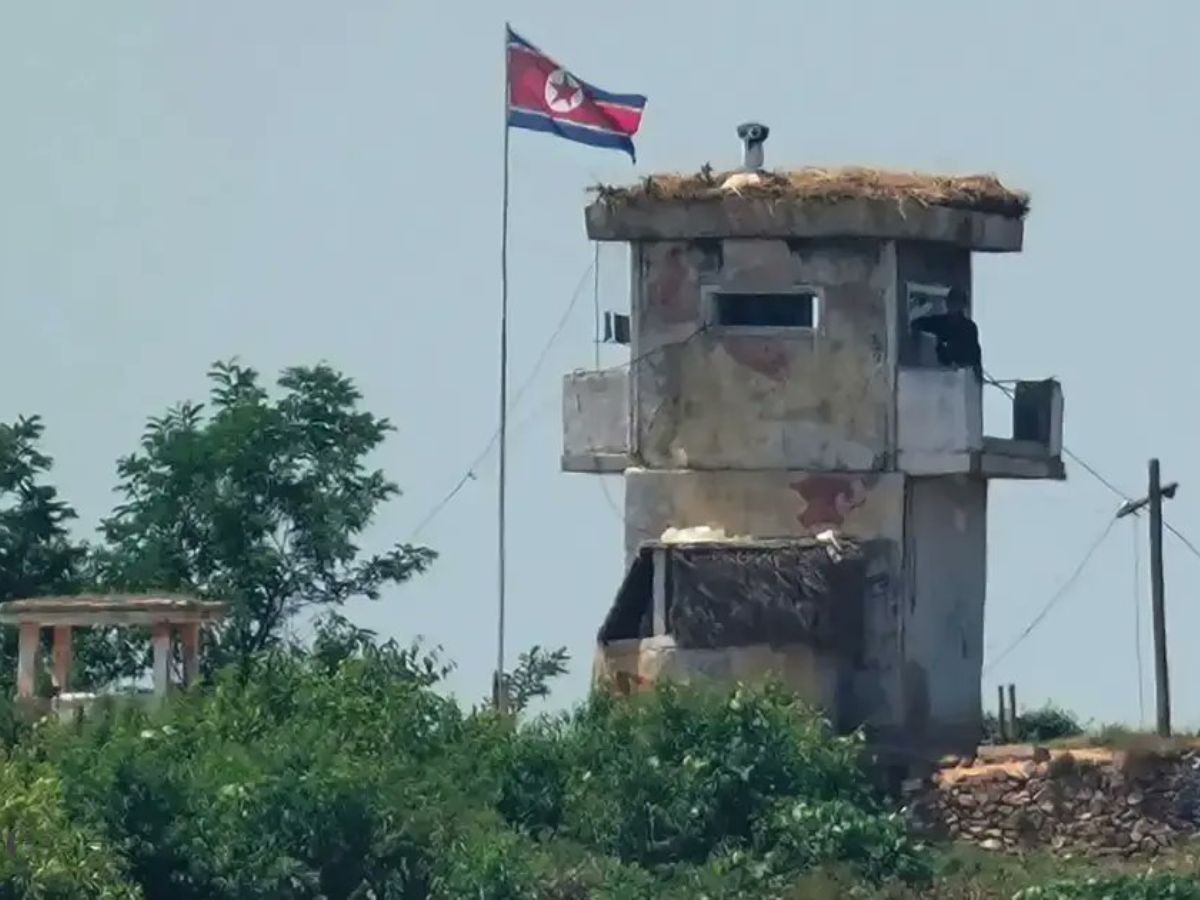
After crossing the heavily defended land border on Sunday, a North Korean soldier was arrested by South Korean soldiers in a daring action that highlights the ongoing desperation on the Korean peninsula. This rare direct defection across the Demilitarized Zone (DMZ) throws a spotlight on the extreme risks individuals are willing to take for freedom and the complex political tensions that define the region.
What Exactly Happened at the Border?
The incident unfolded along the Military Demarcation Line (MDL) in the central front. According to a statement from South Korea’s Joint Chiefs of Staff, their military “identified the individual near the MDL, tracked and monitored him, and conducted a standard guidance operation to take him into custody.” A defence ministry official confirmed the soldier’s intent was to “defect to the South.” But what does this “standard guidance operation” entail? After a secure arrest and preliminary interrogation to make sure the person is not a threat, they are usually transferred to intelligence officials for a comprehensive screening procedure.
Why is This Type of Defection So Unusual?
Defections across the inter-Korean land border are exceptionally rare. The area is a scary maze, not just a line on a map. One of the most mined areas on the planet, the DMZ is heavily forested and under continual observation by watchful soldiers on both sides. Most of the over 34,000 North Koreans who have fled to the South since the 1950s take a much longer, indirect route through China and a third country. This soldier’s direct crossing suggests significant personal motivation and, as analyst Hong Min noted, a “likely familiarity with the area” that may have helped him navigate the deadly terrain.
What Are the Immediate Repercussions for the Defector?
For the soldier, the immediate future involves a rigorous vetting process. North Koreans who arrive in the South are handed over to Seoul’s National Intelligence Service for debriefing. The purpose of this inquiry is to confirm his identification, background, and the sincerity of his defection. After being granted clearance, he would enroll in a government resettlement program aimed at assisting him in adjusting to South Korea, a society that is very different from the one he left behind. His successful crossing marks the beginning of a challenging but new chapter.
What Does This Incident Mean for Inter-Korean Relations?
This defection is more than a personal story; it is a political event. “The latest crossing will not be received positively by Pyongyang,” analyst Hong Min explained, as the soldier “could provide the South with information on its troop movements and operations.” North Korea often uses harsh language, labeling defectors as “human scum.” The incident comes as South Korea’s new President, Lee Jae Myung, has promised a softer approach, saying at the UN he wants to end the “vicious cycle” of tensions. This defection challenges that promise, could trigger a strong reaction from the North, and shows the ongoing distrust between the two countries, which are still technically at war.