
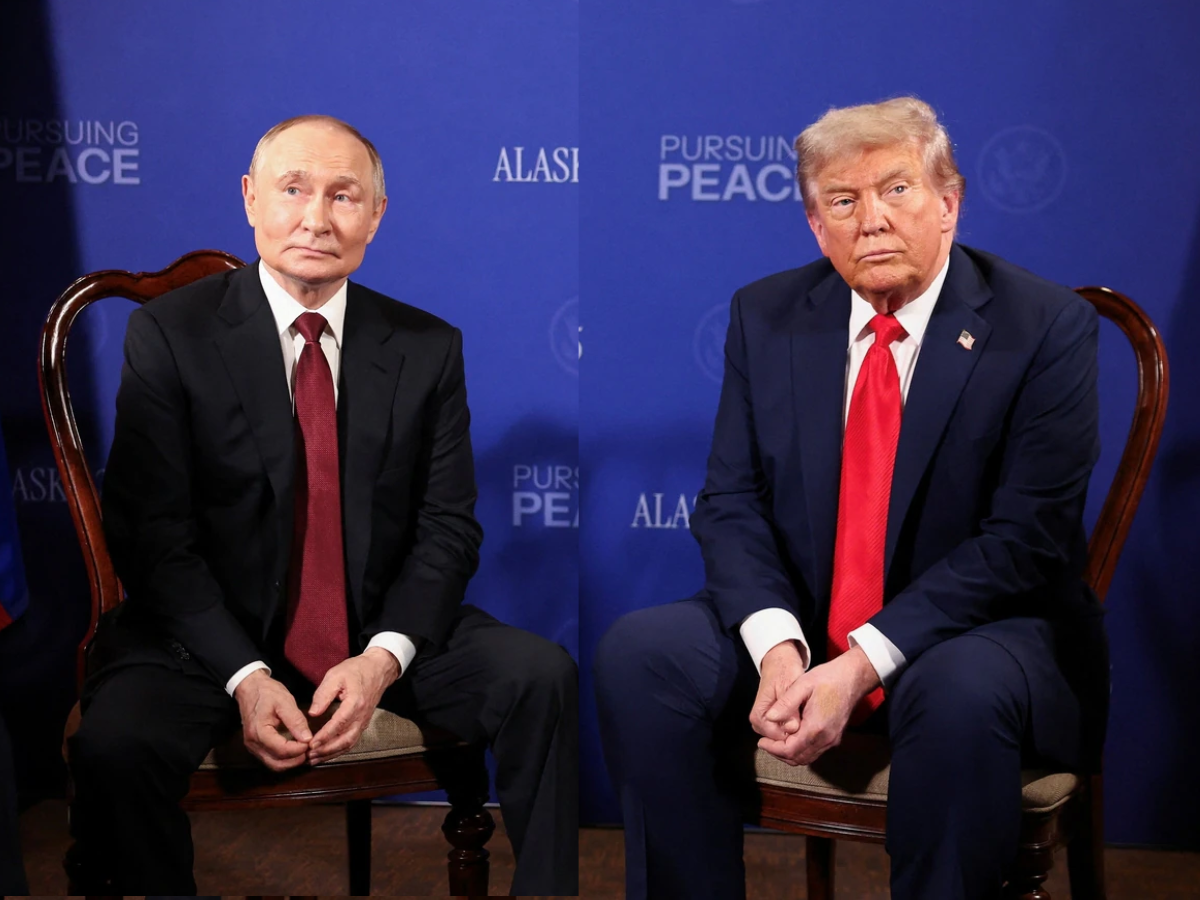
“There’s no deal until there’s a deal,” President Donald Trump said in his early post-summit remarks in Anchorage, Alaska, signaling that the lengthy talks with Russian President Vladimir Putin yielded no tangible results. Hours of discussion concluded without a ceasefire, no agreement, and no concrete announcements.
Progress… But No Proof
Trump claimed that he and Putin made “some great progress,” yet provided few specifics, leaving the world to wonder what exactly was achieved. Later, he candidly added, “We didn’t get there,” before exiting the room without taking questions from the hundreds of reporters present.
Allies Breathe a Sigh of Relief
While the summit produced little substance, Europe and Ukraine may be cautiously relieved that Trump did not make unilateral concessions that could have weakened future negotiations. The absence of an agreement highlights the precarious equilibrium the U.S.
The Peacemaker’s Missed Opportunity
Trump, who often positions himself as a master dealmaker, will leave Alaska without a breakthrough. There is no indication of a follow-up meeting with Ukrainian President Volodymyr Zelensky, despite Putin’s light-hearted remark about a “next time in Moscow.”
Also Read: The Untold Story: Why Did Russia Give Away Alaska To US And Does It Regret It Today?
Domestic and Global Implications
Although Trump had less at stake than Ukraine or Russia, the empty summit may dent his international and domestic prestige. Earlier, he had optimistically claimed there was only a 25% chance the talks would fail—a forecast that now looks overly ambitious.
With no deal, no ceasefire, and no clarity on the next steps, global leaders are left to anticipate whether further negotiations will occur and what leverage either side might gain in the meantime.
The meeting serves as a warning that significant agreements are rarely replaced by mere participation in high-stakes diplomacy.