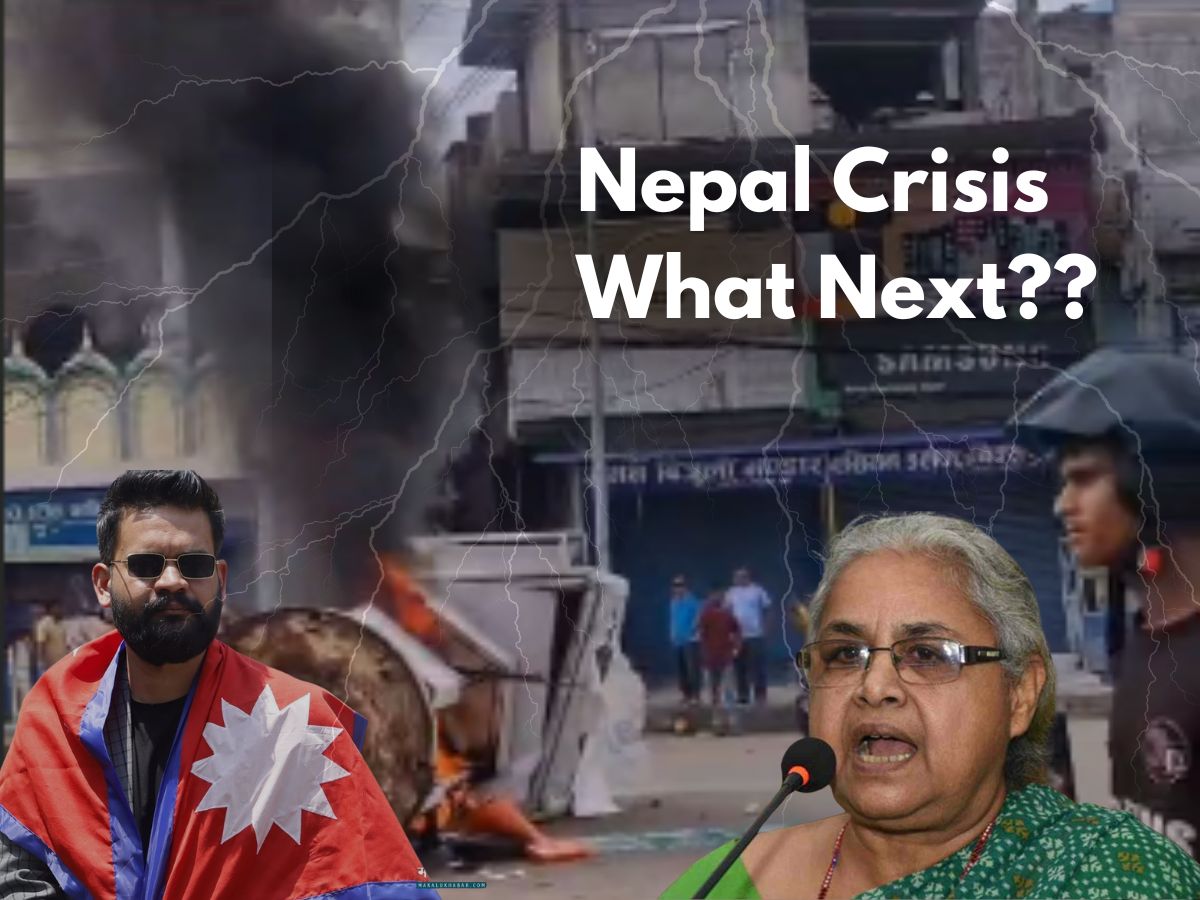
Nepal is still in the midst of a political and social crisis after drastic youth-organized protests that ended with the resignation of Prime Minister KP Sharma Oli on September 9, 2025. Following the imposition of curfew and prohibitory orders in Kathmandu and nearby districts for days, Nepal Army has relaxed restrictions to some extent to permit partial movement of residents. Daily necessities shops are now open between 6 AM and 9 AM and between 5 PM and 7 PM, and a night curfew continues from 7 PM to 6 AM. Essential activities, such as health, emergency services, and the media, function under special authorisation, as authorities attempt to achieve normalcy in the face of ongoing tensions.
ALSO READ | Nepal: Is Chinese Toolkit Active Behind Corruption and Mis-governance?
Who Will Lead Nepal Next?
The resignation of KP Sharma Oli has left a vacuum in Nepal’s political landscape, triggering an intense search for a new leader. The Nepali Army and President Ram Chandra Poudel are engaged in ongoing talks with the “Gen Z” protest leaders, youth activists whose demonstrations sparked the protests, to discuss the formation of an interim government. Some of the names have come into consideration as potential Prime Minister, and among them, the most visible is former Chief Justice Sushila Karki. Karki, Nepal’s first Chief Justice, has agreed to the proposal to act as an interim leader. Other possible candidates are Kul Man Ghising, who was formerly the Managing Director of Nepal Electricity Authority, and Mayor of Dharan Harka Sampang. Other protesters also support major youth leaders such as Balendra “Balen” Shah, a former rapper turned mayor of Kathmandu, as potential leaders.
ALSO READ | In Another Step Towards IPO, Core Integra files DRHP with SEBI
Monarchy Calls Resurface Amid Crisis
In addition to the political turmoil, monarchist feelings have also gained voice, with some protesters shouting “The king must return” (Raja aaunparcha). This rise of monarchist demands is a result of dissatisfaction with the democratic system after the abolition of the monarchy in 2008. Former Absolute Monarch King Gyanendra Shah, who was the king before Nepal became a federal democratic republic, made a rare statement of remorse at the deaths during the demonstrations and appealed for peace. The symbolic presence of the monarchy still holds grounds, particularly among royalist elements who view the restoration of the Shah dynasty as a means to guarantee stability and continuity.
Impact and Challenges Ahead
The protests that started from a ban on social media by the government snowballed into violent clashes that cost more than 30 lives and left over 1,000 injured across the country. The main government buildings, the Parliament and residence of the Prime Minister, came under attack and were torched. The Nepal Army remains in control, patrolling and enforcing curfew and speaking with protest leaders through negotiations. International flights and vital transportation have resumed amid tentative optimism. The future of the country politically, however, remains doubtful, with mooted reforms such as demands for fresh elections, direct election of the Prime Minister, and shorter parliamentary terms being debated.
ALSO READ | India Responds to the ‘Ill-informed’ Remarks by Switzerland in UNHRC
Nepal today is at the crossroads with talks in progress to map a way back to peace and stability. The next few weeks are crucial as the country tries to reconcile competing demands from its youth, political forces, and monarchist groups to rebuild the government and protect democracy. As the chaos and uncertainty surrounds the air of Nepal, after the vacuum in the leadership making it worse, there has to be an open-dialogue on collective platform to find the solution towards stability. Let’s hope the mayhem settles and the country gets back to its daily lifestyle and normal life soon.