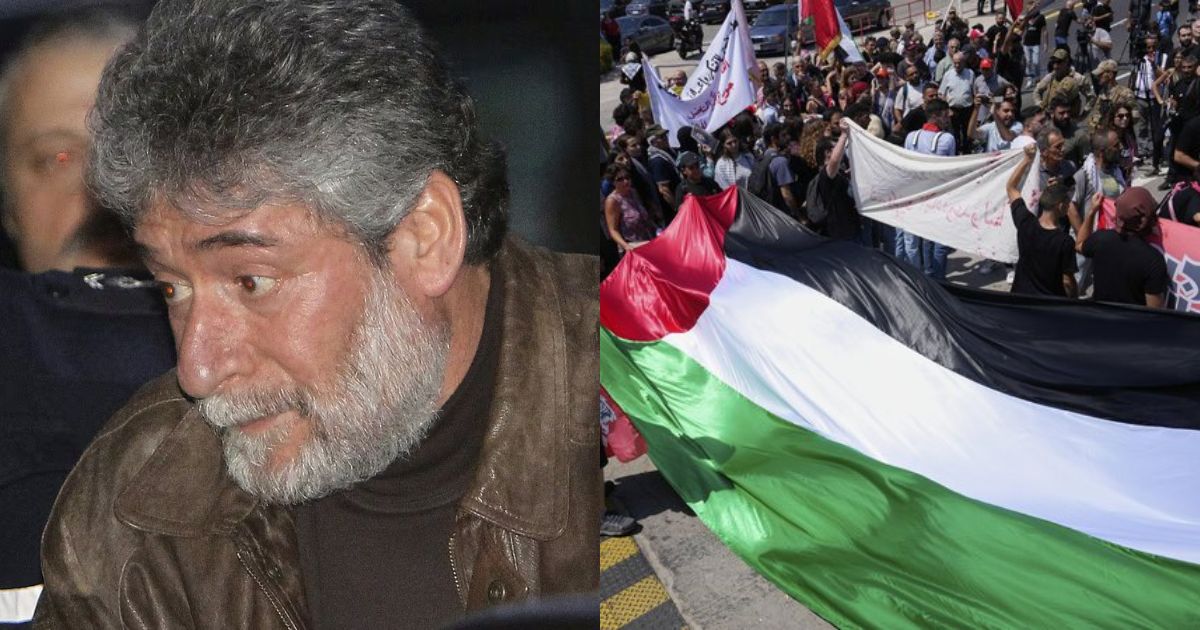
Georges Abdallah landed at Beirut International Airport on July 25, 2025, to applauding spectators. After 41 years in a French jail, the longtime inmate—who supporters often call a symbol of resistance—was freed on Lebanese soil. He was released after the Paris Court of Appeal agreed to grant him parole on the stipulation that he be deported.
At the airport, crowds applauded Abdallah’s uncompromising ideological position, waved Palestinian and Lebanese flags, and yelled anti-Western slogans.
Why Was He Jailed?
Abdallah was arrested in Lyon in 1984 and sentenced to life imprisonment in 1987. French courts found him guilty of complicity in the murders of Lt. Col. Charles Ray, a U.S. military attaché in Paris, and Yacov Barsimantov, an Israeli diplomat at the Paris embassy. Both were gunned down in separate incidents in 1982. The Lebanese Armed Revolutionary Factions (LARF), a group Abdallah co-founded, claimed responsibility. French authorities described the attacks as politically motivated acts of terrorism.
Though eligible for parole as early as 1999, successive French governments—under pressure from the United States and Israel—refused to release him.
Release Comes with a Condition
The latest French court decision came with a strict caveat: Abdallah must permanently leave French territory. Interior Minister Gérald Darmanin signed the deportation order shortly after the ruling. According to French legal experts, continued detention was no longer justifiable under French law. The move, however, drew sharp criticism from the U.S. and Israeli governments.
Hero’s Welcome in Lebanon
Abdallah’s release has reignited political divides. In Lebanon, leftist groups and Hezbollah-aligned organizations hailed his return as a victory for resistance movements. No official statement was issued by the Lebanese government, though the silence is seen as strategic given the regional sensitivities.
His supporters held banners calling him “a symbol of steadfastness” and “the unbroken revolutionary.”
Global Reactions
The United States called Abdallah’s release “deeply disappointing,” and Israeli officials condemned it as a “travesty of justice.” Human rights groups, meanwhile, remained divided—some condemning the glorification of a convicted killer, while others called him a political prisoner held far beyond the terms of justice.
What’s Next for Georges Abdallah?
Abdallah is already back in Lebanon and is not anticipated to be charged with anything. Although he has not yet made any public statements, his political network suggests that he will remain active in leftist and anti-imperialist causes.
His return also reopens global debates over the treatment of long-term political prisoners and the fine line between militancy and ideology in conflict zones.