
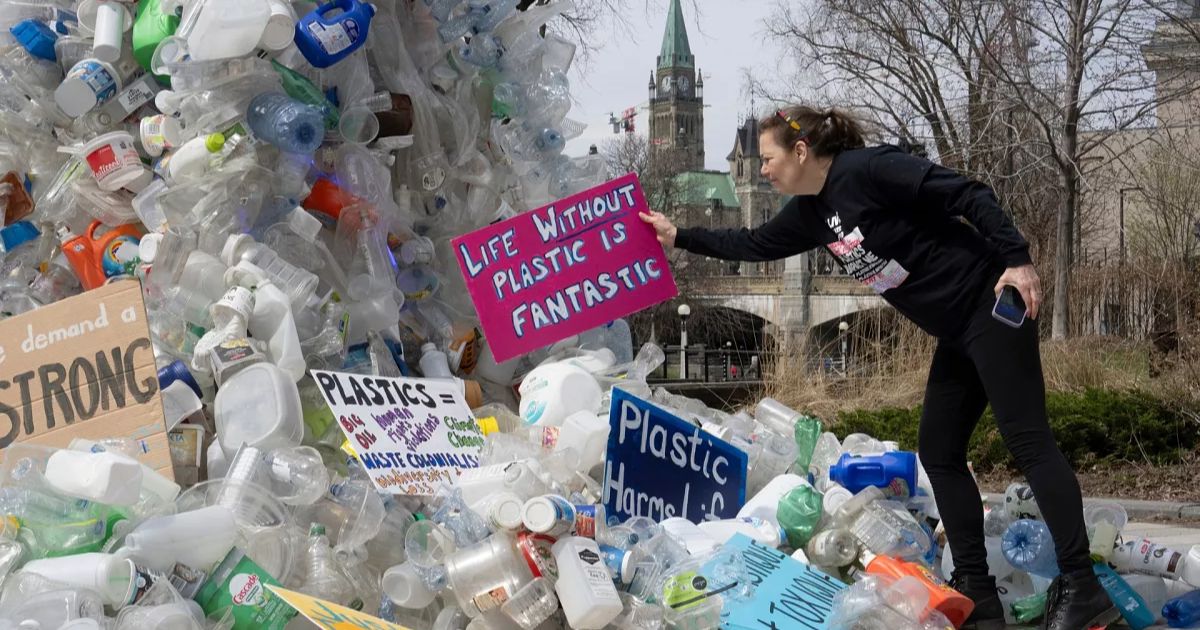
Draft Treaty Fails to Cut Through Divides
Efforts to seal a historic treaty to put an end to plastic pollution hit a shambolic note on Wednesday after nations from both sides of the negotiating divide dismissed the newest draft in Geneva.
With only a day left in negotiations of 184 countries at the United Nations, the document put forward by negotations chairman Luis Vayas Valdivieso was assailed from every quarter. A broad coalition of environmentally active countries criticized the draft as not containing enforceable steps, threatening to dilute the accord into a simple waste treatment agreement.
Meanwhile, oil-producing nations, whose economies are closely linked to the plastics industry, protested the draft went too far, overstepping their “red lines” and taking the treaty further than they wanted.
Ambitious Nations Say Treaty ‘Surrenders’ to Industry
The session, which opened on August 5, was the most recent of a sequence of two and a half years of talks to forge a legally binding international agreement to ban plastic pollution. Earlier rounds such as a “final” one in South Korea last year also fell short of achieving a consensus.
Panama strongly condemned the draft, alleging that it leaves behind the vision to eliminate plastic pollution once and for all. “This document is about closing a wound, but it makes that wound deadly,” their representative stated. Kenya was frustrated with a lack of binding international pledges, alerting the treaty “does not possess any demonstrable worth.”
The small island states were also alarmed. Tuvalu, representing 14 Pacific states, averred that the draft left communities without protection from the very real threat of plastic pollution. It was called “not acceptable” by the European Union and lacking “clear, strong and effective measures” by them, with Norway commenting curtly: “It’s not keeping our promise to eliminate plastic pollution.”
Environmental organizations reiterated these fears. Greenpeace termed the draft “a gift to the petrochemical industry and a betrayal of humanity,” while the World Wide Fund for Nature labeled it a “devastating blow” to already affected people by plastic.
ALSO READ: ICJ Confirms Nations Can Sue Each Other Over Climate Inaction Under International Law
Oil Producers Demand Narrower Scope
In turn, the Like-Minded Group an alliance of oil producers Saudi Arabia, Russia, Iran, and Kuwait objected for a completely different reason. They prefer the concentration of the treaty on dealing with waste and not the whole life of plastics because wider aspirations would render the agreement impossible for some countries.
Kuwait, for the group, told the text “had transgressed our red lines” and reiterated, “Without consensus, there is no treaty worth signing.” Saudi Arabia repeated the importance of determining the scope “once and for all” to prevent the imposition of steps they perceive as impossible.
A Crisis Without Resolution
The standstill occurs at a growing worldwide plastic emergency. More than 400 million tonnes of plastic are made every year, with half being made for disposable items. However, only 15 percent of plastic waste is recovered for recycling, and only 9 percent is recycled. Almost half goes to landfills, 17 percent is burned, and 22 percent is poorly managed, spilling into seas, rivers, and landscapes.
After years of negotiation, Wednesday’s collapse leaves the future of the treaty in doubt. With fewer than 30 hours remaining to save a deal, the negotiations are frozen between countries calling for sweeping, enforceable change and others calling for a narrower, business-friendly accord. At least for now, the world’s plastic issue and the diplomatic divide about how to fix it shows no indication of letting up.