
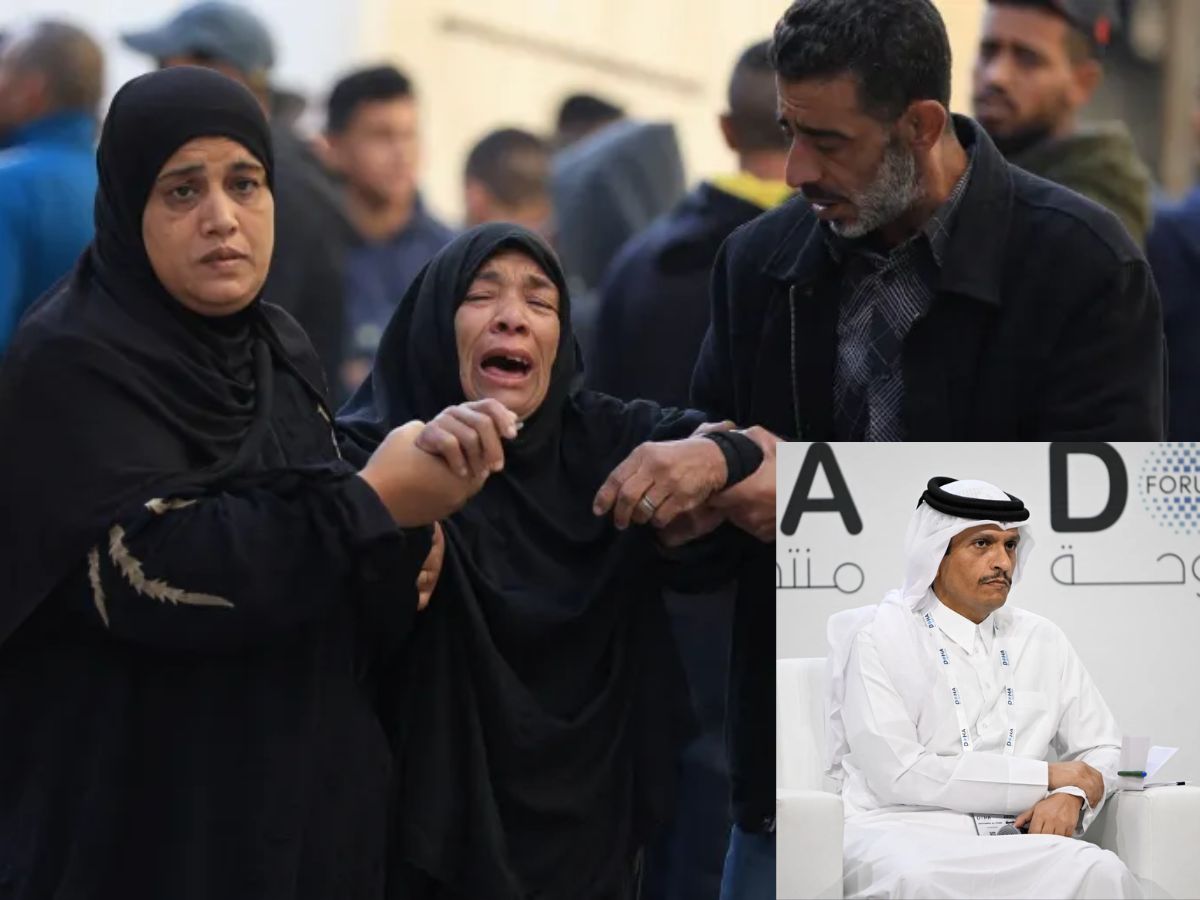
Negotiations to cement a lasting ceasefire in Gaza have reached a precarious and “critical” phase, Qatari Prime Minister Sheikh Mohammed bin Abdulrahman al-Thani said on Saturday. Speaking at the Doha Forum, the key mediator emphasized that the current lull in fighting is only a “pause” and not a complete ceasefire, as violence continues to claim lives on the ground despite a U.S.-backed truce that began on October 10.
What Did the Qatari Prime Minister Say?
As a principal mediator between Israel and Hamas, the Qatari PM provided a sober assessment of the stalled peace efforts. He outlined strict conditions for what would constitute a real ceasefire.
His key statements included:
- On the Current Status: “We are at a critical moment. It’s not yet there. So what we have just done is a pause. We cannot consider it yet a ceasefire.”
- On ceasefire terms: “A ceasefire cannot be finalized without a complete withdrawal of Israeli forces and restored stability in Gaza that allows people to move freely, which is not happening at present.”
- On Mediation Efforts: Mediators are actively working to “force the next phase of the ceasefire forward,” acknowledging the fragility of the current situation.
What is the Situation on the Ground in Gaza?
Despite the overarching truce, violence has not ceased. Palestinian health authorities reported that at least seven people were killed in northern Gaza on Saturday, including a 70-year-old woman allegedly killed in a drone strike.
The Israeli military confirmed two separate incidents where its forces, positioned behind a withdrawal line agreed in the ceasefire, fired on Palestinian militants who crossed that line, killing three. The military stated it was unaware of any drone strike. Both sides continue to trade blame for violations, highlighting the tense and unstable nature of the “pause.”
Also Read: Pakistani Woman Claims Husband Left Her in India for Second Marriage, Appeals to PM Modi for Justice
What Are the Sticking Points in Negotiations?
The talks are centered on rolling out the next stages of a U.S.-backed plan to end the two-year war. A key challenge is negotiating the final swap to finish the deal’s first phase: returning the last deceased hostage from Gaza in exchange for Palestinian prisoners.
Beyond the hostage issue, the broader challenge lies in agreeing on the structure of the proposed post-war governance. The U.S. plan calls for an interim Palestinian government overseen by an international board and backed by an international security force. Determining the composition and mandate of this force has proven particularly difficult for the negotiating parties.
Your Questions Answered: Gaza Truce Talks FAQs
Q: What is the difference between a “pause” and a “ceasefire” according to Qatar?
A: The main short-term issue remains the return of the last deceased Israeli hostage held in Gaza. More complex discussions center on establishing an international security force and shaping interim governance arrangements.
Q: What is the main issue holding up the deal right now?
A: A pressing immediate concern is the return of the final deceased Israeli hostage in Gaza. Wider and more complicated talks focus on the terms for an international security force and plans for temporary governance in Gaza.
Q: Who are the mediators in these talks?
A: Qatar has been a primary mediator, along with Egypt and the United States. Talks have been held in Cairo and Doha.
Q: Has the truce completely stopped the fighting?
A: No. Despite a drop in major military operations, isolated clashes and fatalities continue to occur on both sides, indicating the truce is weak and not fully holding.
Q: What is the “international security force” being discussed?
A: It is a proposed multinational force under the U.S. plan that would be sent to Gaza to help keep security and stability during the interim period after a ceasefire, until a long-term political solution is in place.
Also Read: Stare Decisis Under Strain? Trump Era Cases Test Supreme Court’s Loyalty to Precedent