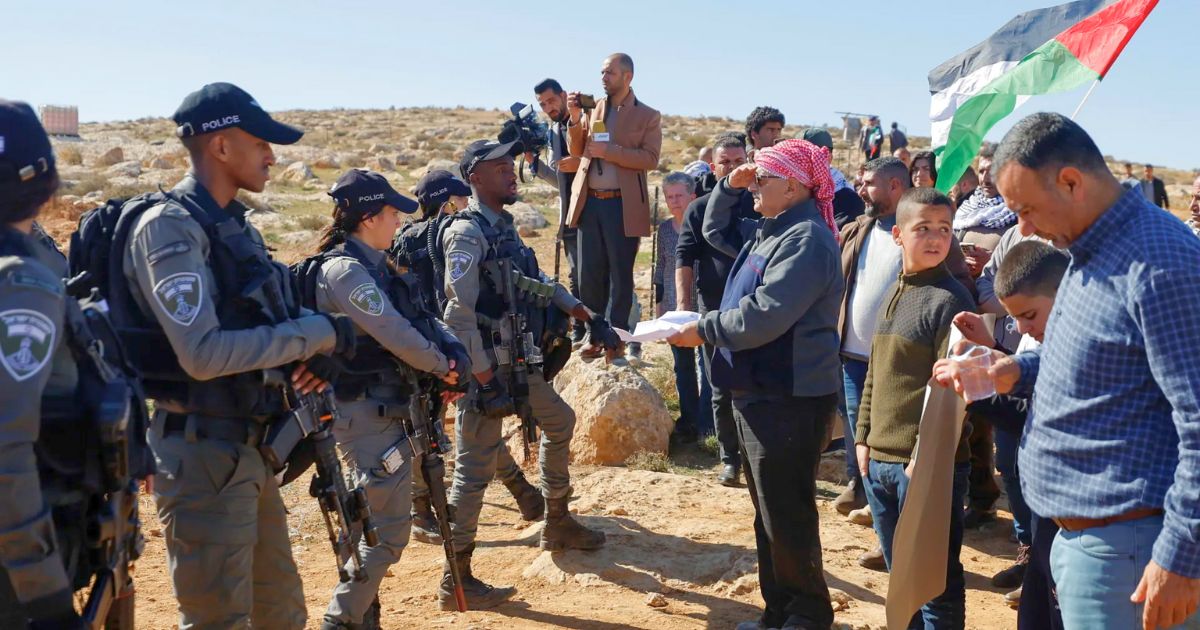
Israeli settler bullets killed Palestinian activist and teacher Odeh Muhammad Hadalin in Umm al-Khair, a West Bank village. Hadalin was among the people who produced the Oscar-winning documentary No Other Land. The documentary was based on life in Masafer Yatta, where Israel has been uprooting Palestinians for years.
Odeh just died. Murdered. https://t.co/rRWqSa48iN
— Yuval Abraham יובל אברהם (@yuval_abraham) July 28, 2025
His killing comes against the backdrop of increasing settler attacks and a recent report by B’Tselem that accused Israel of systematic abuse against Palestinians. A settler named by witnesses Yinon Levi was purportedly responsible for the fatal shot. One settler was arrested by Israeli police while several Palestinians and foreign nationals were detained. The murder is part of the increasing number of Palestinians killed since Israel launched its war in Gaza in October 2023.
Voice Silenced in Umm al-Khair
Odeh Hadalin stood outside his community centre on Monday when a settler opened fire, and his chest was hit. Palestinian officials said he was pronounced dead at the scene. A second Palestinian was also attacked and beaten by a settler. He was taken to a hospital, according to the Wafa news agency.
The Palestinian Education Ministry and the directors of No Other Land verified Hadalin’s death. Co-director Basel Adra referred to him as a close friend and expressed his sorrow on social media. “This is how Israel erases us — one life at a time,” he wrote. Israeli journalist and co-director of the movie, Yuval Abraham, uploaded an online video of the assault and asserted the attacker was the responsible shooter, Yinon Levi—an Israeli settler designated by the EU and US.
Police Reaction & Escalating Tensions
Israeli police reported that they arrested one settler at the scene close to the Carmel illegal settlement. They also arrested four Palestinians and two foreign tourists. Authorities confirmed the death of the Palestinian and said that they are checking his “involvement” in the event.
Simultaneously, violence in the West Bank refuses to abate. Only hours earlier than Hadalin’s assassination, 27-year-old Mohammad Samer Suleiman al-Jamal was killed when Israeli soldiers shot him at a Hebron checkpoint. Witnesses alleged soldiers blocked ambulance teams from reaching him while he haemorrhaged.
Oscar Awards Neglect to Save Palestinian Voices
No Other Land, which won the Best Documentary Oscar earlier this year, was no haven for those who assisted in bringing it about. Hadalin’s killing is a reminder of the disconnect between international recognition and local susceptibility. He drew global attention to the Palestinian cause in Masafer Yatta, but stayed within striking distance of bullets and batons.
His murder also highlights the way that culture and activism are increasingly in the sights. Artists, teachers, and civilians are subject to the same brutal destiny as militants, blurring the distinction between activism and survival.
B’Tselem Warns of Genocidal Conditions
On the day of the attack, Israeli human rights organization B’Tselem published a scathing report. It blamed Israel for perpetrating genocide against Gaza and the West Bank. The organization documented a dramatic increase in armed settler attacks, usually with military support. These attacks range from arson, beatings, home invasions, to even shootings.
These actions are fully backed by Israeli law enforcers and the government, says B’Tselem. There are approximately 3 million Palestinians under occupation in the West Bank and 500,000 Israeli settlers there, who, under international law, are not supposed to be present.
Since Israel launched its war on Gaza in October of 2023, Israeli soldiers and settlers have killed more than 1,000 Palestinians in the West Bank. More than 30 Israelis, both military and civilians, have also been killed. Hadalin’s death adds yet another name to that count—one that’s notable not just for its viciousness but for its symbolism.
Global Acclaim, Local Reality
The murder of Odeh Hadalin highlights the vulnerability of Palestinian life as an occupied people. His work went global, but his murder was local, violent, and avoidable.
As cameras dwindle and headlines fade, his village is still attacked—and the film he assisted in creating becomes both testimony and caution.