Push for Rapid Offensive Despite Warnings
Israeli Prime Minister Benjamin Netanyahu ordered the military to move faster in its push to capture Gaza City, a step that may displace thousands more Palestinians and increase global criticism. The office of Netanyahu announced Wednesday that the timetable for defeating Hamas’ “last bastions” would be abbreviated, although no specifics were provided.
Army spokesman Brigadier General Effie Defrin confirmed Israeli troops had already moved into positions on the outskirts of Gaza City. “We have started the preliminary operations and the initial phases of the attack,” he said, referring to Hamas as a “battered and bruised” force that would be subjected to deeper penetration in the next few days.
The directive was issued just moments after Israeli soldiers clashed with Hamas militants around Khan Younis, where radicals popped out of tunnel shafts and attacked using anti-tank missiles and light weapons. One Israeli soldier was seriously wounded, while Hamas Al-Qassam Brigades took credit, stating one of their militants conducted a suicide bombing against the soldiers.
Reservists Called Up, Ceasefire Debate Lingers
Israeli Defence Minister Israel Katz has ordered the mobilization of some 60,000 reservists to aid the attack on Gaza’s largest city. It is reported that civilians will be moved to refugee camps prior to a full-scale invasion, although few details were available.
A military source had previously said that reservists won’t be sent until September, allowing room for mediators to go ahead and negotiate a ceasefire. Arab nations have presented a 60-day truce proposal involving hostage release in return for Palestinian prisoners. Hamas has agreed to the offer, but Israel remains silent, affirming that all 50 remaining hostages should be released simultaneously.
Netanyahu is also confronted by rival pressures domestically: international appeals to hold back, domestic street rallies in Tel Aviv calling for a hostage exchange, and extremist coalition allies asking for more war and even the annexation of Gaza. Finance Minister Bezalel Smotrich on Wednesday authorized a contentious expansion of a West Bank settlement, proclaiming that every additional unit was “another nail in the coffin” of Palestinian statehood.
Growing Humanitarian Cost
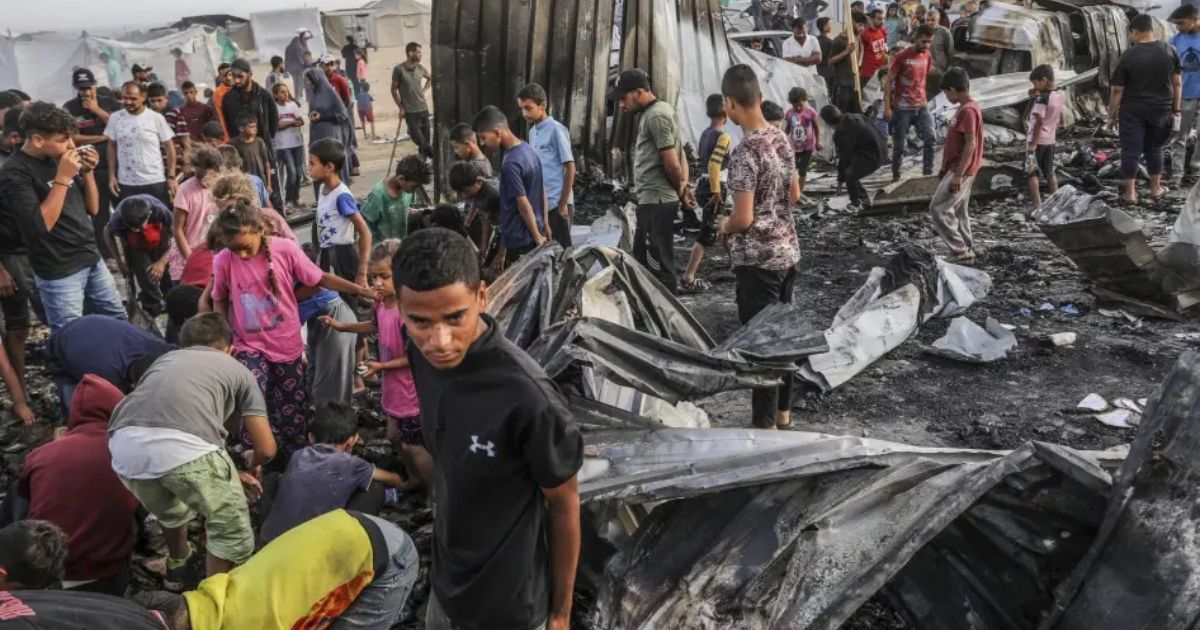
The intensified interest in Gaza City highlights the staggering human toll of the conflict. Hundreds of thousands of Palestinians lived in the city before the war. Numerous buildings, schools, mosques, and residential neighborhoods are now rubble. Israel blames Hamas for operating from behind civilian infrastructure, a charge the group denies.
According to Gaza health authorities, over 62,000 Palestinians have been killed since the war broke out in October 2023, most of them women and children. Israel, which controls about 75 percent of Gaza, still maintains that the war will be over only when Hamas disarms.
Gaza City church authorities said that neighborhoods surrounding the Catholic parish had started receiving evacuation notices this week, raising the specter of another mass exodus. Foreign leaders and humanitarian agencies warn that a storming of the city would unleash disastrous civilian casualties.
ALSO READ: Israel Begins Preliminary Actions for Ground Offensive in Gaza City Amid Rising Tensions
War Roots and Global Response
The conflict started on October 7, 2023, when Hamas-led militants entered southern Israel, where they killed around 1,200 individuals and kidnapped 251 others, some of whom were children. Israel’s follow-up air and ground offensive has ravaged most of the Gaza Strip, which is inhabited by 2.3 million Palestinians.
While Israel’s government is still at odds on the balance between military objectives and hostage diplomacy, public views are changing. According to a recent Reuters/Ipsos poll, 58 percent of Americans favour recognition of Palestine as a sovereign state by all members of the United Nations.
For Netanyahu, the risk is evident: pursue a military victory in Gaza City or risk losing the support of his allies and his own citizens who perceive a negotiated ceasefire as the sole means to bringing the war to an end.