
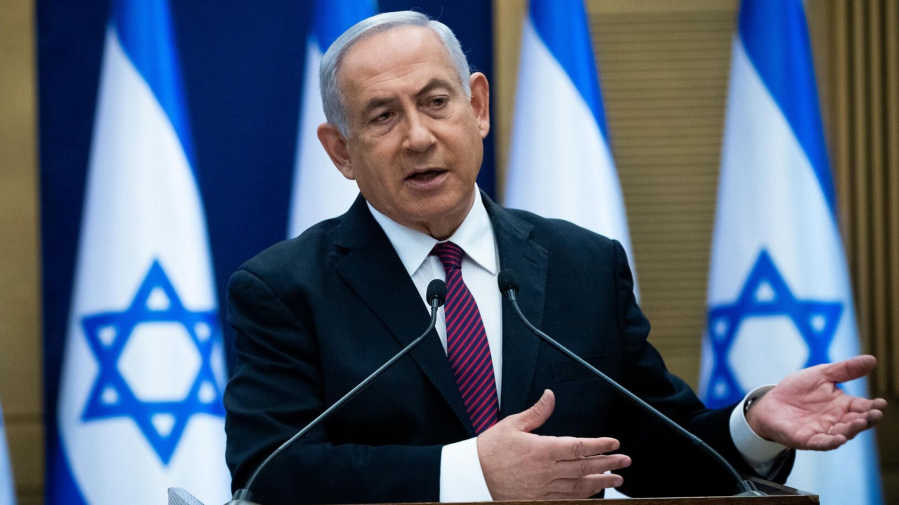
As the war in Gaza intensifies, Israeli Prime Minister Benjamin Netanyahu sparked major debate on Thursday by declaring that Israel aims to take control of “all of Gaza” but does not intend to permanently keep the territory. He said the plan was to hand over the coastal enclave to Arab forces who, in his view, could “govern properly.”
In an interview, Netanyahu was asked if Israel would seize the entire 26-mile strip. “We intend to,” he replied. He clarified, “We don’t want to keep it. We want to have a security perimeter. We don’t want to govern it. We don’t want to be there as a governing body.”
His public remarks came ahead of a crucial meeting with Israel’s security cabinet to discuss expanding military control in Gaza.
Military Chief and Hostage Families Oppose Plan
Israel’s military chief of staff, Lt. Gen. Eyal Zamir, rejected Netanyahu’s idea, warning it could endanger hostages still held by Hamas.
Netanyahu argued that moving troops into the remaining 25% of Gaza not yet under Israeli control was the only way to secure the nation and eliminate Hamas. But families of the hostages strongly oppose the plan, fearing the fighting could put their loved ones in harm’s way.
A military source told The Telegraph that if the cabinet approves the strategy, the war in Gaza could drag on for at least another five months, dimming hopes for a ceasefire.
Opposition From Ultra-Nationalists and Political Rivals
Netanyahu’s proposal also faces pushback from Israel’s ultra-nationalists. They want Gazan civilians removed entirely and Jewish settlements established instead.
At present, Israel’s Operation Gideon’s Chariot has secured 75% of Gaza, but it has not succeeded in destroying Hamas.
Hamas and Arab Leaders Reject the Proposal
Hamas reacted sharply to Netanyahu’s comments. A group official told Al Jazeera Mubasher that any force installed to govern Gaza under Netanyahu’s plan would be treated as an “occupying” force connected to Israel.
A Jordanian official, speaking anonymously to Al Jazeera, said Arabs would only support decisions Palestinians themselves agree to. “Security in Gaza must be done through legitimate Palestinian institutions,” he said, adding, “Arabs will not agree to Netanyahu’s policies nor clean his mess.”
Protests and Public Opinion in Israel
Netanyahu’s idea has sparked protests inside Israel. The Kibbutz Nir Oz, heavily damaged in the Hamas attack of October 2023, cancelled a cornerstone-laying ceremony in protest against the cabinet’s meeting on the Gaza plan.
Kibbutz chairman urged the government to strike a hostage release deal “even if the price is high” and said residents understood the threat of Hamas better than cabinet ministers.
Meanwhile, a new poll shows that most Israelis would rather Netanyahu agree to release the hostages — even if it means ending the war without fully eliminating Hamas.