
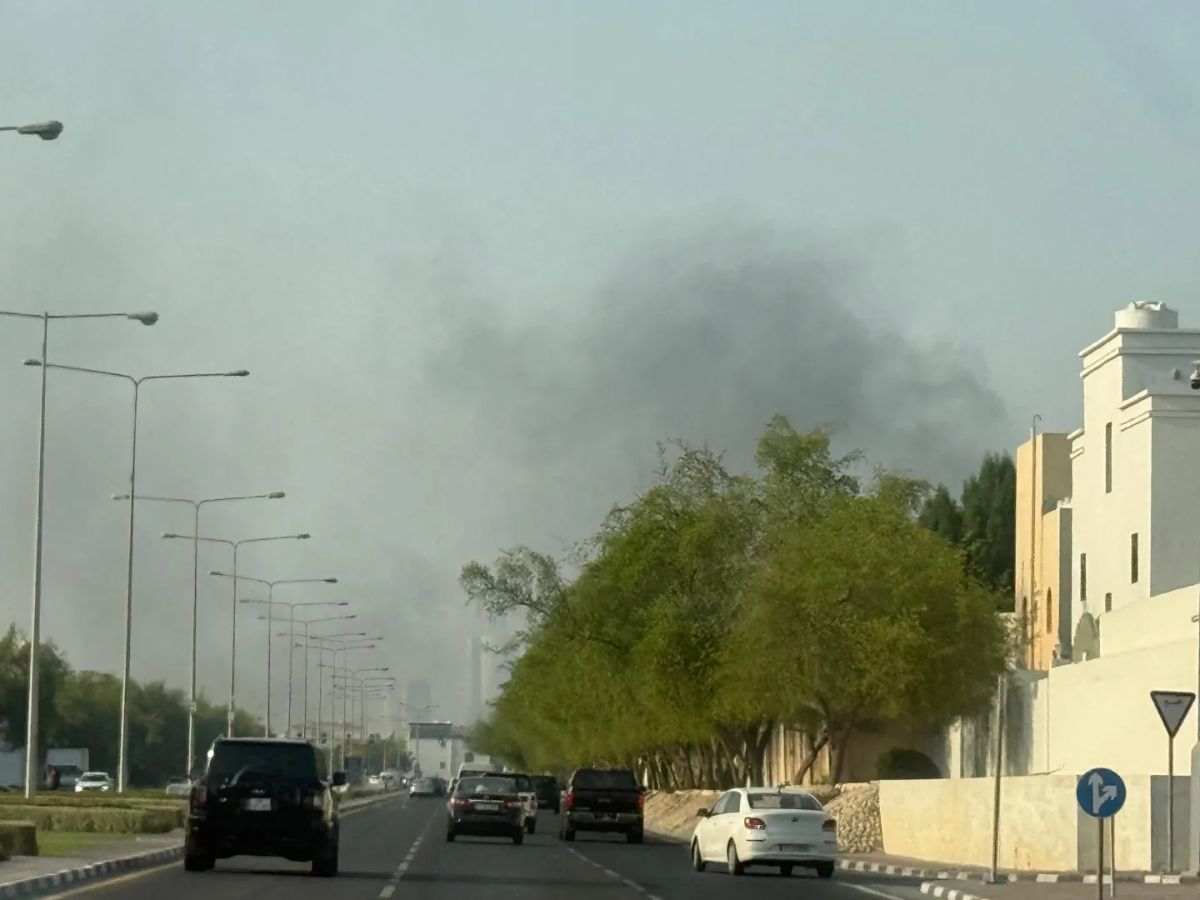
Several powerful explosions shook Qatar’s capital, Doha, on Tuesday, marking a dramatic and dangerous escalation in the Middle East conflict. The target: the top-tier exiled leadership of the Palestinian group Hamas, who were based in the city and reportedly present for sensitive ceasefire negotiations. The attack, for which Israel has taken full responsibility, threatens to shatter diplomatic channels and ignite a broader regional fire.
What Exactly Happened in Doha?
According to reports from Reuters and Al Arabiya, the strikes targeted a location housing senior Hamas officials. The explosions occurred amidst a critical diplomatic moment, as a Hamas negotiating delegation was expressly in Doha to discuss a new ceasefire proposal for Gaza presented by former U.S. President Donald Trump’s envoy. Initial details are still emerging, but the precision of the attack suggests careful planning.
Who Was the Target of the Israeli Strike?
Although official death tolls have not yet been verified, Israeli media has named two valuable targets that are thought to have been struck:
- Khalil al-Hayya: A key figure in Hamas’s political wing and a deputy to Yahya Sinwar.
- Zaher Jabarin: Hamas’s official responsible for prisoner exchanges and a senior leader.
These individuals are part of the five seniormost leaders currently serving as the collective head of Hamas from abroad, following the killing of Gaza leader Yahya Sinwar last year. Their base in Qatar has been a known, if unspoken, reality for years, with the Gulf state acting as a primary mediator.
Who Authorized the Attack on Hamas in Qatar?
In a stark statement on social media platform X, Israeli Prime Minister Benjamin Netanyahu left no room for doubt, posting: “Israel initiated it, Israel carried it out and Israel takes full responsibility.”
However, a deeper layer was revealed by an Israeli news channel, which reported quoting unnamed officials that it was former U.S. President Donald Trump who “gave the green light” to Netanyahu’s regime for the operation. The claim suggests high-level cooperation and gives the event a complex geopolitical dimension. A White House official separately confirmed to Reuters that Israel had informed the United States about the planned strikes prior to the attack.
Also Read: Who is Sudan Gurung? NGO Leader Leading Nepal’s Gen Z Protests in Nepal
What Was Hamas Doing in Qatar?
The timing of the strike is particularly explosive. The Hamas delegation was in Doha to discuss a ceasefire proposal presented by Donald Trump’s Middle East envoy, Steve Witkoff. Earlier this week, Trump stated he was giving his “last warning” to Hamas.
The proposal, as reported by the AP, called for:
- A negotiated end to the war.
- The withdrawal of Israeli forces from Gaza.
- The release of hostages held by Hamas.
- The establishment of a permanent ceasefire.
A senior Hamas official had initially criticized the proposal as a “humiliating surrender document,” but the group had agreed to discuss it. This attack likely vaporizes any near-term chance of those talks progressing.
How Has Qatar Responded to the Violation of Its Sovereignty?
The Qatari government reacted with fury and condemnation. Majed al-Ansari, the spokesperson for its foreign ministry, described the bombing as a “flagrant violation of all international laws and conventions” and a “cowardly” conduct. The strike on its soil represents a severe breach of diplomatic protocol and Qatar’s sovereignty, potentially forcing a reevaluation of its role as a neutral mediator. This incident comes after a recent battle with Israel in which Iran attacked Qatar’s Al-Udeid Air Base, which is home to the U.S. military.
What Does Israel Say Justifying the Strike?
The Israeli military, while not providing immediate specifics, defended its actions in a official statement: “For years, these members of the Hamas leadership have led the terrorist organization’s operations, are directly responsible for the brutal October 7th massacre, and have been orchestrating and managing the war against the State of Israel.”
Additionally, they asserted that they used “precise munitions and extra intelligence” prior to carrying out the strike in order to minimize harm to civilians.
What Does This Mean for the Future?
The immediate consequences are dire. The already fragile ceasefire negotiations are now in complete disarray.
The attack also runs the risk of bringing Qatar and other regional powers closer to the war, taking it outside of Israel’s and Gaza’s boundaries and into the diplomatic center of the Gulf.