
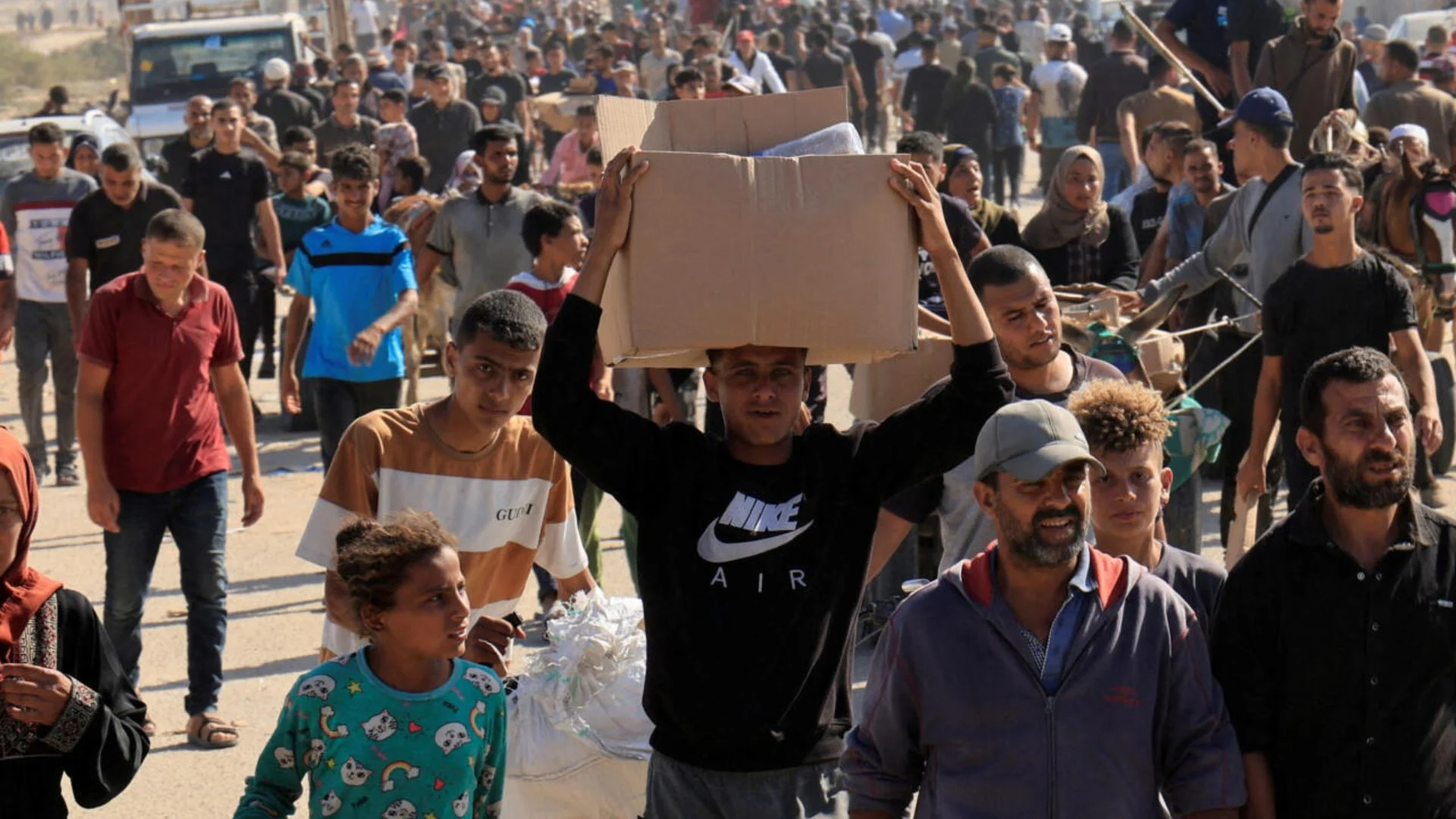
Israeli authorities have made it clear that they prefer the United Nations to continue as the main channel for the provision of humanitarian assistance to Gaza, a senior World Food Programme official has said. WFP deputy executive director Carl Skau gave the news on Friday following his recent visit to Gaza and Israel last week.
“They wanted the UN to remain the primary track for delivery, particularly if there is a ceasefire, and they asked us to stand by to ramp up,” said Skau, speaking to reporters. His comments are made amid the continued efforts of the US, Egypt, and Qatar to arrange a ceasefire between Israel and Hamas.
Skau explained that throughout the negotiation with Israeli officials at different levels, the US-financed, contentious Gaza Humanitarian Foundation (GHF) was not raised. “There were speculations that the UN was being edged out, but it was thoroughly clear within my interaction that they desire the UN to remain the prime track in delivery,” he underscored.
The US and Israel have openly endorsed the GHF, whose operations started late last month, sending private security and logistics contractors to deliver aid. The United Nations, however, has pulled away, citing concerns about the group’s neutrality as well as calling out its model as militarizing aid and pushing for forced displacement.
Since Israel lifted its 11-week blockade on May 19, restricted UN aid convoys resumed. The GHF began its mission one week later and says it has distributed more than 70 million meals in Gaza without problems. Yet the UN human rights office documented at least 615 casualties close to GHF aid locations and 183 likely along routes of aid convoys, although GHF says there were no fatalities at its sites.
The United States has accused Hamas of siphoning aid from UN-operated programs, charges the militant group has denied. Even with logistical challenges and access limitations, the UN has defended its system, saying that during the two-month-long truce at the start of this year, as many as 700 truckloads of aid entered Gaza daily without extensive looting illustrating the effectiveness of the system when reliable aid is provided.
The conflict has tried the humanitarian mechanisms in Gaza, but Israel’s new stance reiterates the UN’s pivotal role in relief, particularly if a truce is achieved.