
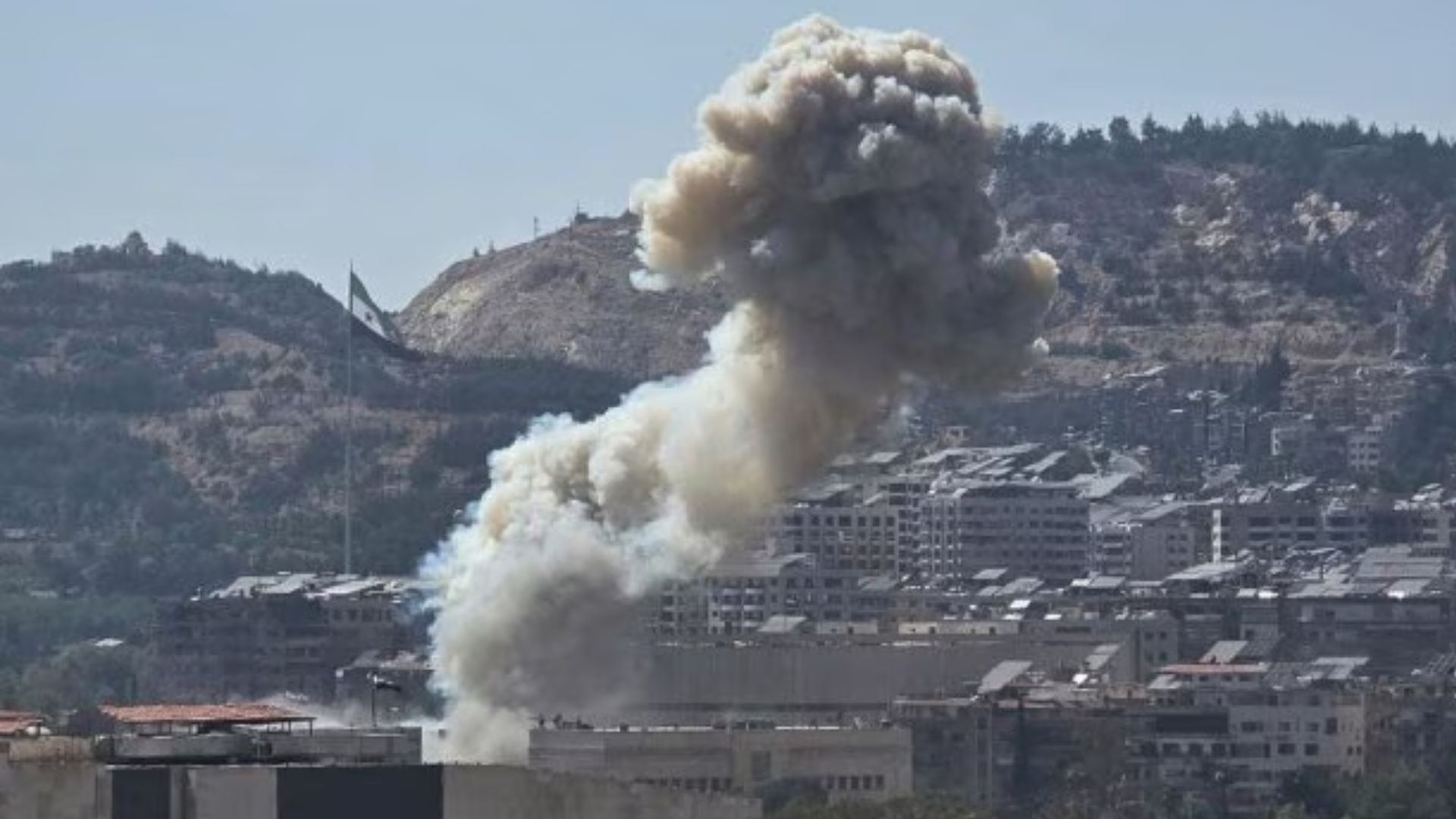
Over 300 killed and 80,000 displaced as Druze-Bedouin fighting rocks southern Syria. Israel and Syria have agreed to a ceasefire after a deadly week of violence in southern Syria’s Sweida province. The clashes, which involved government troops, Bedouin tribal fighters, and the Druze minority, left more than 300 people dead and forced tens of thousands to flee their homes.
The announcement came early Saturday from US Envoy to Turkey and Syria, Tom Barrack, as fighting continued to rage between armed Bedouin groups and Druze militias. “We call upon Druze, Bedouins, and Sunnis to put down their weapons and together with other minorities build a new and united Syrian identity,” Barrack wrote on X. He confirmed the ceasefire had the support of Turkey, Jordan, and neighboring countries.
Israeli Airstrikes Prompt Syrian Pullback
Earlier in the week, Israel launched several airstrikes, targeting Syrian military bases in Damascus and the south. One of the attacks hit the Syrian Defence Ministry headquarters, drawing global attention. Israel stated it was acting to protect the Druze minority, which shares strong cultural and familial ties with Israeli Druze. Many Druze also serve in the Israeli military.
In response to Israel’s strikes, Syrian government forces withdrew from Sweida on Wednesday, after reaching a separate truce with the Druze fighters. The temporary halt in fighting created a window for broader ceasefire negotiations.
President’s Pledge to End Clashes
Syria’s interim president, Ahmad al-Sharaa, had earlier vowed to restore order in Sweida. He announced that the government would send a “specialised force to break up clashes and resolve the conflict on the ground.”
Despite this promise, the situation escalated.
Tribal Conflict Erupts After Truce
Just days after the truce with Druze groups, fresh clashes broke out. Armed Bedouin fighters, allegedly supported by the Syrian government, began attacking Druze communities. According to AFP, around 200 Bedouin fighters launched attacks using machine guns and artillery shells. Several smaller tribal groups from across Syria reportedly joined forces with the Bedouins to target Druze men.
The fighting originally began on Sunday when Sunni Bedouin tribes and Druze militias engaged in intense skirmishes. Syrian government forces claimed they stepped in to restore peace, but they appeared to support the Bedouins against the Druze, intensifying the violence. Later that week, Israel intervened militarily, defending the Druze through targeted airstrikes.
UN: Humanitarian Crisis in Sweida
The conflict has triggered a major humanitarian crisis. On Friday, the United Nations’ migration agency reported that nearly 80,000 people have been displaced since Sunday. Families fled their homes as violence spread, and aid groups warned of worsening conditions.
UN Coordinator Adam Abdelmoula highlighted the severity of the crisis. “There are severe disruptions to supply routes, with insecurity and road closures blocking aid deliveries,” he said in a statement. He also mentioned that essential services like electricity, water, and healthcare have collapsed in Sweida and Daraa.
A Fragile Peace Ahead
Although the ceasefire brings a temporary halt to the violence, tensions remain high. The deal was achieved only after significant international pressure and military action. The situation on the ground is still fragile, and any breakdown in the truce could quickly lead to further bloodshed.