
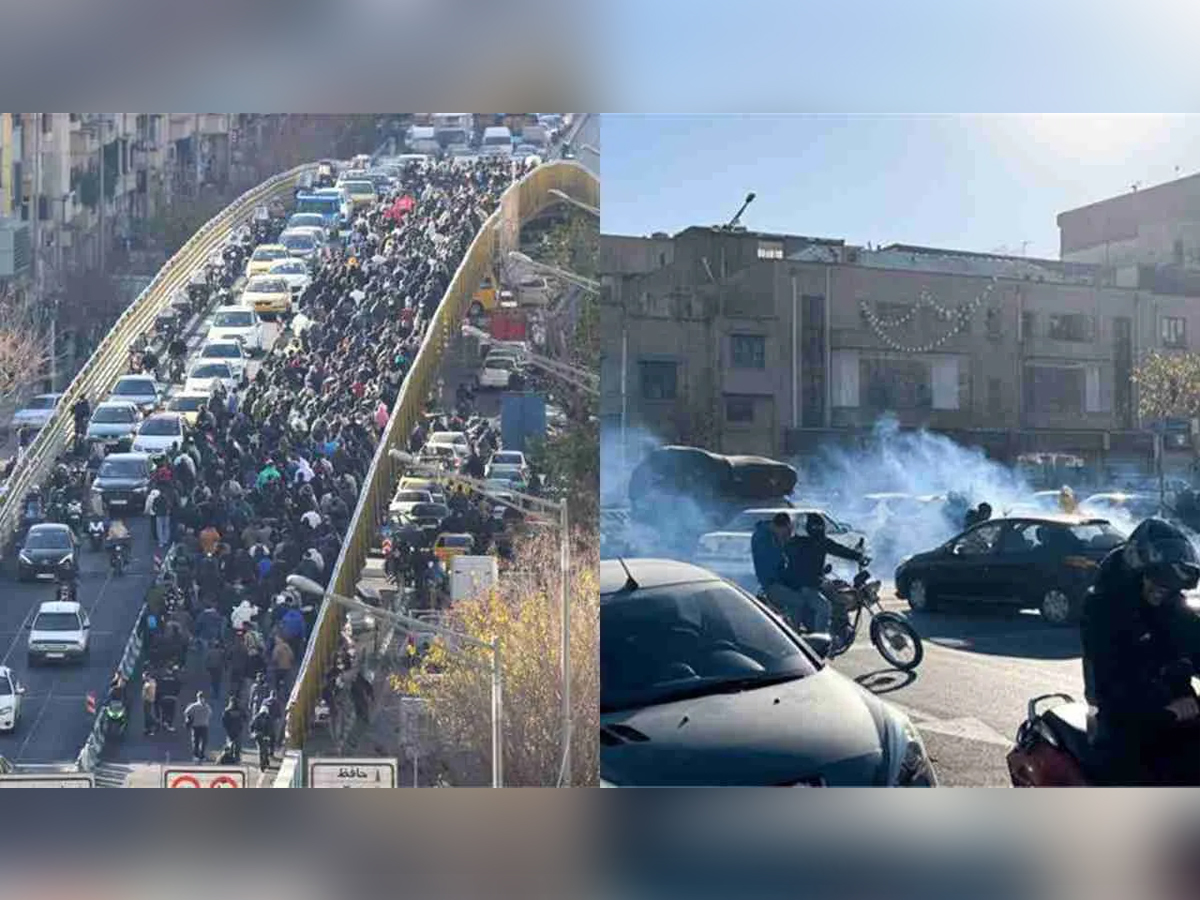
Iran is witnessing a sharp escalation in protests as demonstrations driven by economic distress turn violent with the arrival of the New Year. What began as scattered protests has now spread across cities and rural regions, leaving several protesters and at least one member of the security forces dead.
The unrest marks the most intense wave of protests in the country in nearly three years. Rising prices, a collapsing currency, and shrinking incomes have pushed people from all walks of life onto the streets.
Iran Protest: Protests Spread Beyond Tehran
The demonstrations first gained momentum in Tehran, where university students and shopkeepers raised their voices against the worsening economy. Soon, the unrest moved beyond the capital and reached smaller towns and rural areas, showing the depth of public frustration.
Cities such as Lordegan, Kuhdasht, Isfahan, and Marvdasht saw clashes between protesters and security forces. These confrontations marked a turning point, as the protests became more aggressive and confrontational.
Deaths Reported Amid Iran Violent Clashes
Authorities and rights groups have reported multiple fatalities since the protests turned violent. At least three people were killed in the early days of the clashes, marking the first confirmed deaths since the demonstrations began.
The Islamic Revolutionary Guard Corps said a member of its Basij volunteer paramilitary unit was killed in Kuhdasht, while several others were injured. Officials accused protesters of “taking advantage of the atmosphere of popular protests.”
Rights groups, however, claimed that security forces used excessive force in several locations, resulting in deaths and serious injuries among demonstrators.
Calls for Political Change Grow Louder
As the protests intensified, slogans moved beyond economic demands. Protesters chanted “Death to the dictator” and “Long live the Shah” in parts of Tehran, signalling growing anger toward Iran’s leadership.
Reza Pahlavi, the son of Iran’s former monarch who lives in exile in the United States, voiced support for the protesters and wrote, “I am with you. Victory is ours because our cause is just and because we are united.”
He also warned, “As long as this regime remains in power, the country’s economic situation will continue to deteriorate.”
Inflation and Currency Collapse Fuel Anger
Iran’s economy has been under intense pressure due to sanctions, weak growth, and rising prices. Inflation hit over 42% in December, while the Iranian rial lost nearly half its value in 2025.
Merchants, shop owners, and students have been among the most active participants in the protests. Several major bazaars shut down as demonstrations spread, disrupting daily life and commerce.
Government Response and Security Measures
The Iranian government has taken a mixed approach. Officials have promised dialogue with trade unions and merchant groups, while security forces continue to crack down on demonstrations.
Government spokesperson Fatemeh Mohajerani said authorities were open to discussions but gave no clear timeline or details.
In several provinces, police detained protesters, and security forces increased their presence to prevent further escalation.