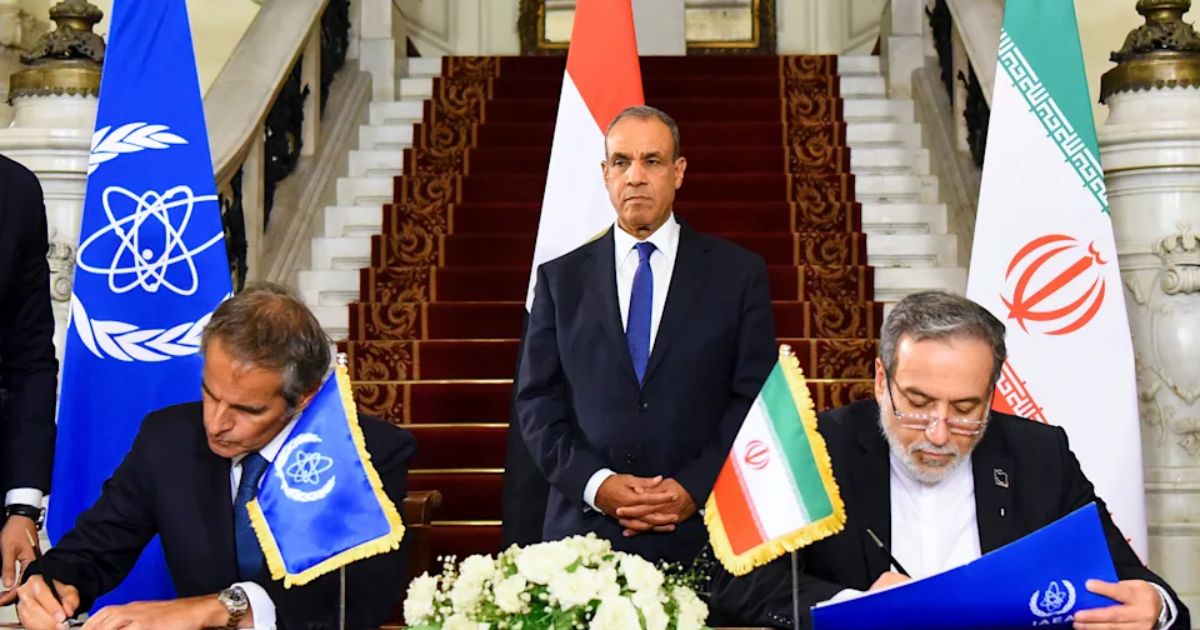
The longstanding confrontation over Iran’s nuclear plans took another twist this week when the United Nations nuclear agency, IAEA and Tehran issued contradictory reports about a newly declared cooperation agreement.
Mixed Signals From Iran and IAEA
On Tuesday, the International Atomic Energy Agency (IAEA) disclosed that it had obtained an agreement giving access to all Iranian nuclear facilities, a step it called essential after months of tense relations. IAEA director Rafael Grossi informed the agency’s Board of Governors that the agreement entailed “all installations and facilities in Iran” and that reporting on the sites targeted by recent attacks by the United States and Israel was included.
Iran and the agency will now resume cooperation in a respective and comprehensive manner,” Grossi declared, framing the deal as a breakthrough in a shaky relationship.
But hours later, Iranian Foreign Minister Abbas Araghchi provided a very different interpretation. In an interview on state television, he emphasized the agreement does not at this point allow IAEA inspectors total access except for the Bushehr nuclear facility and any additional inspections would need Iran’s Supreme National Security Council approval.
Fallout From Recent Attacks
The conflicting remarks follow that Iran broke off cooperation with the IAEA in July. That move followed fatal Israeli and US attacks on Iranian nuclear sites during a 12-day war that killed more than 600 people, including leading scientists, and injured thousands. Tehran had accused the IAEA of “double standards” for not denouncing the attacks, and President Masoud Pezeshkian signed legislation suspending cooperation with inspectors.
Since then, the IAEA has cautioned that it is unable to confirm Iran’s enriched uranium stockpile, judging the circumstances a “serious concern.” Iran still retains uranium at 60 percent purity level short of weapons-grade alarms European powers who have threatened to re-impose sanctions rolled back under the 2015 nuclear accord.
ALSO READ: Gaza War Expands: Israel Strikes Houthi Strongholds In Yemen, Killing 9 After Qatar Attack
Agreement at Risk
Even as they celebrated the deal as progress, Iran’s leadership has indicated that the agreement could easily collapse. Araghchi threatened that Tehran will abandon the agreement if any “hostile act” is taken against the nation or if sanctions are reinstated.
“The message is clear,” Araghchi stated. “Iran will never compromise on sovereignty, rights, or security. But we are also demonstrating restraint and responsibility.”
For the time being, the fate of the agreement is unclear hanging between guarded hope in Vienna and cautious doubt in Tehran.