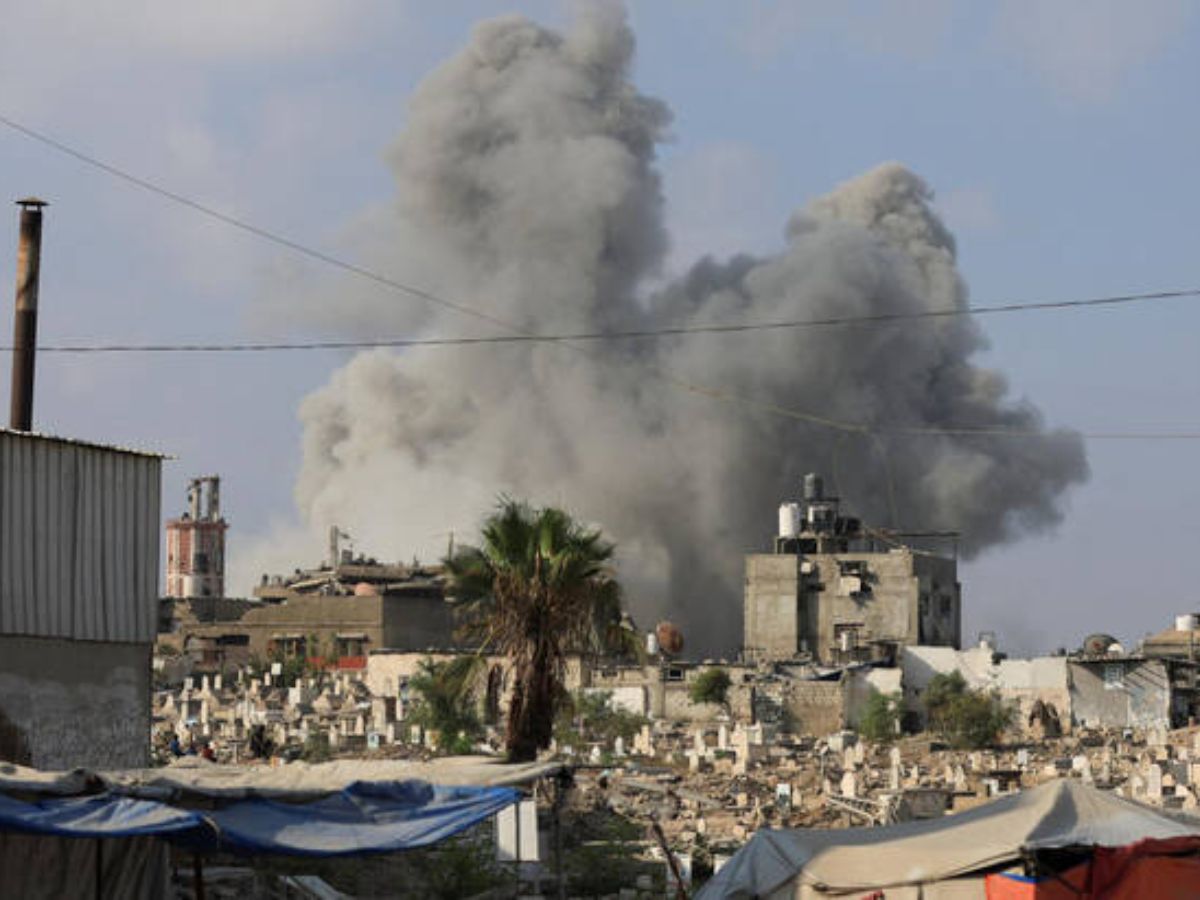
“Gaza is burning,” Israeli Defence Minister Israel Katz declared on social media platform X. His words marked the start of a long-threatened, intense ground assault on Gaza City on Tuesday, described by Palestinians as the most severe bombardment in two years of war. The operation defies European threats of sanctions and internal warnings from some Israeli military commanders, plunging a shattered city back into the heart of the conflict.
What Does the Israeli Military Operation Entail?
An Israel Defence Forces (IDF) official confirmed that ground troops are advancing deeper into the enclave’s main city. The number of soldiers is expected to rise in the coming days for a singular objective: to confront an estimated 3,000 Hamas combatants the IDF believes are still entrenched within Gaza City. Defence Minister Katz stated the operation aims to “create the conditions for the release of the hostages and the defeat of Hamas.” This move represents a significant escalation in Israel’s campaign to dismantle Hamas’s military infrastructure.
How Are Civilians Being Impacted on the Ground?
Gaza health officials reported at least 50 people killed on Tuesday, with most casualties concentrated in Gaza City. Airstrikes swept across the urban landscape as tanks advanced. Reuters footage from the scene showed the devastating human cost: residents clambering over immense mounds of dislocated concrete from destroyed residential buildings to pry out victims. One woman wept as a small child’s body was pulled from the wreckage, hastily wrapped in a blanket. Abu Mohammed Hamed described the grim reality for many, stating his cousin’s body was trapped under a concrete block. “We don’t know how to take her out. We have been working on it since 3 a.m.,” he said.
Why Are Thousands Fleeing and Where Are They Going?
The IDF renewed calls for civilians to evacuate, leading to long columns of Palestinians streaming towards the south and west. They fled by donkey carts, rickshaws, overloaded vehicles, and on foot. Abu Tamer, 70, traveling south with his family, texted Reuters, “They are destroying residential towers, the pillars of the city, mosques, schools and roads… They are wiping out our memories.” The IDF estimates 40% of the city’s population has left, while Hamas figures suggest hundreds of thousands have been newly displaced. This exodus forces people into overcrowded coastal encampments further south that lack food, medical supplies, and space.
What is the International Response to the Escalation?
The assault has drawn sharp international reactions:
United States: Secretary of State Marco Rubio, speaking in Jerusalem, offered support, stating the U.S. must be prepared for a non-diplomatic end to the war. Former President Donald Trump warned Hamas would have “hell to pay” if it used hostages as human shields.
European Union: In a stark contrast, the EU executive announced plans to agree on new sanctions against Israel, including suspending certain trade provisions.
United Nations: A UN Commission of Inquiry concluded Israel had committed genocide in Gaza—an assessment Israel called “scandalous” and “fake.”
Starvation in Gaza
The humanitarian situation remains catastrophic. Gaza’s health ministry reported three more Palestinians died of malnutrition and starvation in the past 24 hours, raising the total documented hunger deaths to at least 428. Israel disputes the extent of the crisis. While Israeli military spokesperson Effie Defrin asserted “there will not be a situation of starvation in Gaza,” aid agencies continue to warn of a severe famine exacerbated by the new offensive and mass displacement.
Also Read: Israel Launches Airstrike on Yemen Rebel Port After Evacuation Alert
Is There Internal Israeli Dissent Over the Operation?
Yes. Some Israeli military commanders have expressed concern that the assault could be a “death trap” for troops and endanger the remaining hostages held by Hamas. According to three Israeli officials, Chief of Staff Eyal Zamir urged Prime Minister Netanyahu to pursue a ceasefire deal during a security meeting on Sunday. Families of the hostages gathered outside Netanyahu’s home in Jerusalem as the offensive began. “Our loved ones in Gaza are being bombarded by the IDF under the orders of the prime minister,” said Anat Angrest, whose son is among the 20 hostages believed still alive.