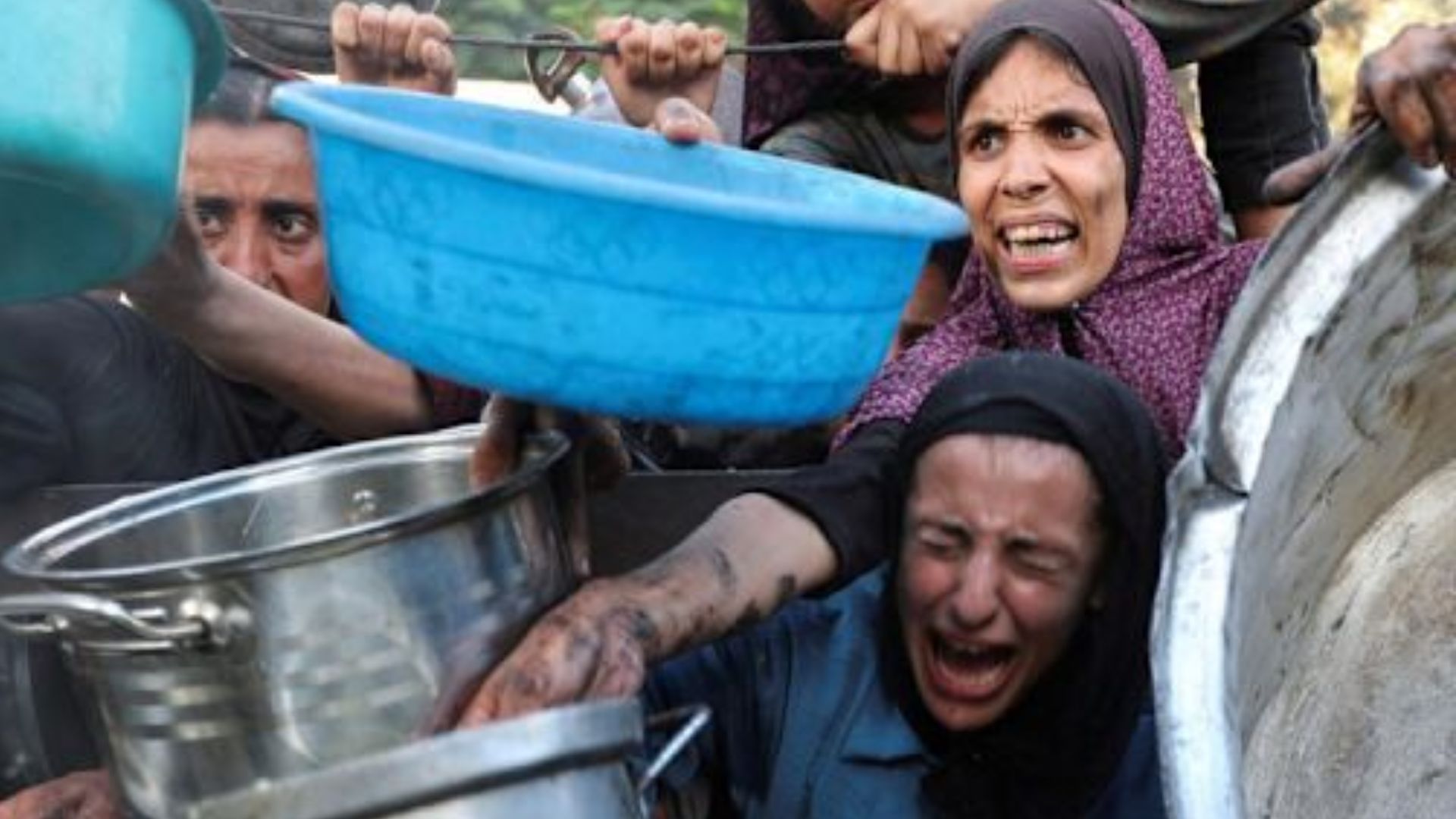
The head of the UN agency for Palestinian refugees, Philippe Lazzarini, said that his staff in Gaza are collapsing due to extreme hunger. He raised alarm as the number of people dying from starvation continues to rise, and peace talks show no progress.
He warned, “This deepening crisis is affecting everyone, including those trying to save lives in the war-torn enclave … when caretakers cannot find enough to eat, the entire humanitarian system is collapsing.”
Over the past four days, at least 45 people have died of hunger, according to UN reports. The agency and other humanitarian groups blamed the worsening food shortage on Israel’s blockade, which is preventing aid from entering Gaza. One of Lazzarini’s colleagues in Gaza shared a haunting message: “People in Gaza are neither dead nor alive, they are walking corpses.”
Although 6,000 truckloads of food and medical supplies are ready in Jordan and Egypt, Israel has not allowed them through. Lazzarini urged Israel to “allow humanitarian partners to bring unrestricted and uninterrupted humanitarian assistance to Gaza.”
Starvation Claims More Lives
Recently, disturbing images have surfaced of people who have collapsed or died from hunger. Gaza’s civil defence released photos of extremely thin bodies showing bones through the skin. Medical sources confirmed that two more people died of hunger on Thursday, both already sick and unable to eat for several days.
France Steps Up: Plans to Recognise Palestinian State
As pressure builds globally, French President Emmanuel Macron announced that France will officially recognise the State of Palestine at the UN General Assembly in September.
He declared, “True to its historic commitment to a just and lasting peace in the Middle East, I have decided that France will recognise the State of Palestine. I will make a formal announcement at the United Nations General Assembly in September,” via X and Instagram.
Peace Negotiations Break Down
Meanwhile, peace efforts faced a serious setback. Both Israel and the United States withdrew their negotiators from Doha, ending current ceasefire talks. US envoy Steve Witkoff blamed Hamas for not being serious.
He posted on X, “We have decided to bring our team home from Doha for consultations after the latest response from Hamas, which clearly shows a lack of desire to reach a ceasefire in Gaza.”
He also mentioned the US would explore “alternative options” to rescue hostages and stabilize Gaza but gave no further details.
Ironically, earlier in the day, an Israeli official had told the Associated Press that the latest proposal from Hamas was “workable,” raising hopes of a breakthrough.
Witkoff was also scheduled to meet Israeli adviser Ron Dermer and Qatari Prime Minister Sheikh Mohammed bin Abdulrahman al-Thani in Sardinia, but it is now unclear if those talks will continue.
Hamas Proposes Permanent End to War
According to Israeli media, Hamas’s proposal includes:
-
A permanent end to the war (not just a ceasefire)
-
Clear guidelines for prisoner exchanges
-
Permission for UN agencies to handle aid distribution
A Palestinian official told Reuters that Hamas’s response was “flexible, positive and took into consideration the growing suffering in Gaza and the need to stop the starvation.” A Hamas source added that a detailed prisoner exchange roadmap is central to their proposal.
Hostage Families Demand Action
In response to the collapsed negotiations, the Israeli Hostage Families Forum expressed deep concern and urged leaders to secure a ceasefire quickly.
They said, “Each day that passes endangers the hostages’ chances of recovery and risks losing the ability to locate the fallen or gain vital intelligence about them.”
What Was in the Proposed Deal?
The plan being discussed included:
-
A 60-day ceasefire
-
Release of 10 living hostages and 18 bodies
-
In return, Israel would release Palestinian prisoners
-
Aid access to Gaza would significantly increase
-
Talks during the ceasefire would aim to create a long-term truce
This deal gained momentum after the recent end of the Iran-Israel war. However, despite the ongoing talks, Israeli airstrikes intensified. In just 24 hours, Gaza health officials reported 89 deaths from airstrikes in central Gaza.
Israel Denies Hunger Crisis Despite Evidence
Despite photos, doctor testimonies, and reports from the ground, Israel continues to downplay the hunger crisis, saying global media has exaggerated it. However, aid workers, doctors, and witnesses strongly disagree.
Israel is allowing only limited aid into Gaza, most of which is managed by the Gaza Humanitarian Foundation (GHF) — a private US company operating four food distribution centers guarded by US security personnel.
Since GHF took over two months ago, more than 1,000 people have died trying to access aid. Previously, aid was distributed by the UN through over 400 centers, but Israel shut that system down in March, claiming Hamas was stealing supplies. Humanitarian groups say there is no strong evidence for that claim.
GHF’s Model Called Dangerous
Aid organisations argue that GHF’s system is not only ineffective but also violates key humanitarian principles. They insist it cannot replace the UN-led aid network. Hamas has made the restoration of UN aid delivery a key condition for any ceasefire deal. As internal and international pressure grows, Israeli negotiators have softened their position on this demand. Even within Israel, frustration is rising.
On Wednesday, thousands of Israeli protesters marched in Tel Aviv, carrying bags of flour and photos of starving Palestinian children, demanding an end to the Gaza blockade.
Far-Right Israeli Cabinet Opposes Full Truce
Despite the humanitarian catastrophe, many far-right members in Prime Minister Benjamin Netanyahu’s cabinet remain against a permanent ceasefire. Israel wants to leave the door open for future military action even after a temporary truce.