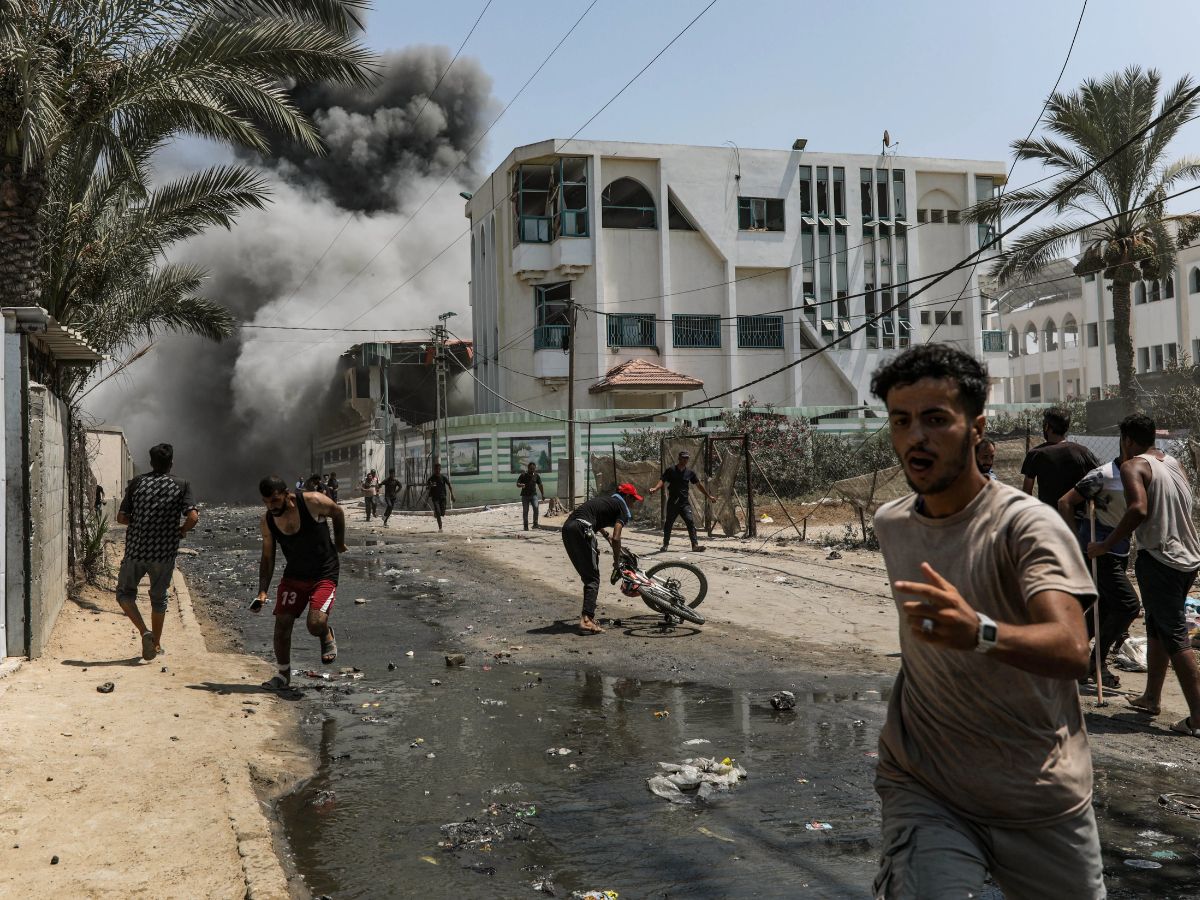
Israel’s security cabinet has approved a plan to seize Gaza City, expanding military operations in the war-torn Palestinian territory. The move comes amid the nearly two-year-old conflict with Hamas, ignited by the militant group’s deadly 2023 attack on Israel.
The decision, announced early Friday after a tense cabinet meeting, drew swift condemnation from European allies and sparked a political firestorm at home. Prime Minister Benjamin Netanyahu’s far-right coalition allies have pushed for total control of Gaza as part of his pledge to eradicate Hamas. Military leaders, however, warn the escalation could put the lives of 50 remaining hostages at risk.
Allies Split—Germany Halts Arms, Britain Urges Restraint
Germany, one of Israel’s closest European partners, suspended all military exports that could be used in Gaza — a decision Netanyahu called “disappointing” in a phone call with Chancellor Friedrich Merz. Britain and several other European capitals urged Israel to reconsider.
European Commission President Ursula von der Leyen urged de-escalation, while Saudi Arabia condemned any move to occupy Gaza, warning it would block normalization talks without a Palestinian state.
But U.S. Ambassador to Israel Mike Huckabee defended the plan, accusing critics of targeting Israel rather than Hamas. Huckabee told Reuters that President Donald Trump insists Hamas cannot remain in power and must disarm.
Domestic Backlash Over Hostages
Opposition leader Yair Lapid blasted the Gaza City plan as a “disaster” that defies military advice. He accused far-right ministers Itamar Ben Gvir and Bezalel Smotrich of dragging Netanyahu into a prolonged war that would cost hostage and soldier lives.
The Hostages Families Forum condemned the decision, calling it “another march of recklessness” that abandons captives. Public polls show a majority of Israelis want the war to end through a diplomatic deal securing hostage releases.
Danny Bukovsky, a hotelier in Tel Aviv, said bluntly, “It’s a death sentence to all the hostages still there. It’s the wrong decision to do it now.”
Also Read: Gaza City Showdown: Will Netanyahu’s High-Stakes Offensive Spark Victory Or Disaster?
Gaza City’s Strategic Weight
Israel’s military estimates it controls about 75% of Gaza. Retired brigadier general Amir Avivi says taking Gaza City would push that to 85%—a symbolic and strategic blow to Hamas.
“Gaza City is the heart of Gaza. It’s the centre of government. The fall of Gaza City is pretty much the fall of Hamas,” Avivi said.
The city, now home to some 900,000 people, shelters thousands displaced by earlier offensives. Many fear they have nowhere left to go. “Where should we go? Do we throw ourselves in the sea?” asked Maghzouza Saada, a displaced resident from northern Gaza.
Netanyahu’s Security Perimeter Plan
In an interview with Fox News’ Bill Hemmer, Netanyahu said Israel aims to control all of Gaza but does not plan to keep it permanently. He outlined a “security perimeter” before transferring control to Arab forces.
His office later stressed that the goal is to “free Gaza from Hamas” so a peaceful government can emerge. Still, the move marks a dramatic escalation in a war that has already strained Israel’s relations abroad and deepened political divides at home.
Talks for a ceasefire collapsed in July, halting the only channel that had freed hostages so far. With 20 believed alive in Gaza, the military gamble now pits Netanyahu’s pledge to crush Hamas against the lives of those captives.
As Israel’s cabinet prepares to endorse the Gaza City push, the nation faces a stark choice, force a decisive military breakthrough or risk cementing a war that is tearing its society apart.