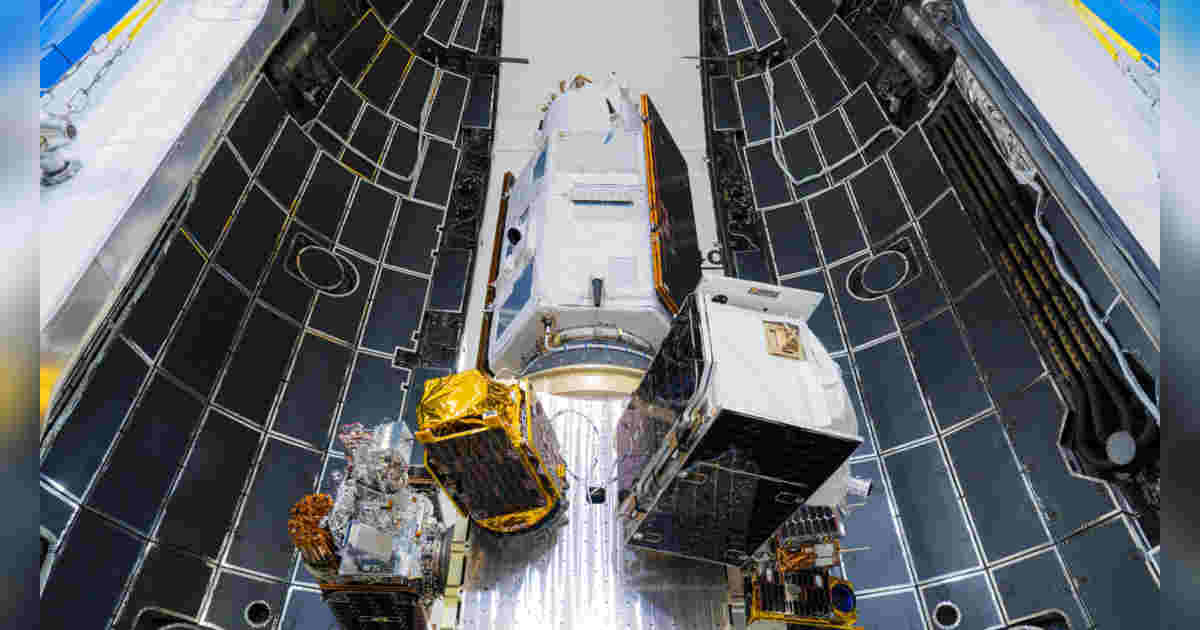
Israeli defence firm Elbit Systems has achieved another milestone in space technology with the launch of its latest space camera, JUPITER. The camera was carried aboard the NAOS (National Advanced Optical System) satellite, which lifted off from the Vandenberg Space Force Base in California on a SpaceX Falcon 9 rocket.
Purpose of the NAOS Satellite
The NAOS satellite is designed for versatile Earth observation missions. Its applications cover a wide range of areas, from military surveillance to environmental monitoring and scientific research. The satellite will play a crucial role in strengthening Israel’s ability to collect precise, real-time data from space.
Cutting-Edge JUPITER Camera
The JUPITER camera was developed by Elbit’s Intelligence and EW (Electronic Warfare) division – Elop. It is described as one of the world’s most advanced space cameras, equipped with:
-
An exceptionally large optical aperture for sharper imaging.
-
A lightweight structure to maximize efficiency in orbit.
-
Seamless integration with both satellite systems and ground control stations.
AI-Optimized Imaging
Elbit Systems explained that the JUPITER camera is not just about capturing images but about transforming raw data into meaningful intelligence. By being fully optimized for next-generation image-processing engines and AI-based analytics, the system can automatically detect, classify, and track objects with high precision.
This integration of artificial intelligence means that the data gathered in space can be quickly processed to deliver real-time insights for a wide variety of users. In defence and security, JUPITER can help track troop movements, missile launches, or suspicious maritime activity. In environmental monitoring, it can map deforestation, track climate change effects, assess crop health, and monitor natural disasters like floods and wildfires.
The camera’s ability to work seamlessly with AI ensures that decision-makers do not just receive images but ready-to-use intelligence. This reduces the time between observation and action, which is critical for both military operations and disaster response.
The company underlined its confidence in the system, describing JUPITER as “one of the most advanced spaceborne optical observation systems in the world,” highlighting its unmatched combination of precision, adaptability, and technological sophistication.
Background: Elbit’s Growing Space Role
Elbit Systems has long been recognized for its defence electronics, drones, and surveillance solutions, but in the last decade, the company has steadily expanded into the space sector. With projects like JUPITER, Elbit is positioning itself as a key player in space-based intelligence gathering, a field once dominated by only a handful of global powers.
Israel’s growing investment in such technologies reflects its strategic need for independent, high-quality intelligence in a rapidly changing security environment. The ability to generate data from space strengthens its national security while also opening opportunities for scientific research, climate monitoring, and international collaborations.
Elbit’s venture into space aligns with a wider global trend, where private defence and tech companies are increasingly becoming major contributors to space innovation. By launching JUPITER, Elbit is sending a strong message that it intends to compete with the leading aerospace and defence firms in Europe and the US.
The JUPITER project is not only a technological milestone for Elbit but also a symbol of Israel’s ambition to be a global leader in space observation and advanced defence technologies.
Also Read: SpaceX Marks Milestone with Starship’s 10th Test Flight