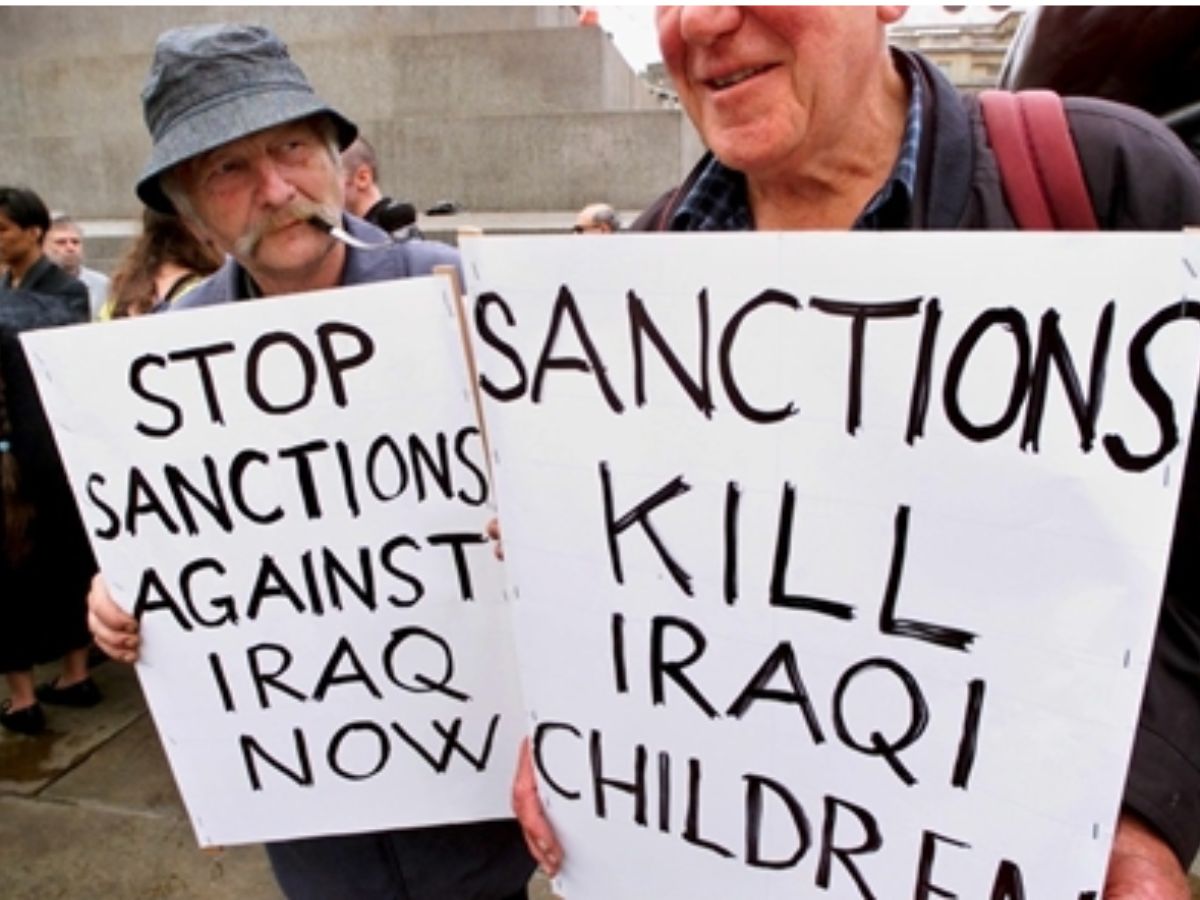
Iran’s Foreign Minister Seyed Abbas Araghchi has accused the United States of committing crimes against humanity through economic sanctions. Speaking on Wednesday, he cited a new Lancet study that claims unilateral sanctions have killed more than 500,000 people every year since the 1970s. Most victims, the study says, are children and the elderly.
The research also concludes that sanctions can be as deadly as war itself. Araghchi called Western claims of sanctions being a “bloodless alternative” a dangerous myth and urged sanctioned nations to form a united front in response. The findings raise serious questions about whether sanctions are ethical tools of foreign policy or instruments of silent warfare.
Iran’s Accusation Against the West
Araghchi accused Western governments, particularly the US, of hiding behind the idea that sanctions are a non-violent diplomatic measure.
He said the Lancet research proves otherwise, with numbers that match wartime mortality levels. He labelled Western sanctions “inhumane” and a clear violation of basic human rights.
ALSO READ: Dubai Sees Over 3,600 Islamic Conversion in the First Half of 2025 | REPORT
The Lancet’s Grim Findings
The Lancet study, funded by the Centre for Economic and Policy Research, examined mortality data from 152 sanctioned countries between 1971 and 2021. Using advanced analytical methods, it linked sanctions directly to elevated death rates.
The authors came to the conclusion that sanctions, frequently on a scale similar to armed conflicts, impair healthcare systems, disrupt economies, and shorten lives. The report recommends a fundamental rethink in how sanctions are designed and deployed, urging restraint and reform.
The Rising Use of Sanctions
The number of sanctioned states has increased significantly, according to the Global Sanctions Database. Compared to just 8% in 1970, 25% of nations were subject to US, EU, or UN sanctions between 2010 and 2022. Brazil, Cuba, Iran, Venezuela, Russia, and its oil consumers, China and India, as well as Syria and Libya, are among the countries targeted by sanctions or high tariffs as of August 2025.
In addition to trade restrictions, other measures like the FATF blacklist, “shadow fleet” crackdowns, and human rights-related bans create a complex global sanctions web.
ALSO READ: Gaza Crisis Fuels Diplomatic Row Between Priyanka Gandhi and Israeli Ambassador
Sanctions and Global Power Realignment
The sanctions regime is just one part of it. It is altering alliances and bringing sanctioned states closer together. Countries like Iran, Russia, China, and Venezuela are building alternative trade routes, banking systems, and security pacts to bypass Western dominance.
This slow shift could lead to an alternative global economic order that is more resistant to Western influence and less dependent on the US dollar. The unintended effect of sanctions may be to accelerate the very geopolitical realignment that Washington and Brussels hope to prevent.