Iran Spurns US-Sponsored Transport Corridor Close to Its Borders
Iran has strongly reacted against a new transportation corridor scheduled under a US-facilitated peace deal between Armenia and Azerbaijan, saying it will oppose the plan regardless of Russia’s stance. Iran’s supreme leader’s top adviser, Ali Akbar Velayati, has referred to the project as a “political treachery” and blamed US President Donald Trump for dealing with the Caucasus as a “piece of real estate” to dominate for decades.
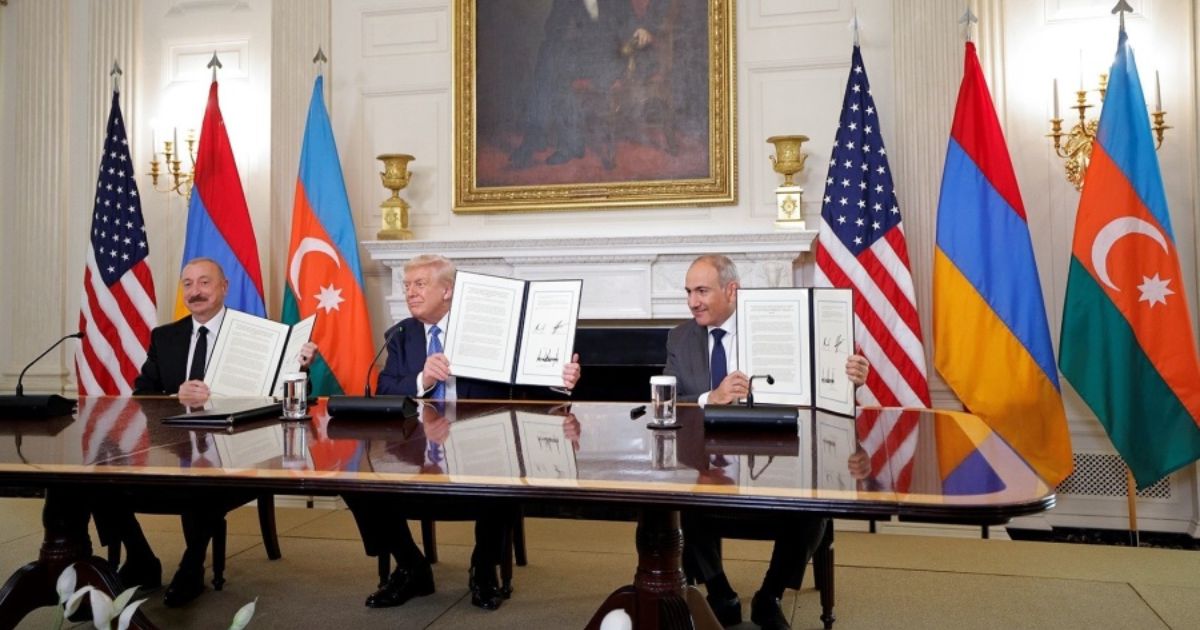
The corridor, which is to connect Azerbaijan to its exclave Nakhchivan via Armenian land, is one of the most important components of the peace agreement inked at the White House. Dubbed the Trump Route for International Peace and Prosperity (TRIPP), it would grant the US sole development rights and be governed by Armenian law. However, Tehran considers it a perilous step that would enable NATO to gain a strategic foothold “like a viper” between Iran and Russia.
Velayati was not ambiguous, declaring, “This corridor will not be a doorway to Trump’s mercenaries it will be their cemetery.” Tehran’s assertiveness mirrors fears of sovereignty and security in a region where alliances are fluctuating, and where power remains precarious.
Russia and Turkey Weigh In on the Corridor and Peace Deal
As Iran vows to shut the corridor, Russia has moved with greater prudence. Moscow hailed the reconciliation between Armenia and Azerbaijan as a move toward stability in the region but cautioned against “outside intervention” that may lead to additional divisions. The Russian Foreign Ministry underscored that long-term solutions must emanate from regional actors and not external forces, citing previous “unfortunate experiences” with Western-led conflict resolutions in the Middle East.
Turkey, a NATO ally and a close friend of Azerbaijan, has been more bullish. Ankara is expecting the transit route to increase energy exports and further economic bonds through the South Caucasus. Turkish President Recep Tayyip Erdogan called Azerbaijani President Ilham Aliyev, promising solidarity for lasting peace as soon as the final agreement was signed. The corridor was termed a “very useful development” by Turkish Foreign Minister Hakan Fidan, who added that it would connect Europe to Asia through Turkey and boost trade and transportation networks.
A Step Toward Peace Amid Complex Regional Rivalries
The US-brokered peace deal aims to end decades of conflict between Armenia and Azerbaijan over Nagorno-Karabakh, a contested region that saw brutal wars since the late 1980s. Armenia returned several villages to Azerbaijan last year, a move Baku called “historic.”
Analysts, such as Ahmad Shahidov of the Azerbaijan Institute for Democracy and Human Rights, view Friday’s deal as a “roadmap” to a full peace agreement expected soon. With no remaining territorial issues left to resolve between the neighbors, Shahidov thinks a final statement could arrive within weeks.
But the tense Iranian responses and Russian cautionary warnings illustrate how tenuous peace is in the Caucasus. The envisioned corridor, while boding well for economic gain, also reveals fault lines among big powers maneuvering for position. Tehran’s pledge to shut down the corridor “with or without Russia” bodes ill for a difficult path forward toward implementing the deal—and toward stability in the broader region.