
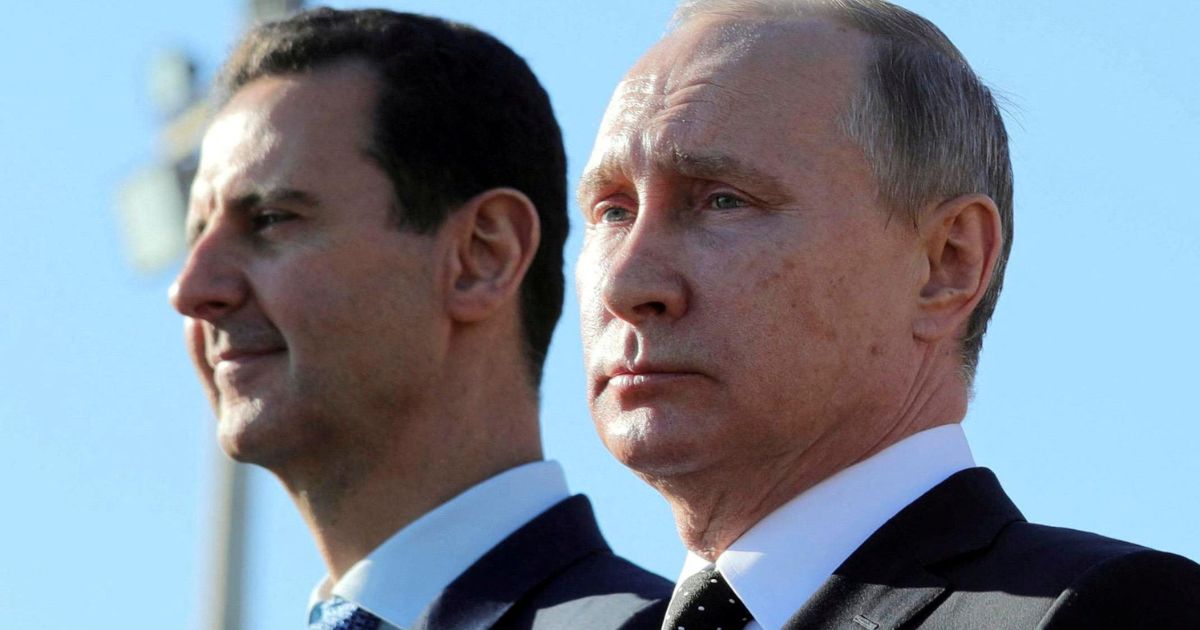
In a revealing break from Assad’s times, Syria’s new masters are now indicating they are open to aligning with Russia albeit this time, perhaps on more restricted terms and with better-defined expectations.
While in Moscow, Syrian Foreign Minister Asaad al-Shaibani urged Russia to continue as a major ally as Syria undergoes a complicated phase of transition. It was the first official Russian visit by a member of Syria’s new government that came in power after the long-time regime collapsed last year during a speedy rebel push.
Speaking with Russian Foreign Minister Sergey Lavrov by his side, al-Shaibani stated, “We are at the pivotal moment of threats and opportunities. Our intention is to rebuild Syria as a united and powerful country, and we wish to have Russia with us on this journey.” Nevertheless, he said that previous tensions and “complicating factors” need to be resolved, appealing for relations based on “mutual respect.
This visit highlights a more pragmatic approach by Damascus. While Russia was an overt ally of ousted President Bashar al-Assad offering military support that determined the direction of the war the new leadership, headed by interim President Ahmed al-Sharaa, seems intent on stability, reconstruction, and reconfiguring old alliances.
The situation has made incremental progress. A Russian delegation visited Damascus in early this year, after which there was a call between President Vladimir Putin and al-Sharaa that was “constructive” as described by the Kremlin. Some Russian soldiers are still stationed at coastal bases, and Russia keeps on shipping oil supplies despite the Syrian political transition.
Al-Shaibani also praised the firm Russian rejection of recent Israeli attacks on Syrian soil, a view shared by much of the region. He appreciated the defense of Syria’s sovereignty by Moscow after fatal clashes in southern Syria this month, which killed over 250 people in combat between government forces, Bedouin militias, and Druze factions.
But Syria’s new government is marking boundaries. Al-Shaibani stated that he was setting up a committee to examine current agreements with Russia, which means that previous deals some of them dating back to the Assad era could be nullified. What happens to Russia’s military bases in Tartous and Khmeimim also is up in the air, with no firm commitment by the new government to keep them in the long term.
Lavrov himself stressed further Russian support for the unity and sovereignty of Syria, and thanked the Syrian authorities for ensuring the safety of Russian individuals and facilities. He also invited President al-Sharaa to the forthcoming Russia–Arab League summit in October.
As Assad stays in exile, supposedly under Russian guard, Syria’s new leadership seems set on forging a new path a path that is grateful for former beneficence but aware of the realities of a post-Assad world.