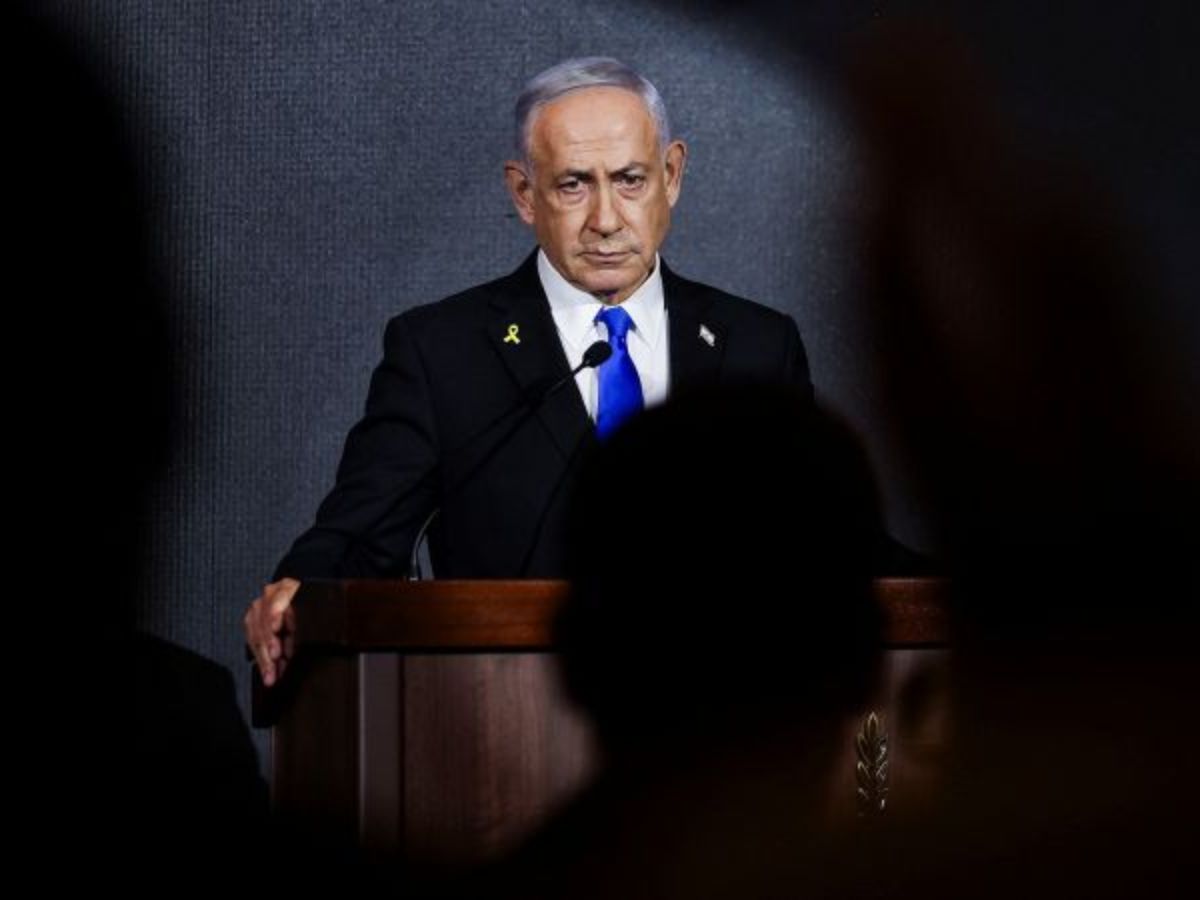
Israeli Prime Minister Benjamin Netanyahu has issued a furious and unequivocal response to the coordinated decision by the UK, Canada, and Australia to formally recognize a Palestinian state, accusing them of “rewarding terrorism” and vowing that there will be “no Palestinian state to the west of the Jordan River.” With the war in Gaza causing Israel to become increasingly isolated internationally, the declaration represents a radical hardening of Israel’s stance.
The move by three major Western allies represents a significant diplomatic shift and a substantial blow to Israel’s traditional diplomatic support base. Quick and unyielding, Netanyahu’s office response framed the recognition as a direct threat to Israel’s existence and security.
What Was Netanyahu’s Exact Warning?
Netanyahu’s statement was one of his most categorical rejections of Palestinian statehood to date. He directed a clear message to the leaders of the recognizing nations:
“I have a clear message to those leaders who are recognising a Palestinian state after the horrendous October 7 massacre: You are rewarding terror with an enormous prize. And I have another message for you: It’s not going to happen. There will be no Palestinian state to the west of the Jordan River.”
He framed his long-standing political career as a successful effort to block this outcome, stating, “For years, I have prevented the creation of that terror state, against tremendous pressure, both domestic and from abroad.” He further pointed to the expansion of Jewish settlements as evidence of this commitment, vowing to continue on that path.
Why Did the UK, Canada, and Australia Make This Move?
The prime ministers of the three nations justified their historic decision by citing the ongoing humanitarian catastrophe in Gaza and the necessity of a political solution. They stated that recognizing Palestine was a crucial step towards achieving a lasting peace and revitalizing the dormant two-state solution.
Their move is seen as a direct result of Israel’s military campaign in Gaza, which has drawn widespread condemnation and charges of violating international law. The coordinated timing amplifies its impact, signaling a collective frustration with Netanyahu’s government and its war aims. Portugal joined the movement a few hours later, which strengthened the impression of Western unity.
Also Read: After UK, Canada, Australia, Portugal Formally Recognises Palestine, Piling Pressure on Israel
What Does This Mean for the “Two-State Solution”?
Netanyahu’s statement fundamentally rejects the cornerstone of international peace efforts for decades—the two-state solution. He is undermining a major policy goal of even his closest friend, the United States, by announcing that there would be no Palestinian state and promising to keep building settlements in the occupied West Bank.
The response from Jerusalem suggests that instead of prompting a return to negotiations, the Western recognition has instead hardened Israel’s resolve, setting the stage for a deeper confrontation with much of the international community.
What Happens Next?
Netanyahu indicated that a formal Israeli response would be decided upon after his return from a trip to the United States. This points to a period of heated diplomatic discussion by the Israeli government, which may involve symbolic activities directed at the recognizing nations or retaliation moves against the Palestinian Authority.
The gap between Israel’s vision and that of its erstwhile allies has never been wider. Netanyahu’s furious response and the synchronized acknowledgment by Western countries indicate a turning point in the conflict, shifting it from the battlefield in Gaza to a new, fierce diplomatic arena where Israel is becoming more and more isolated.