
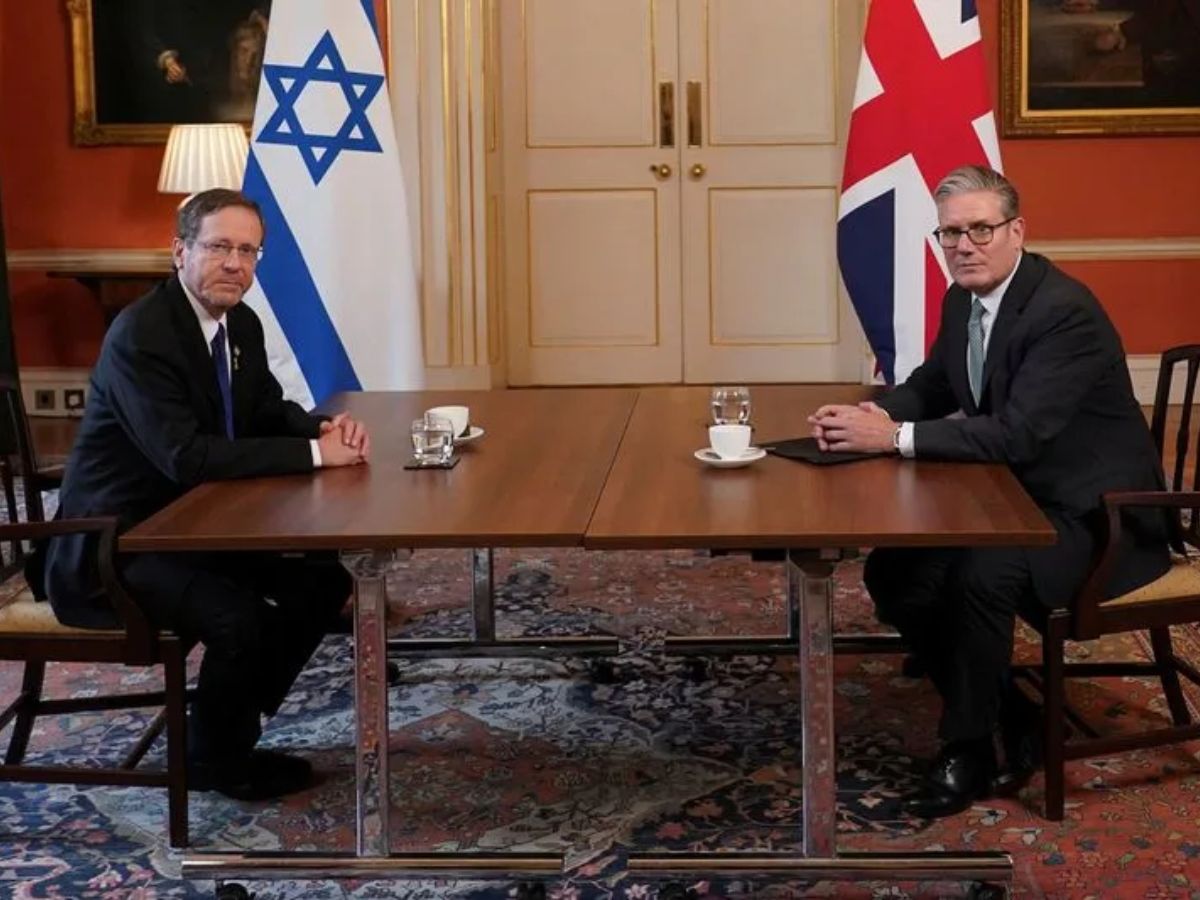
A brief, unsmiling handshake on the steps of 10 Downing Street set the tone for what followed inside: a likely tense meeting between British Prime Minister Keir Starmer and Israeli President Isaac Herzog. The Wednesday summit, overshadowed by the war in Gaza, saw both leaders prepared to deliver sharp criticisms of the other’s nation, highlighting a significant strain in the UK-Israel relationship.
Why Was This Meeting So Tense?
The meeting came just one day after Israel expanded its military campaign against Hamas by launching a daring airstrike targeting the group’s political leaders in Qatar, a key British ally in the Middle East. Prime Minister Starmer swiftly condemned the strike, setting an immediate point of contention.
Beyond this recent event, the war in Gaza has profoundly strained Israel’s relations with Britain and other European allies. The Israeli government is angered by a UK-led push to recognize a Palestinian state and by a decision to block Israeli officials from a major UK defense trade show this week.
What Did the UK Plan to Criticize?
A spokeswoman for Prime Minister Starmer stated that he intended to bring up two important points with President Herzog:
- The action in an allied country, the Airstrike in Qatar, sparked worries about regional escalation and sovereignty.
- Access to food, water, and medical assistance is among the many severe circumstances that Palestinian civilians face in Gaza, which is known as the humanitarian crisis.
Starmer is under a lot of pressure from his own Labour Party to take a more assertive stance against Israel. However, he has maintained a diplomatic approach, telling parliament on Wednesday that diplomacy was the essential path to achieving a ceasefire and securing the release of Israeli hostages held by Hamas.
Also Read: Gaza War Expands: Israel Strikes Houthi Strongholds In Yemen, Killing 9 After Qatar Attack
What Was Israel’s Planned Response?
President Herzog, whose role is mainly ceremonial but carries significant diplomatic weight, arrived with a firm rebuttal prepared. A statement from his office said he planned to “reject outright the positions presented by the UK recently.”
His key objections included:
- Recognizing a Palestinian State: Herzog argues this would “reward Hamas” for its October 7th attacks.
- UK Sanctions on Israeli Ministers: Herzog was set to “express protest” over Britain’s June decision to sanction far-right Israeli cabinet ministers, calling the move “unacceptable.”
- Herzog himself has been a controversial figure in the conflict; he caused anger previously by stating that all residents of Gaza were responsible for the Hamas-led attack on Israel.
What is the UK’s Stance on Palestinian Statehood?
This issue is a central pillar of the current friction. On Monday, Starmer hosted Palestinian Authority President Mahmoud Abbas. They agreed there would be “absolutely no role” for Hamas in the future governance of a Palestinian state.
Britain has made a concrete promise: it will recognize a Palestinian state ahead of the U.N. General Assembly later this month unless Israel meets four conditions, including ending the war in Gaza and allowing a significant increase in humanitarian aid into the enclave.
Also Read: Where is KP Sharma Oli Now? Former Nepal PM Claims He’s Still in Nepal, Blames India for Fall
Are Other UK Officials Critical of Israel?
Yes, the criticism extends beyond the Prime Minister. Wes Streeting, the Health Minister in Starmer’s government, stated this week that Israel’s handling of the war in Gaza was leading it to “pariah status.” This comment reflects the deep concerns within the UK government and the broader political landscape about the conduct and consequences of the ongoing conflict.
The meeting between Herzog and Starmer was therefore not just a simple diplomatic formality. It was a high-stakes conversation between allies whose relationship is being severely tested by a devastating war and divergent visions for a path to peace.