
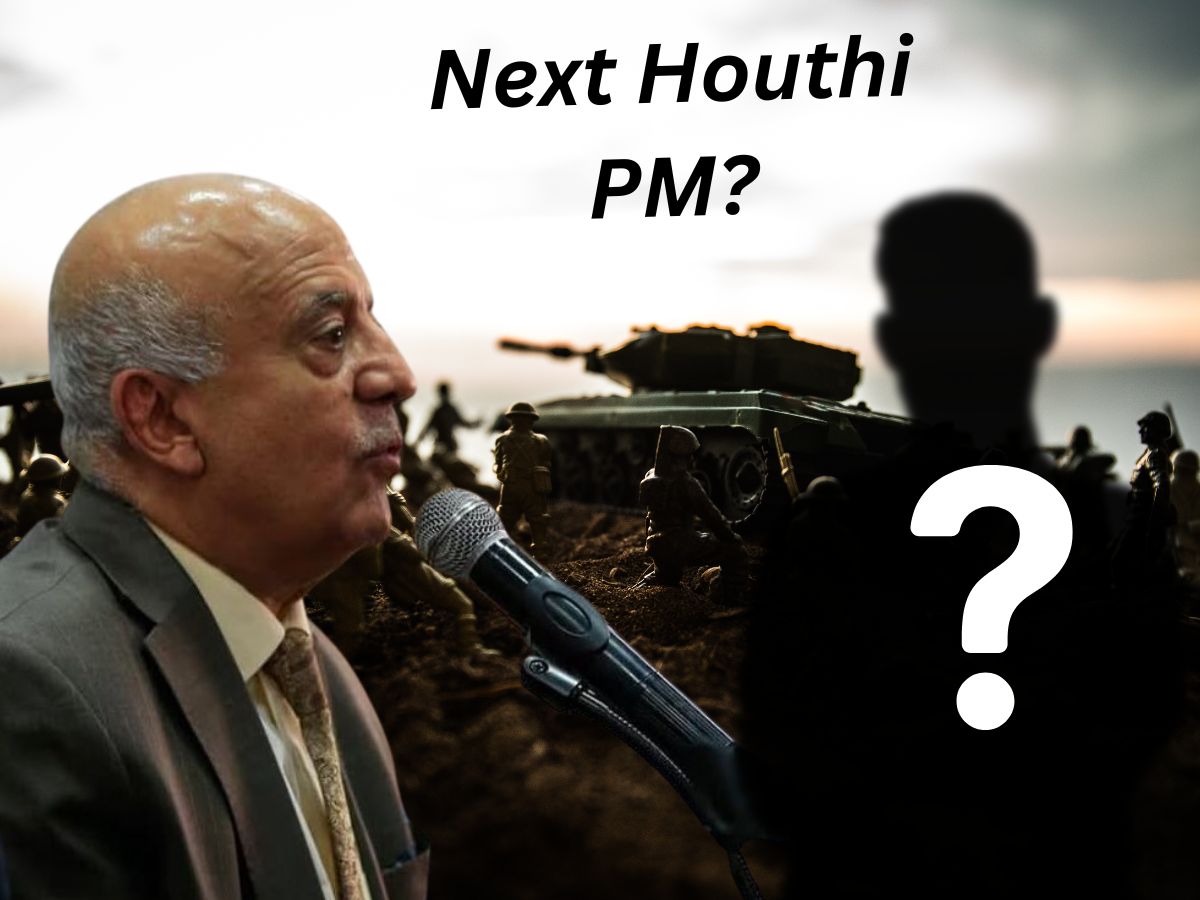
In the wake of the heart-wrenching killing of Yemen’s Houthi Prime Minister Ahmed Ghaleb Nasser al-Rahawi in an Israeli airstrike on August 28, 2025, the leadership of the rebel faction quickly appointed Mohammed Ahmed Miftah as the new interim Prime Minister. The move comes at a significant time for the Houthi government in the face of growing military pressures and regional insecurity.
The Israeli Airstrike and Its Aftermath
The Israeli bombing struck a government workshop inside the Houthi-held capital Sana’a, where al-Rahawi and a number of senior ministers were discussing administrative developments. The bombing killed a minimum of five ministers and injured others, constituting a severe blow to the Houthi political establishment. Israel justified the airstrike by citing recent Houthi missile attacks on Israeli territory and shipping routes in the Red Sea, which have intensified since late 2024 in solidarity with Palestinians amid the Gaza conflict.
Profile of Ahmed al-Rahawi and Impact of His Death
Ahmed al-Rahawi, who had been Prime Minister since August 2024, was considered a symbolic leader within the Houthi government rather than a military strategist. His passing, though, represents a keystone interruption of the rebel organization’s administrative continuity and rule. The Houthis have occupied most of northwestern Yemen, including Sana’a, since 2014, fighting both the internationally recognized Yemeni government and regional enemies. Their close linkage to Iran has also complicated Yemen’s position in the greater Middle Eastern geopolitical framework.
Appointment of Interim Prime Minister Mohammed Ahmed Miftah
Following the death, Mohammed Ahmed Miftah, previously the First Deputy Prime Minister, was appointed as the caretaker Prime Minister instantly. His appointment, as confirmed by the Houthi Supreme Political Council and state media, marks the group’s effort to sustain governmental stability and project strength in the face of crisis. Being the deputy of al-Rahawi, Miftah is well-versed with the inner workings of the Houthi government and will be expected to spearhead efforts to stabilize the faction’s political and military operations.
Regional and Geopolitical Implications
The elevation of Miftah to his new position is coincidental with the escalation of threats against the Houthis from Israeli military operations that seek to undermine their missile capabilities and disrupt their command networks. The airstrike on al-Rahawi is a signal that Israel is changing its approach to operationalizing its counterstrike far beyond its borders. The Houthis, for their part, have promised vengeance and promised to press their military efforts on Israel, especially in defense of the Palestinian cause.
Regionally, the assassination of the Houthi Prime Minister raises tensions in the Middle East, where Iranian-backed militias continue to confront Israeli security and Western interests. Yemen is one such frontline in this proxy war, with renewed potential for escalation after this attack.
Challenges Ahead for Mohammed Ahmed Miftah
Mohammed Ahmed Miftah’s time in office will be challenged as he weathers ruling amidst criticism, coping with internal solidarity, and coping with constant military attacks. How well he asserts authority and steers the Houthis through this crisis will heavily impact Yemen’s unstable future and its position in the wider regional balance of power.