
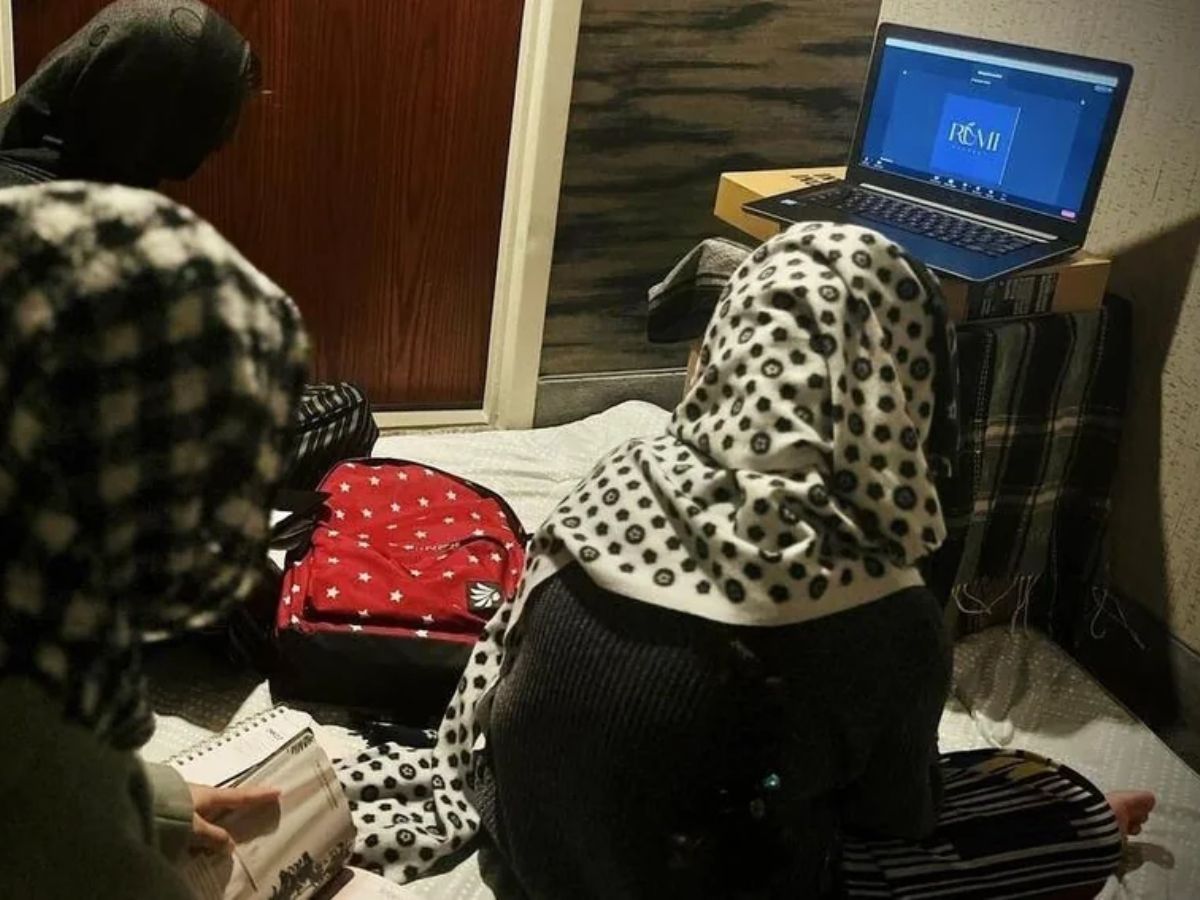
After the Taliban regained control of Afghanistan in 2021, many women, including 24-year-old Sodaba, saw their futures collapse as the regime tightened its grip on their freedoms. The Taliban imposed sweeping restrictions, banning women from entering parks, gyms, restaurants, workplaces, and most critically, schools beyond primary level.
A pharmacology student, Sodaba was once forced to leave her education. But when she discovered an online coding course, her life took a hopeful turn. She said that she felt grateful to be a part of the journey and reflected on how the skills helped her rebuild confidence. The course was offered by Dari, an Afghan refugee based in Greece.
Refugee’s Coding Journey Sparks a Movement
The coding initiative Sodaba joined is part of Afghan Geeks, an organization founded by Murtaza Jafari, a 25-year-old Afghan refugee who fled to Greece years ago. He had never used a computer before joining a coding course himself, and language posed another barrier. “I was trying at the same time to learn Greek, learn English, and then also learn computer… It was super difficult for me,” he told AP.
READ MORE: Taliban Stripped Afghan Women of Basic Rights
Eventually, he earned a coding certificate and decided to “give back” by launching Afghan Geeks. “I think…sharing knowledge is what makes a real difference to someone,” he told AFP.
Coding Classes and Job Opportunities
Afghan Geeks now provides online coding classes to 28 women in Afghanistan, divided into beginner, intermediate, and advanced levels. Jafari goes beyond teaching, he also mentors students in finding remote internships and jobs.
Many women from his classes go on to join his team at Afghan Geeks, which delivers services like website development and chatbot creation to clients across Afghanistan, the US, and the UK. Out of respect for their privacy and cultural sensitivities, Jafari doesn’t ask his students to show their faces on camera. “I’ve never done that. I don’t want to do it, because I respect their culture, their choice,” he said.
Online University EducatingThousands
Another major initiative is Vision Online University, co-founded by Zahul, a 20-year-old Afghan woman who was also affected by the education ban. She launched the platform in collaboration with a university professor.
“Our only aim or goal is to provide free education for girls and to enhance research in Afghanistan,” she said. The platform now has 150 staff members and more than 4,000 female students, offering courses ranging from psychology and nursing to foreign languages and Quranic studies.
READ MORE: Taliban Turns Rehab Centres Into Radicalisation Hubs
Despite having no external funding, Zahul and her team continue to operate the university on a voluntary basis. “We are all working voluntarily with no salary, no support,” she said. She uses a pseudonym to protect herself after receiving threats. Still, she remains determined. “If I stop, over 4,000 women could fall back into despair,” she added.