
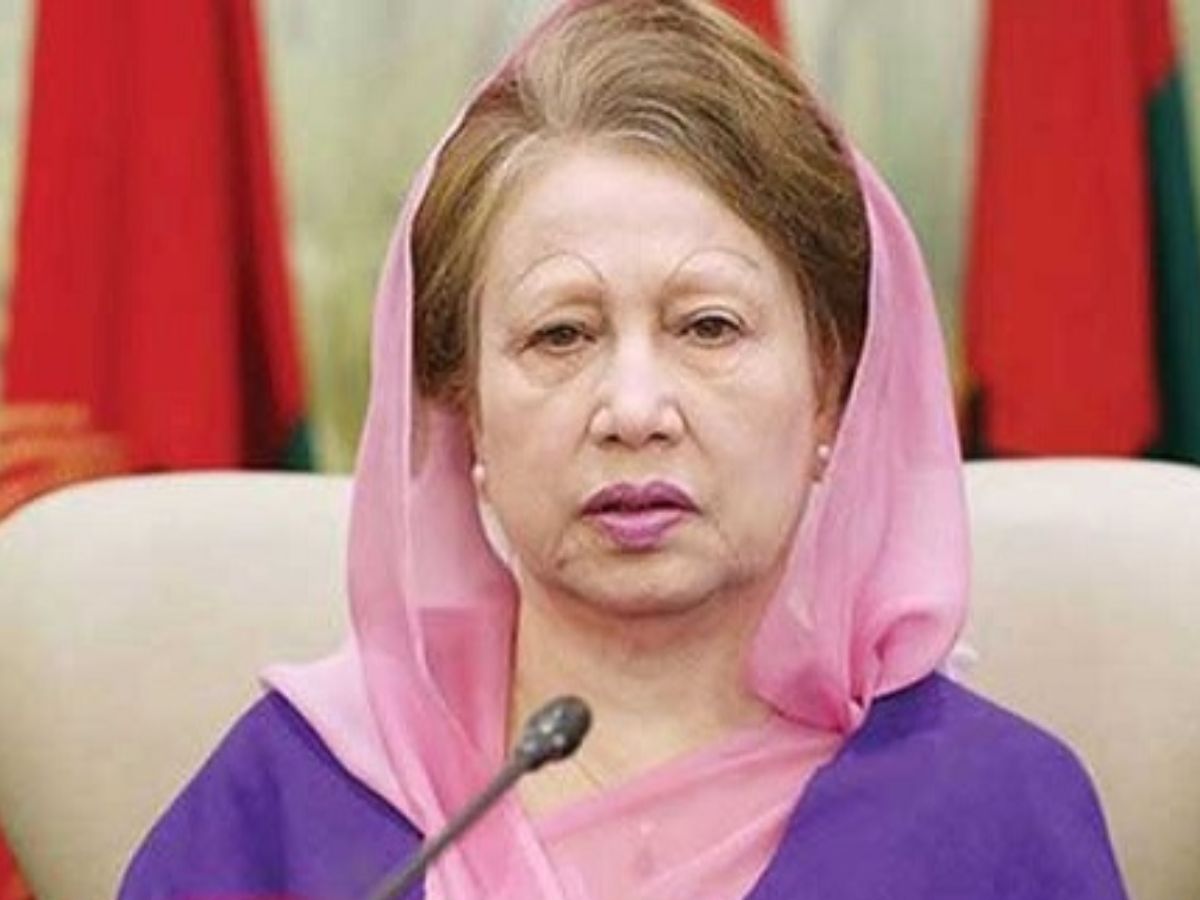
Bangladesh’s first woman prime minister, Khaleda Zia, died on Tuesday at the age of 80 after battling serious health problems for many years, her party, the Bangladesh Nationalist Party (BNP), confirmed.
Doctors treating her had earlier said that she was suffering from advanced liver cirrhosis, arthritis, diabetes, and problems related to her chest and heart.
The BNP announced her death on social media. A message on the party’s Facebook page said, “Khaleda Zia passed away at around 6:00am, just after Fajr prayer.”
It further added, “We pray for the forgiveness of her soul and request everyone to offer prayers for her departed soul.”
Funeral likely in Dhaka
According to BNP leader Salahuddin Ahmed, Khaleda Zia’s funeral is expected to be held on Wednesday at Manik Mia Avenue in Dhaka. He was quoted by Prothom Alo as giving this information.
Years of illness and legal troubles
Khaleda Zia had been in poor health for a long time. She also faced major legal issues in her later years.
In 2018, she was convicted in a 2008 corruption case linked to the misuse of funds that were meant for orphans. As a result, she was sent to prison.
However, after Sheikh Hasina was removed from power, Khaleda Zia was freed from house arrest. Earlier, in 2020, Hasina, who led the Awami League, had suspended Khaleda’s prison sentence due to her medical condition. This was done on the condition that Khaleda would not leave the country or take part in politics.
In a major legal development this year, Bangladesh’s Supreme Court in January overturned her 10-year jail term and cleared her of the corruption charges.
The BNP had always claimed that these cases were politically motivated. The party repeatedly accused Hasina’s government of targeting Khaleda Zia for political revenge.
Bangladesh’s first female prime minister
Khaleda Zia served as the Prime Minister of Bangladesh twice—first from 1991 to 1996, and then again from 2001 to 2006. She made history as the country’s first woman prime minister.
She was the wife of Ziaur Rahman, a former president of Bangladesh and an army general.
After winning the 1991 national election, Khaleda Zia led Bangladesh back to a parliamentary system of government. She also introduced the caretaker government system, which was meant to make elections fair and free, according to The Daily Star.
Also Read: Sheikh Hasina Warns of ‘Radical Influence’ Under Yunus Government Amid Fresh Clashes in Bangladesh
Political struggles and imprisonment
In 2007, when an army-supported caretaker government took over, Khaleda Zia was arrested along with several other top political leaders, including Sheikh Hasina. She was later released and contested the 2008 parliamentary elections, but her party did not win.
Family and personal life
Khaleda Zia is survived by her elder son Tarique Rahman, his wife, and their daughter. Tarique returned to Bangladesh on December 25 after spending 17 years in exile, marking an important moment for the family and the BNP.