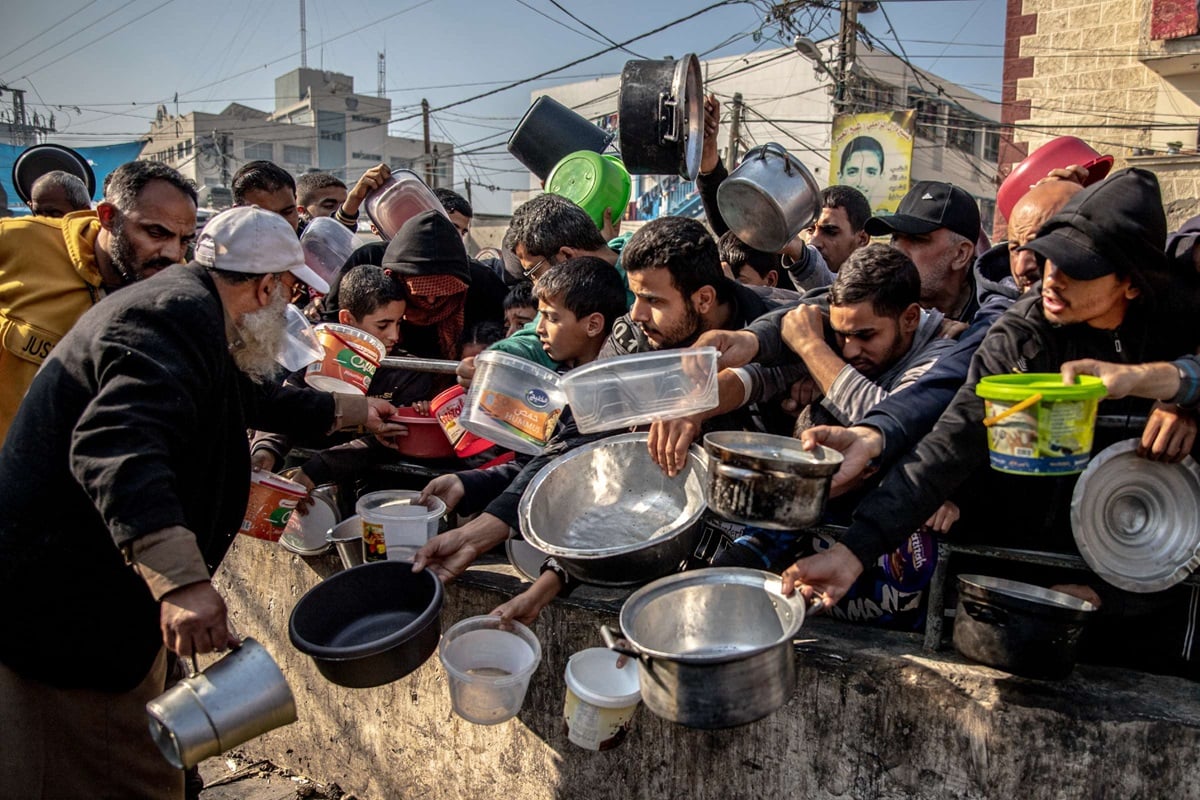
Amidst perhaps the most dreadful humanitarian catastrophe in Gaza’s history, Palestinian journalists set to document the desolation now teeter on the razor’s edge of starvation. Local reporters working for international agencies like AFP, BBC and Reuters have turned into the only witnesses remaining to the agony inflicted upon Gaza, with international journalists barred from entering the territory.
Yet, famine is fast diminishing even their numbers, both literal and figurative.
“I’m Mohammed Abu Aoun, a photojournalist from Gaza. In a widely circulated tweet that has garnered international notice, Abu Aoun stated, “I want to sell my equipment and the press shield so that I can buy food for me and my family.” The post captures the increasing desperation of Gaza’s civilian population, many of whom are currently suffering from the fatal effects of protracted food shortage.
The journalists have sent out appeals through news agencies, stating that they have not had a bite to eat, or medical aid, or a roof over them. Bashar, a photographer for the AFP since 2010, stated in a troubling message that he had lost more than 16 kilos and had been living on a scant diet of lentils. “I don’t have any more strength,” he wrote. “We are dying slowly.”
The AFP Society of Journalists sent an urgent appeal warning that, without immediate food and aid access, the remaining journalists of Gaza may not last.
A Rare International Outcry
On July 23, leading international media outlets made a joint appeal to the Israeli government, insisting on food and humanitarian access for their correspondents in Gaza. Many of these journalists have already been displaced several times by heavy bombardments and now confront yet another enemy starvation.
Some have collapsed out of sheer exhaustion. Others have had to sell equipment to buy food jeopardizing not just their livelihoods, but their ability to report.
A limbo ceasefire
The deteriorating hunger crisis coincides with the deadlock in ceasefire talks between Israel and Hamas. Following the departure of US and Israeli delegates from Doha, Qatar, where negotiations had been underway, Israeli Prime Minister Benjamin Netanyahu declared Friday that his country is exploring “alternative options.”
Netanyahu claimed in a statement that “Hamas is the obstacle to a hostage release deal” and that Israel and its US partners were looking into alternative strategies to achieve the captives’ release, destroy Hamas, and establish “lasting peace.”
Not Just a Journalist Crisis
The situation is dire not only for journalists but for the entire population of Gaza. Hospitals are reporting increased deaths from malnutrition of infants. Aid convoys have variously faced blocks, checkpoints, and violence. With food running thin, residents are trading their possessions phones, jewelry, even clothes for a meal.
This is a crisis not only of starvation, but of truth. As Gaza’s journalists grow weaker, the world faces the impending loss of the last voices that might still bear witness to the humanitarian calamity brewing in the besieged region.
Should an intervention of utmost urgency not be instigated, the story will fade and with it, the window of the world to Gaza’s affliction.