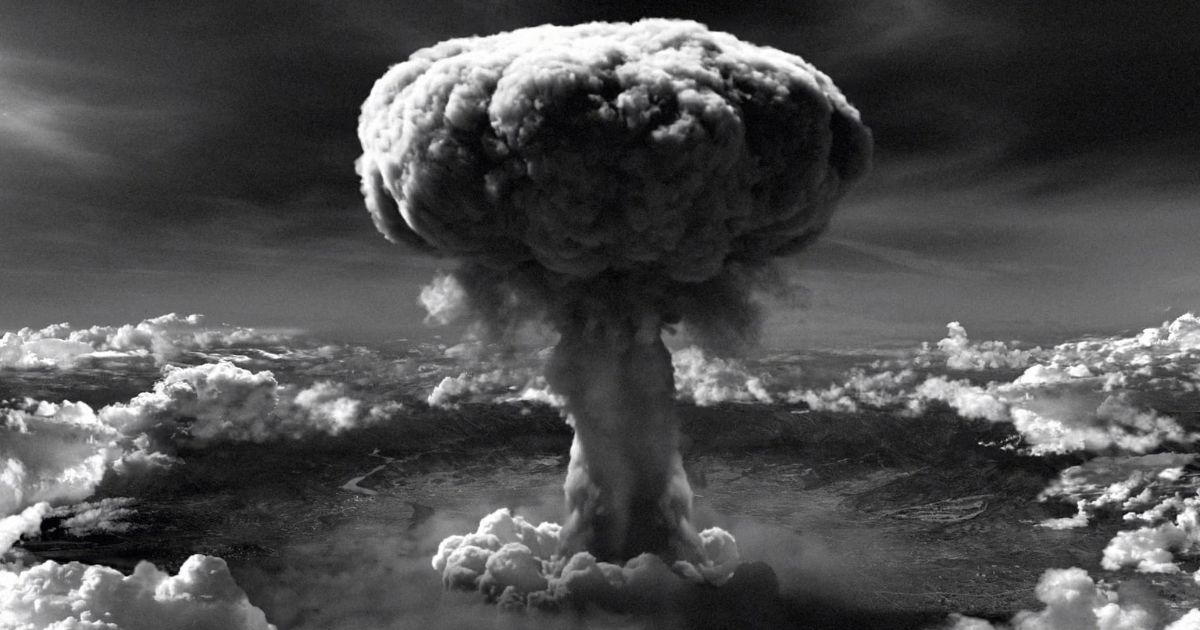
Eight decades since the atomic bombs fell on Hiroshima and Nagasaki, the devastation remains but so do the voices willing to be heard. One such voice is that of 29-year-old Kazumi Kuwahara, a third-generation hibakusha (atomic bomb survivor), and now one of the youngest peace guides at Hiroshima’s peace memorial park. Her life has been defined by a history she didn’t experience, but one that inhabits her body and soul nonetheless.
Earlier this year, she spoke at a conference in London on Victory Over Japan Day, sharing a deeply personal account of illness and inherited pain. In her twenties, Kuwahara underwent abdominal surgery to remove a tumour. Though it was benign, the moment she told her grandmother, 91-year-old Emiko Yamanaka, the response was heartbreaking: “I’m sorry, it’s my fault.”
That simple sentence reveals what so many hibakusha families carry. Kuwahara grew up watching her grandmother say sorry every time she fell ill. “The bombing didn’t end on that day,” she said. “We’re still living inside it.”
A child caught in the blast
Yamanaka was 11 when the bomb fell on Hiroshima. That August morning in 1945, she went back to the city for an eye appointment. As she stooped to repair her broken sandal, a blinding flash illuminated the sky. A fireball erupted above. The shockwave struck before she could breathe.
Blinded, strangling, and buried under rubble, she was rescued by a man whose own flesh pealed off in her hand. She fled for hours along the riverbank while the city burned behind her, trying to reach home to Eba. She finally found her mother wrapped in bloody bandages. Yamanaka had glass embedded in her body that still protrudes today.
They took refuge that evening on Eba hill, listening to the cries of the wounded and the sound of the city burning to cinders.
Years of silence, and the fear of being different
For decades following the war, survivors such as Yamanaka were dissuaded from speaking. Initially by Japan’s military, afterward by US occupation, any reference to the atomic bomb was suppressed. Even relatives avoided speaking of it, fearful of being stigmatized. Hibakusha were “dysfunctional” and frequently ostracized at marriage or in employment.
Kuwahara explains that even within her own family, the tale had largely been kept silent. It wasn’t until she went through training as a denshosha a volunteer interviewer who tells survivors’ tales at Hiroshima Peace Park that it finally changed. Six months of learning were intense, but it made her understand how many still have no idea what occurred.
Finding voice, and strength in shared pain
Others such as Keiko Ogura, 87, remained quiet for decades too. She was eight years old when she witnessed the black rain pouring down after the bomb. “For 40 years, I had nightmares,” she stated. “We were scared to talk. But we feared even more for our children.
Then there’s Keisaburo Toyanaga, a retired educator who escaped Hiroshima along with his family when he was nine years old. As an adult, he advocated on behalf of Korean hibakusha to be recognized many of whom had experienced double discrimination: initially under Japan’s colonial rule, then again after the bomb.
Carrying the memory forward
Today, Kuwahara is among a growing number of young Japanese who are choosing to speak, not just for their families, but for the world. She first shared her grandmother’s story at 13, winning a local speech contest. Now, she speaks to visitors from around the globe.
“Each individual I meet has their own history and point of view,” she said. “That makes me think more deliberately about how I narrate Hiroshima’s history.”
With the final survivors aging, it is up to individuals like Kuwahara to preserve their memories, not as the past, but as a warning, and a hope for peace that remains relevant.