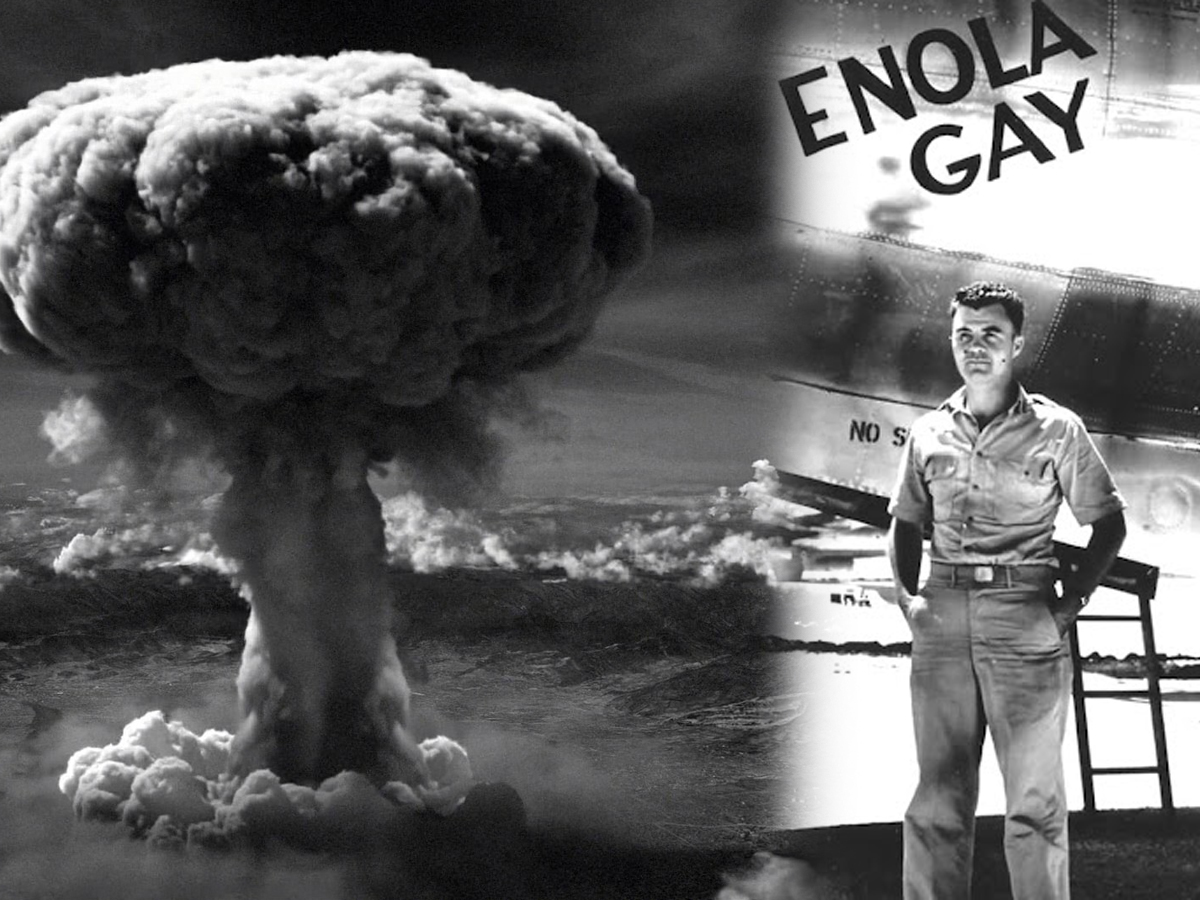
On August 6, 1945, exactly eighty years ago, the US dropped the world’s first atomic bomb on the Japanese city of Hiroshima, which changed the course of history in the world. This first-ever atomic attack was carried out by the US Air Force B-29 Superfortress named Enola Gay, killing over a lakh people and wiping out almost the entire city. Three days later, another Japanese city, Nagasaki, faced the same fate. These two bombs forced Japan to surrender, which effectively ended the Second World War.
While historians have debated for a very long time on the necessity and morality of the atomic bombings, what remains less discussed is how the pilots who flew these deadly missions felt about their role.
Hiroshima: First Target of Nuclear Warfare
On the morning of August 6, 1945, the Enola Gay, carrying a 9,700-pound uranium bomb named Little Boy, flew from its base in Tinian, near Guam, toward Hiroshima. At 8:15 am, the bomb was dropped, detonating with a temperature comparable to the sun’s core.
The blast instantly killed an estimated 80,000 people, and by the end of the year, radiation sickness and injuries took the death toll to about 140,000. Nearly 90 percent of the city’s 76,000 buildings were destroyed or severely damaged.
ALSO READ: “If I Live for 100 Years…”: Hiroshima’s Co-Pilot Could Never Forget That Moment
Just three days later, on August 9, the US dropped a more powerful plutonium bomb named Fat Man over Nagasaki using another B-29 bomber, Bockscar. Around 40,000 people died instantly, and another 40,000 later succumbed to radiation-related illnesses.
Together, the bombings killed more than 200,000 people. On August 15, 1945, six days after Nagasaki, Japan announced its surrender.
Inside the Enola Gay: A Crew That Changed History
Colonel Paul Tibbets was the pilot who led the mission to Hiroshima. He named the B-29 bomber Enola Gay after his mother. Along with a crew of 12 men, he flew the aircraft into history. As the plane approached Japan, naval captain William “Deak” Parsons and electronics specialist Morris Jeppson armed the bomb mid-air.
Jeppson recalled the moment he replaced Little Boy’s safety plugs, “He double-checked the red plugs were correctly set, gave the third one a final twist – ‘That was a moment,’ he remembered – and left,” reported Stephen Walker in his book Shockwave: Countdown to Hiroshima.
Co-pilot Bob Lewis noted in his logbook, “The bomb is now live. It’s a funny feeling knowing it’s in back of you. Knock wood.”
When the bomb detonated, the crew felt the shockwaves even 16 km away. A mushroom cloud quickly rose over Hiroshima. “The city wasn’t there. There was just nothing there. That dust cloud covered the whole city,” said Harold Agnew, a physicist from Los Alamos flying aboard The Great Artiste, a support aircraft.
Tibbets turned to his crew and said, “Fellows, you have just dropped the first atomic bomb in history.”
No Regrets: What the Pilots Believed
Navigator Theodore “Dutch” Van Kirk later said: “You just can’t imagine something that big. We couldn’t see how the Japanese could continue the war. Nobody said anything about the people on the ground. That wasn’t mentioned at all.”
Even decades later, Tibbets and his crew defended the bombings. In a 2002 interview with Studs Terkel, Tibbets said, “I knew we did the right thing because when I knew we’d be doing that, I thought, yes, we’re going to kill a lot of people, but by God, we’re going to save a lot of lives. We won’t have to invade [Japan].”
Tibbets, who died in 2007, never expressed remorse for the civilian deaths. “You’re gonna kill innocent people at the same time, but we’ve never fought a damn war anywhere in the world where they didn’t kill innocent people,” he told Terkel.
“If the newspapers would just cut out the s—: ‘You’ve killed so many civilians.’ That’s their tough luck for being there.”
Legacy of the Bombings Still Haunts the World
As the world marks the 80th anniversary of the Hiroshima and Nagasaki bombings, debates continue about whether they were necessary to end the war. What remains clear is the unimaginable scale of destruction—and the chilling clarity with which those who dropped the bombs viewed their historic role.
The story of the pilots offers a window into the mindset of wartime duty, one that prioritized military strategy over human cost.