A huge earthquake struck Russia’s Kamchatka Peninsula earlier today whose magnitude was recorded to be 8.8. Consequently, the United States and Japan alerted Tsunami warnings.
The epicenter of the quake was 133 km southeast of Petropavlovsk-Kamchatsky at a depth of 74 km, reported the United States Geological Survey (USGS).
The Government of Russia confirmed it to be the most powerful earthquake in the area since 1952. The Russia Earthquake 2025 has been the most powerful quake of the globe in 14 years.
Tsunami warning sirens were heard in Honolulu, leading to evacuations as people were instructed to relocate to elevated areas. Both the US National Tsunami Warning Center and the officials of Japan are monitoring wave movement closely and assessing potential hazards.
Let’s simplify it how an earthquake generates a tsunami and why would a Russian quake impact a country on the other side of the sea?
What is an earthquake?
An earthquake is a description of the tectonic plate movements under the earth surface. These movements induce vibrations referred to as seismic waves, which are the shockwaves felt on the surface of Earth. Earthquake occurs when tectonic plates move past or bump into one another.
Earthquake refers to the shaking of the Earth surface suddenly due to the ground movement beneath it. This typically occurs when tectonic plates which are large sections of Earth’s surface, move, collide, or pass over one another.
The pressure that is accumulating from this movement is released suddenly, creating shockwaves in the Earth. Earthquakes may be weak or extremely powerful, depending on the amount of energy released. They may occur on land or beneath the ocean. The current Russia Earthquake is one of the world’s strongest earthquakes until now.
What is a Tsunami?
Tsunami is technically a sequence of giant ocean waves. They are mostly triggered by an earthquake beneath the ocean. When the ocean floor moves, it propels the water above it, creating waves on the ocean.
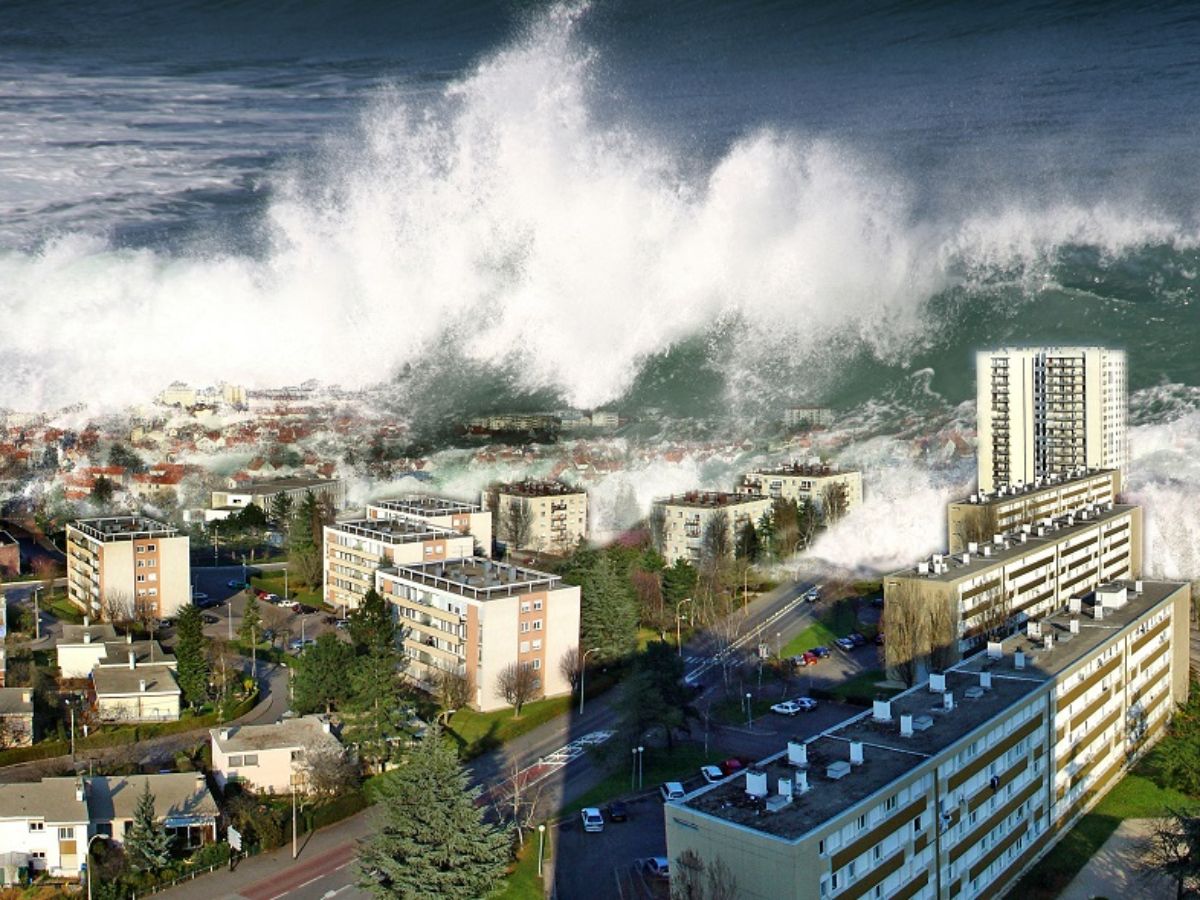
A tsunami can inundate and destroy entire coastal communities and increase in height as they travel towards shallow coastal regions.
Relationship between Earthquake and Tsunami
Tsunamis are large, destructive waves mainly caused by seismic activity underwater, particularly submarine earthquakes. When tectonic plates violently move under the ocean floor most often at subduction zones, they push huge amounts of water, creating waves that move at jetliner speeds across the ocean.
This isn’t an ordinary ripple. A tsunami wave in the open ocean can be almost imperceptible only a few feet high but as it reaches shallower coastal waters, its height can skyrocket and become deadly walls of water.
How Does a Quake in One Nation Cause a Tsunami in Another?
It all boils down to common tectonic boundaries and oceanic basins. The Pacific ‘Ring of Fire’, a horseshoe-shaped area of constant seismic activity connects nations such as Russia, Japan, Indonesia, Chile, and the U.S. in a series of tectonic plates that are always in movement.
When an intense earthquake strikes beneath the ocean in one area, the energy it releases travels in all directions through the water and through the earth. When the earthquake lifts or lowers a part of the seafloor, it shoots a rush of water outward in every direction.
Tsunami waves travel thousands of kilometers, maintaining very little loss of energy, which is why a quake off the coast of Russia can reach Japan just as the 2004 Sumatra earthquake reached Somalia and East Africa.