
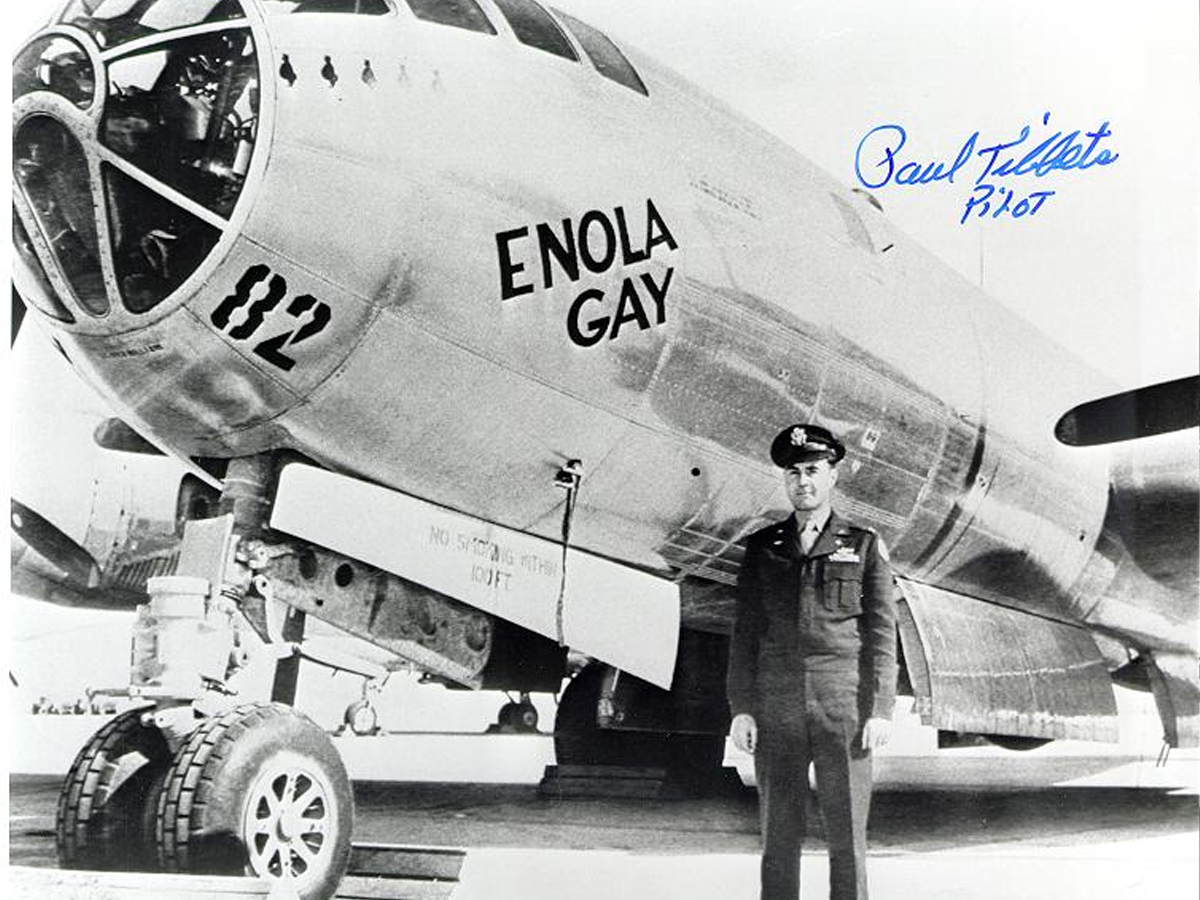
The voices of the crew members who flew those historic missions still reverberate with a mixture of pride, grief, and lingering agony eight decades after the US dropped atomic bombs on Hiroshima and Nagasaki. Though the bombings ended World War II, they left behind a trail of devastation and reflections that many of the men carried to their graves.
Unshakable Images of Horror
Robert Shumard, flight engineer on the Enola Gay, which dropped the bomb on Hiroshima, kept his silence on the destruction. “You don’t brag about wiping out 60, 70,000,” he once said before he died in 1967. Tail gunner George “Bob” Caron confessed to “a partial feeling of guilt” after seeing horrifying images of burned children from Hiroshima. “I wish I hadn’t seen them,” he told historian J. Samuel Walker.
Co-pilot Robert Lewis’s haunting words in his logbook became a lasting symbol of regret. “My God, what have we done? If I live for 100 years, I will never get these few minutes out of my mind,” he wrote after the bomb detonated over Hiroshima.
ALSO READ: Hiroshima and Nagasaki: 80 Years Later, The World Still Learns from the Silence
Could There Have Been Another Way?
Bomb arming officer Morris Jeppson reflected on the decision decades later, expressing sorrow over the method of demonstration. He once suggested that the bomb could have been tested in front of Japanese officials without targeting a populated city. In his letter to Walker, he wrote about Hiroshima’s “great tragedy” and his deep “sorrow.”
The mission’s navigator, Theodore “Dutch” Van Kirk, offered perhaps one of the most profound takeaways in a 2005 interview. “I pray no man will have to witness that sight again. Such a terrible waste, such a loss of life,” he said. “We unleashed the first atomic bomb, and I hope there will never be another.”
He added, “I pray that we have learned a lesson for all time. But I’m not sure that we have.”
ALSO READ: Hiroshima-Nagasaki Bombing: How Many Lives Were Lost During Atomic Attack?
Nagasaki: A Change of Target, But Not of Purpose
The second bomb, “Fat Man,” was intended for Kokura but was redirected to Nagasaki due to poor visibility. Charles “Chuck” Sweeney piloted the B-29 bomber Bockscar and dropped the bomb, which detonated over a torpedo factory used in the Pearl Harbor attack.
“Suddenly, the entire horizon burst into a super-brilliant white with an intense flash – more intense than Hiroshima. The light was blinding,” Sweeney recalled in his book War’s End.
The aircraft nearly ran out of fuel, landing in Okinawa with just a minute left in the tanks.
Duty, Not Regret
Unlike others, Sweeney stood by his mission. “I looked upon it as a duty. I just wanted the war to be over, so we could get back home to our loved ones,” he said in 1995. “I hope my missions were the last ones of their kind that will ever be flown.”
Fred Olivi, Sweeney’s co-pilot, echoed that sentiment. “While thousands died, I feel sure the bomb had to be dropped because, if the Americans had been forced to invade Japan, it would have been a bloodbath.”