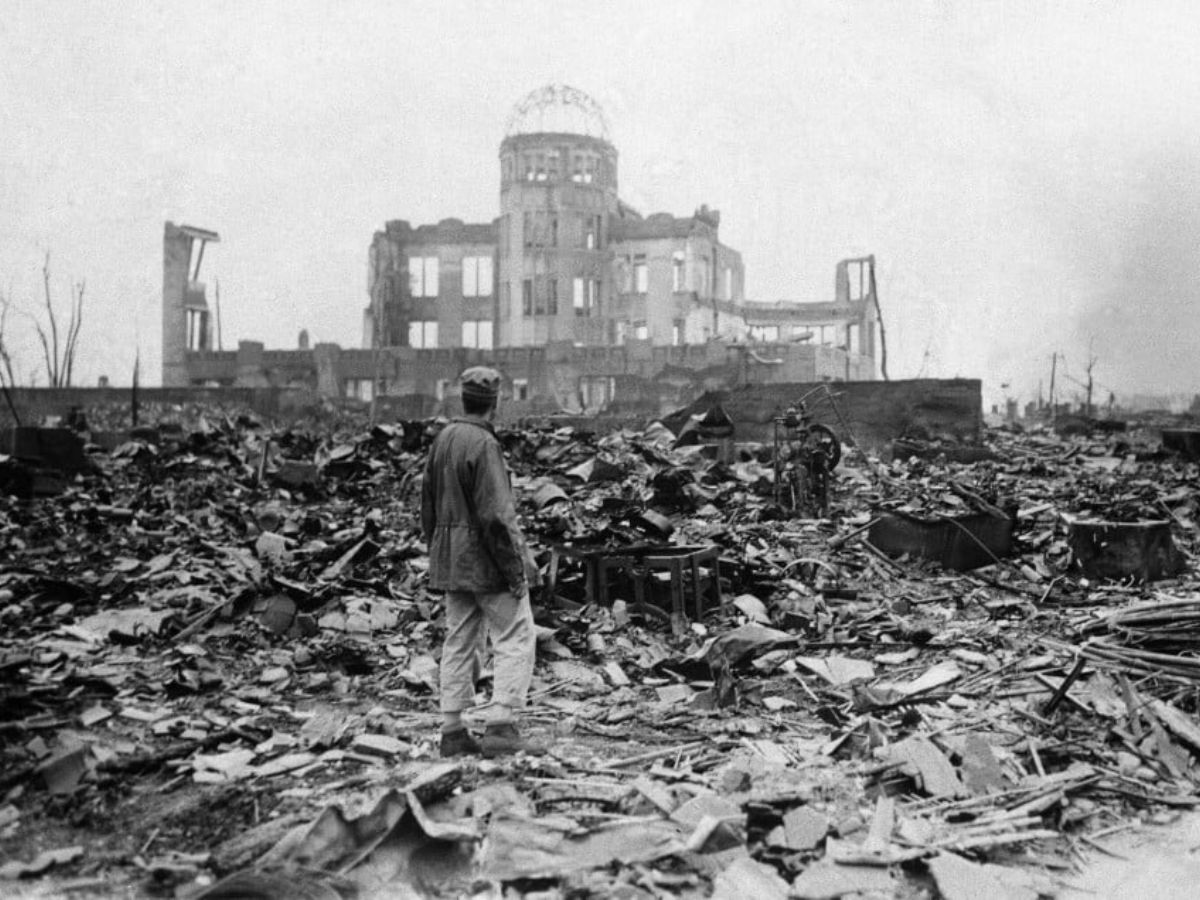
When the United States dropped atomic bombs on Hiroshima and Nagasaki, they collectively claimed the lives of 200,000 people in Japan. That was the first and only time nuclear bombs were used in warfare.
‘Hiroshima Day’ is observed on August 6 every year as a crucial day in the history to remember the repercussions of using atomic bombs.
Let’s get down to details:
Details of Bombing
The bomb ‘Little Boy’ was dropped using B-29 bomber Enola Gay in the city of Hiroshima at 8:15 am (local time), claiming the lives of 140,000 people. Three days later, on August 9, another bomb, ‘Fat Guy’ was dropped in Nagasaki at 11:02 am (local time), that killed 74,000 people.
About the bombs
‘Little Boy’ was a uranium-powered nuclear bomb that raised the temperature of Hiroshima to 4000 degrees Celsius or 7200 Fahrenhite, killing everything in its three-kilometre radius. On the other hand, ‘Fat Man’ was a plutonium-powered atomic bomb with power equivalent to 21 kilotons of TNT.
Destruction in Hiroshima and Nagasaki
The bomb dropped on Hiroshima killed nearly 140,000 people, whereas the bomb deployed on Nagasaki took lives of approximately 74,000 people. Together, they claimed the lives of 200,000 people.
The bombs destroyed 70% of the infrastructure in Hiroshima including buildings, schools, homes and businesses, and 44% of Nagasaki suffered consequences.
In the updated data of August 2024, Japan recognizes 3,44,306 deaths in Hiroshima and 198,785 deaths in Nagasaki, including radiation-related illness and injuries too.
Who were Hibakusha?
Survivors of the atomic bombing in Hiroshima and Nagasaki were known as ‘hibakushas’. They suffered from radiation-related illness, which was passed down from generation to generation. it caused disabilities in their children and a higher risk of deadly diseases like cancer and leukaemia.
‘Hibakusha’ people were subject to discrimination within the country. People refused to marry or hire them for jobs. Over time, rumors spread that ‘Hibakusha’ carried diseases and their offspring could be affected by them too.
What happened to the Plants?
It was assumed that the plantation and the earth at Ground Zero would be dead. However, a report by Grudge said that weeds appeared in a few months after the bombing. They mentioned that oleanders blossomed in the spring of 1946.