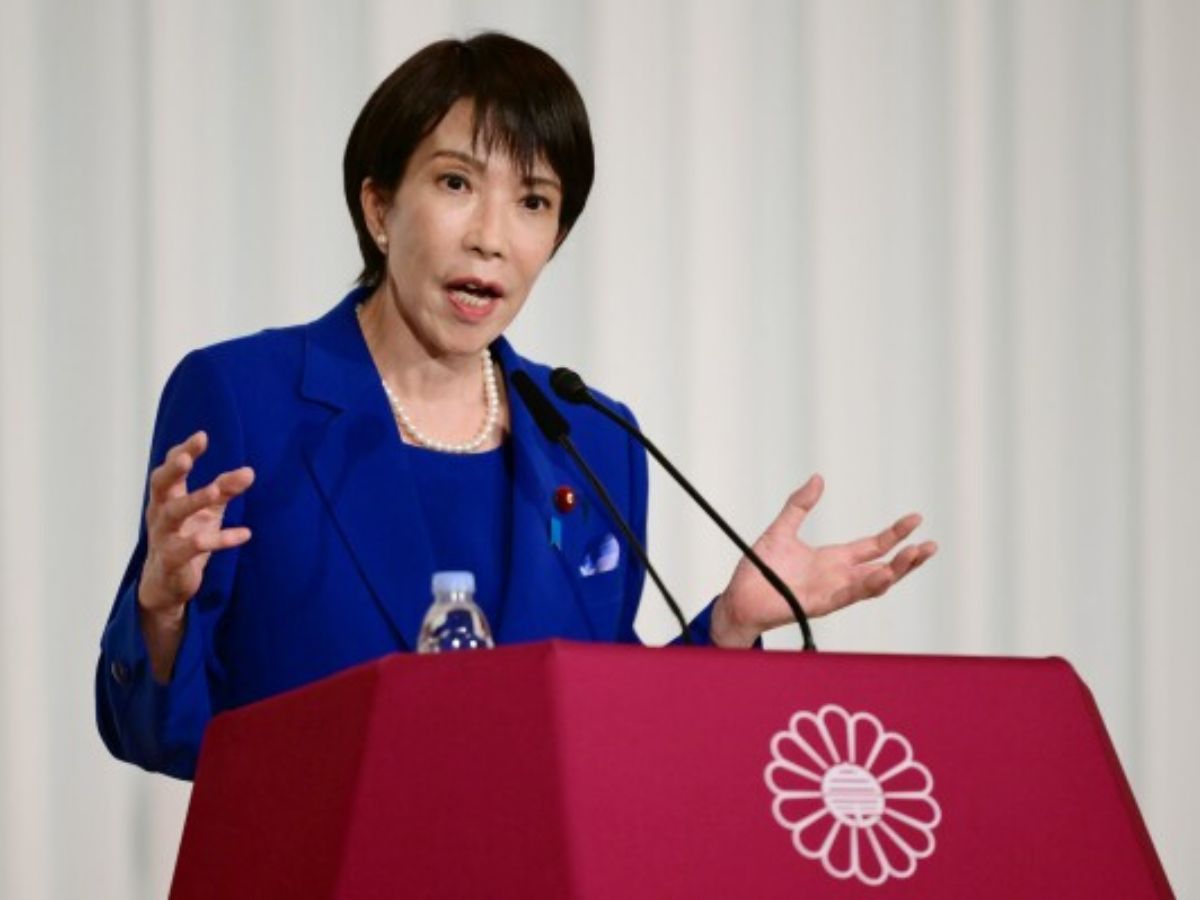
TOKYO: A political debate has intensified in Japan over the prime minister’s “exclusive prerogative” to dissolve the House of Representatives after Prime Minister Sanae Takaichi recently exercised the authority, triggering an early general election and drawing criticism from opposition parties, Kyodo News reported.
The snap election scheduled for February 8 comes less than 16 months after the previous polls held in October 2024, prompting opposition lawmakers, including members of the newly formed Centrist Reform Alliance, to call for limits on the dissolution power, long viewed as a discretionary tool of the prime minister.
While Japan’s Constitution does not explicitly grant the prime minister authority to dissolve the lower chamber, Article 7 allows the emperor to do so “with the advice and approval” of the Cabinet.
Over decades, this provision has been interpreted as enabling the prime minister to initiate dissolution, as the emperor plays no political role.
Legal scholars have increasingly questioned this practice, describing the government’s “arbitrary” use of the authority as undesirable and urging deeper parliamentary debate to establish broader consensus, Kyodo News reported.
Takaichi dissolved the lower house on January 23 at the opening of the regular Diet session, marking the first such move without prior parliamentary debate since 1966.
The decision cut short lawmakers’ four-year terms, which were set to continue until 2028. “Japan uses the power to dissolve (the lower house) more frequently than any other country,” Satoshi Honjo, co-policy chief of the new centrist party, told reporters in January, adding that the authority should be exercised with restraint.
The Centrist Reform Alliance, formed by the Constitutional Democratic Party of Japan and Komeito, has pledged in its election manifesto to clarify dissolution rules to “prevent dissolutions that disregard public opinion,” while the Social Democratic Party has made a similar campaign commitment, according to Kyodo News. Takaichi, who leads the ruling Liberal Democratic Party and governs with coalition partner Japan Innovation Party, is seeking to expand her razor-thin parliamentary majority. At a press conference on January 19, Takaichi defended the dissolution, saying it was necessary because the new ruling bloc formed in October and “major policy shifts” such as her “responsible yet aggressive” fiscal stance had “not yet received a direct mandate from voters.”
Her move has renewed attention on two constitutional provisions, Article 7 and Article 69.
Article 69 requires the Cabinet to resign unless the chamber is dissolved within 10 days of a no-confidence vote.
Past legal challenges argued that resolutions not tied to Article 69 were unconstitutional, but Japan’s Supreme Court avoided ruling on the issue in 1960, stating that highly political acts fall outside judicial review.
Since then, Article 7 has been widely interpreted as allowing prime ministers to dissolve the lower house at a politically advantageous time, a practice experts say has become deeply entrenched. Following media reports in mid-January about a possible dissolution, Cabinet members including Chief Cabinet Secretary Minoru Kihara declined comment, maintaining that it is “the prime minister’s exclusive prerogative,” Kyodo News reported.