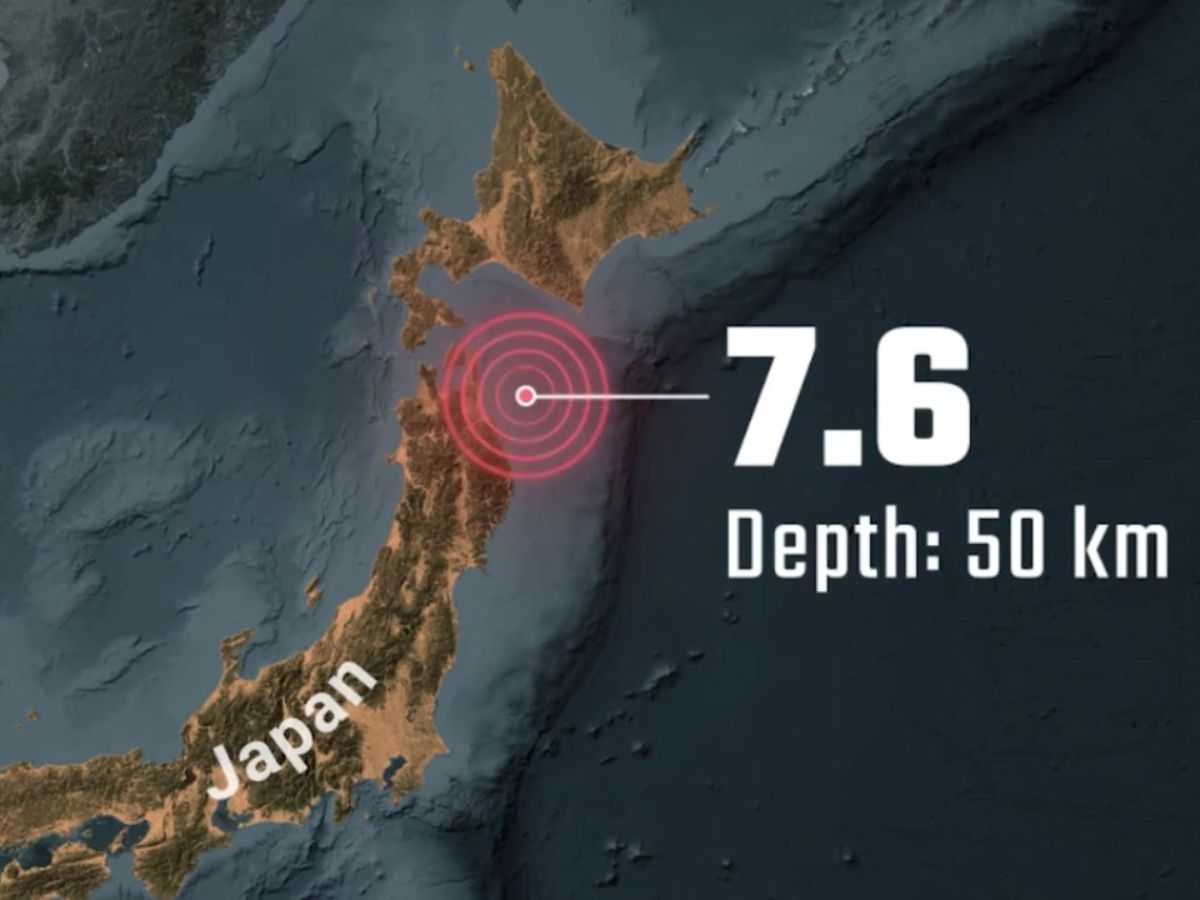
A powerful earthquake with a magnitude of 7.6 struck off the coast of northern Japan late Monday, injuring at least 23 people and sending tsunami waves of up to 70 centimeters onto the Pacific coastline. The quake, which prompted urgent evacuation warnings and halted high-speed rail services, has put authorities on alert for possible aftershocks in the coming days.
What is the Extent of the Damage and Injuries?
The earthquake, which hit at 11:15 p.m. local time about 80 km off the coast of Aomori prefecture, caused injuries primarily from falling objects and accidents. According to the Fire and Disaster Management Agency, 23 people were injured, including one seriously.
Specific incidents included:
- Several people were hurt at a hotel in Hachinohe city.
- A man in the Tohoku region sustained minor injuries after his car fell into a hole created by the tremors.
- Most injuries were non-life-threatening, as reported by public broadcaster NHK.
What Was the Tsunami Impact?
The Japan Meteorological Agency had warned that tsunami waves could reach 3 meters (10 feet). In the end, the largest wave was 70 centimeters (28 inches) at Kuji port, showing the prompt emergency response worked.
Key tsunami-related actions included:
- Evacuation Orders: Minoru Kihara, the chief cabinet secretary, encouraged coastal people to relocate right away to higher ground.
- Downgraded Alerts: The initial tsunami warnings were later downgraded to advisories as the wave threat subsided.
- Preparedness Review: Authorities advised residents in 182 municipalities to review their emergency plans, warning of a slightly higher risk of a larger earthquake in the coming week.
How Has Infrastructure Been Affected?
Services and utilities in the impacted area were severely disrupted by the earthquake.
Reported impacts include:
- Power Outages: Around 800 homes were without electricity.
- Transport Halts: Shinkansen (bullet train) services and a few local rail lines were suspended. At Hokkaido’s New Chitose Airport, about 200 travelers were stuck overnight.
- Nuclear Facility Inspection: Safety checks were initiated at nuclear plants. At the Rokkasho fuel reprocessing plant in Aomori, about 450 liters of water spilled from a cooling area, but officials confirmed no safety risk as water levels remained normal.
- Military Response: Defense Minister Shinjiro Koizumi stated 18 defense helicopters were deployed to assess damage, and about 480 residents took shelter at Hachinohe Air Base.
Also Read: Golden Globes Nods: DiCaprio’s ‘One Battle After Another’ Tops List with 9 Nominations
Your Questions Answered: Japan Earthquake FAQs
Q: Where was the earthquake’s epicenter?
A: The epicenter was in the Pacific Ocean, roughly 80 kilometers (50 miles) off the coast of Aomori prefecture, at a depth of 50 km.
Q: Is there still a tsunami threat?
A: Tsunami warnings have been downgraded to advisories, although residents are being advised to stay cautious after the JMA warned of aftershocks and a small rise in the risk of a larger earthquake.
Q: Were any nuclear plants damaged?
A: No major damage has been reported. The Nuclear Regulation Authority confirmed a 450-liter water spill at the Rokkasho reprocessing plant but stated it posed no safety risk. All facilities in the region are undergoing standard post-quake inspections.
Q: How common are earthquakes of this magnitude in Japan?
A: Frequent tremors make Japan one of the world’s most earthquake-prone countries. Because it lies on the Pacific “Ring of Fire,” even major earthquakes of magnitude 7.0 and above occur regularly.
Q: What should residents do now?
A: Authorities have advised residents in the affected regions to:
- Avoid coastlines until all advisories are lifted.
- Prepare for aftershocks by securing furniture and checking emergency kits.
- Review evacuation routes and stay informed via official channels like NHK and JMA alerts.
This is a developing story. Updates may follow.