
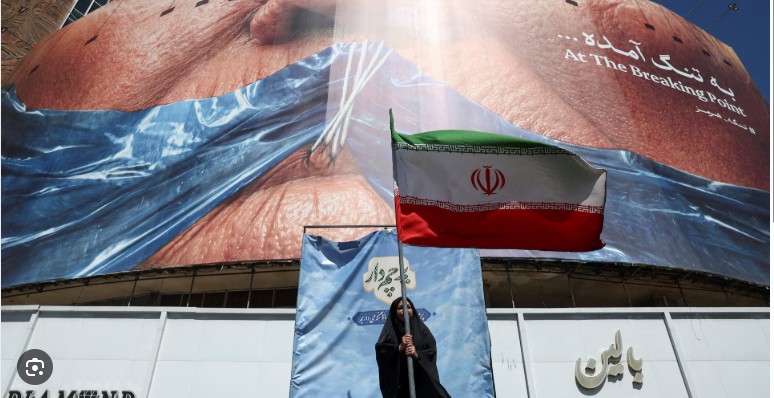
Iran’s top negotiator and its foreign minister were in Doha for talks with Qatar’s prime minister on a potential deal with the U.S. to end the three-month-old war, an official briefed on the visit said on Monday, after Washington and Tehran played down hopes for an imminent breakthrough.
U.S. Secretary of State Marco Rubio told reporters in New Delhi earlier that the U.S. would give diplomacy every chance to succeed before considering whether to deal with Iran in “another way”.
There was a “pretty solid thing on the table in terms of their ability to open up the strait, get the strait (of Hormuz) open, enter into a very real, significant, time-limited negotiation on the nuclear matter, and hopefully we can pull it off,” Rubio said.
In a lengthy post on Truth Social on Monday, U.S. President Donald Trump said talks with Iran were going nicely and urged more Arab and Muslim states to sign up to the Abraham Accords, which aim to normalise ties between Arab and other Muslim-majority states and Israel. He said Saudi Arabia and Qatar should immediately sign up and everyone else should follow suit.
Trump in an earlier post on Monday said the Iran deal will either be “great and meaningful, or there will be no deal at all.”
Iran’s foreign ministry spokesperson Esmaeil Baghaei said in a weekly briefing on Monday that a conclusion had been reached on many topics, but that does not mean that “we’re close to signing an agreement”.
The official briefed on the Iranians’ Doha visit told Reuters the discussions were focused primarily on the Strait of Hormuz and Iran’s stockpile of highly enriched uranium, while the country’s central bank governor is also part of the delegation to discuss the potential release of frozen Iranian funds as part of a final deal.
Baghaei said the potential memorandum of understanding contains 14 points and is focused on ending the war and the U.S. naval blockade of the Strait of Hormuz, in exchange for Iran taking steps to ensure safe transit through the strategic waterway.
He said the talks were not yet focusing on nuclear issues, however, which will be negotiated over a 60-day period if the framework accord is agreed.
Trump has said his key aim in the war is to prevent Iran from developing a nuclear weapon with its highly enriched uranium. Tehran has consistently denied it has any plans to do that.
A day earlier, Trump wrote on Truth Social that the U.S. blockade on Iranian ships in the Strait of Hormuz would “remain in full force and effect until an agreement is reached, certified, and signed”.