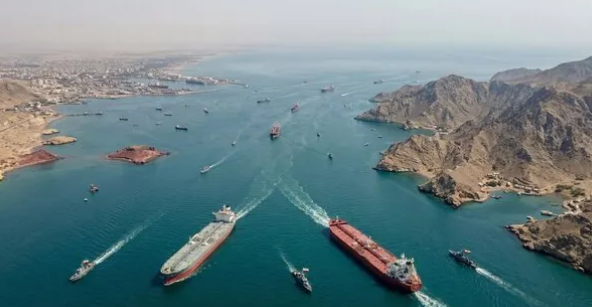
This week, the attacks intensified between the US and Iran, which brought an already fragile ceasefire to collapse completely and re-energised debates about the future security order in West Asia. These developments have direct implications for regional geopolitics, global energy markets and the prospective role of NATO in the Gulf, even as key structural and political constraints make a full-scale NATO deployment in West Asia unlikely. Iran’s unprecedented attack on two Indian ships this week has also collected sharp reactions from India.
The April 2026 interim ceasefire between the US and Iran, framed by President Donald Trump as a two-week suspension of offensive operations linked to reopening the Strait of Hormuz, could never translate into a stable truce on the ground. While the US publicly committed to halting offensive strikes on Iran, Iran continued to use missile and drone attacks against regional oil facilities and Gulf Arab states, and both sides accused each other of violating ceasefire terms. Iranian officials insisted on retaining control over traffic through Hormuz, imposing toll tax, and on linking ceasefire implementation to wider regional issues, including hostilities in Lebanon, whereas the US position centred on curbing Iran’s nuclear activities, missile programme and regional proxies.
Then, the pattern shifted decisively toward renewed escalation. US Central Command reported intercepting Iranian ballistic missiles and drones and conducting “defensive” strikes on Iranian missile launch sites and control facilities, including on Qeshm Island, in response to attacks on cargo ships and alleged threats to commercial shipping. Iran, in turn, launched missiles at US bases and Gulf allies in Bahrain and Kuwait, and targeted vessels near Oman, framing these actions as retaliation for US seizures of ships and strikes on Iranian assets. This tit-for-tat dynamic produced an oxymoronic situation of attacks with negotiations in parallel, as Trump and Iranian leaders continued to signal willingness to pursue technical talks even while trading military attacks on each other.
The immediate geopolitical impact of these attacks has been to heighten insecurity among Gulf Arab states, expose the limits of US crisis management, and complicate the diplomatic efforts of mediators such as Qatar. Bahrain, Kuwait, Qatar and the UAE have all faced direct missile or drone threats, underscoring their vulnerability to Iranian coercive power and reinforcing dependence on US and other external security guarantees. The UN Secretary-General has warned that continued escalation could lead to a return to full-scale war with “unpredictable ramifications” for the region and the wider world, particularly for economically fragile states.
Global energy markets have responded sharply to the instability around Hormuz. US strikes on Iranian targets and Iranian attacks on shipping have repeatedly pushed oil prices above 100 dollars per barrel and disrupted plans by the International Maritime Organization and other actors to evacuate or reroute vessels stuck in the Gulf. The blockade and intermittent openings of the Strait have affected roughly a fifth of global oil supply, with traders oscillating between expectations of resumed flows under ceasefire conditions and renewed fears of long-term disruption. These swings highlight how the war between US-Iran reverberates through global macro-economics, adding a pronounced energy security dimension to what might otherwise appear as a regional conflict. Also, the present situation has driven the regional actors to explore diversified partnerships, including with European states and Asian powers, to hedge against volatility.
After Iranian attacks on ships in Strait of Hormuz, NATO nations have started speaking against Iran. This week, Britain has declared IRGC as a terrorist organisation. Against this backdrop, the question of whether NATO could ‘enter’ West Asia alongside the US must be assessed through the alliance’s existing partnership mechanisms and out-of-area operations experience. NATO has long maintained dialogue and limited cooperation with West Asian and Gulf states through two frameworks: the Mediterranean Dialogue (since 1994) and the Istanbul Cooperation Initiative (ICI, launched in 2004), which provides political consultation, training and practical cooperation with Bahrain, Kuwait, Qatar and the UAE. These initiatives however do not offer any collective defence guarantees or pave the way to NATO membership.
In the initial months of US-Iran war, the NATO signalled reluctance to be drawn into a war, even as they recognised their stake in securing energy routes and regional stability.
NATO’s historical out-of-area operations in Kosovo, Afghanistan and Libya demonstrate that the alliance can and has intervened beyond its traditional Euro-Atlantic theatre when member states agree on the political necessity and legality of such missions. However, several factors constrain similar engagement in West Asia. Legally, NATO’s collective defence obligations under Article 5 apply only to member states, and partnership frameworks like ICI do not create treaty-based commitments to defend Gulf partners against attack. Politically, alliance members are also divided over the wisdom of deeper entanglement in West Asia at a time when they also face pressing security challenges in Europe and the Indo-Pacific. But, prolonged choking of Strait of Hormuz by Iran seems to be driving NATO nations to enter into the Region. For example, France and Britain have outlined plans for a coalition of roughly a dozen countries to guarantee safe passage in Hormuz and the Gulf of Oman once tensions ease, with several NATO allies already deploying minehunters and warships to the surrounding region. This seems to be a paradigm shift in the approach of NATO towards Iran. Iran must understand that choking and controlling Strait of Hormuz against International laws and disrupting global energy security would not fetch it anything other than a collective reply from the world. And that’s why, at least I think, NATO’s involvement in this entire war in the future could bring the war to a decisive turning point.