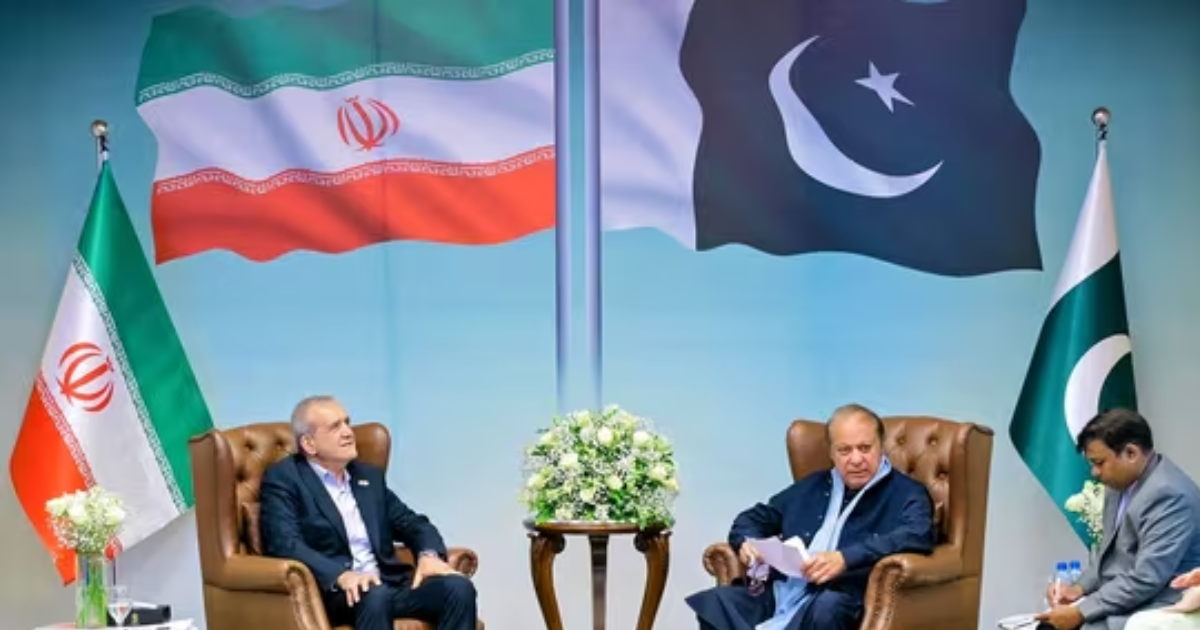
Pakistan and Iran decided to boost bilateral commerce to USD 8 billion a year on Sunday as their trade ministers conducted talks to strengthen their political and economic ties.
“Kamal envisioned that, if fully leveraged, bilateral trade between Pakistan and Iran could easily exceed USD 5–8 billion annually in the coming years,” the ministry said.
Pakistan’s Commerce Minister Jam Kamal Khan met Iranian Minister for Industry, Mines and Trade Mohammad Atabak during the state visit of the Irani President Masoud Pezeshkian to Islamabad and agreed on bilateral trade increasing up to USD 8 billion yearly. They laid stress on geographic advantages to their border trade and improving border logistics to the greater aspect of economic integration.
Agreements beyond the previously stated aspirations were made since both sides aimed for a USD 10 billion target through an MoU in early 2025. The 10-billion-dollar goal remained aspirational, but parties now shifted focus to a realistic, actionable expansion at the 8-billion-dollar threshold in the interim while still keeping the long-term views alive.
Khan said that beyond bilateral gains, such connectivity could expand to Turkey, Central Asia, Russia, and even parts of West Asia, creating an economic bloc of substantial power and resilience. According to the statement, the two ministers concurred that it is critical to identify certain industries for future cooperation, including cross-border logistics, services, energy, livestock, and agriculture.
Key Measures & Regional Cooperation Pillars
Simpler customs, reduced business visa fees, and eased transit barriers are some ways by which the cross-border movement of goods can be improved. The major areas for impact to be expanded include agriculture, livestock, energy, logistics and IT services.
Joint B2B meetings and trade delegations are organized with chambers of commerce to allow a space for direct commerce relationship building and trust building. The ministers stressed the harnessing of their email “discount of distance” meaning economic advantages of proximity to realize cost and time-efficient trade over the approximately 900-km Pakistan-Iran border.
The Importance of This The long-term ambition of Pakistan for increasing economic linkages with Iran has ambitions also to resume some old energy projects like the stalled IP gas pipeline, which seems to face delays due to sanctions. This agreement also underlines the fact that Pakistan is generally moving away from the rest of Asia to focus more on trade and strategic ties toward the east in this particular region as the geopolitics of West Asia is undergoing significant change.
Immediate Aim: $8 billion; future projection: both sides had earlier committed to achieving $10 billion worth of trade within the next five years. Follow-through will depend on improved infrastructure, tariff harmonization, and resolution of existing friction points.