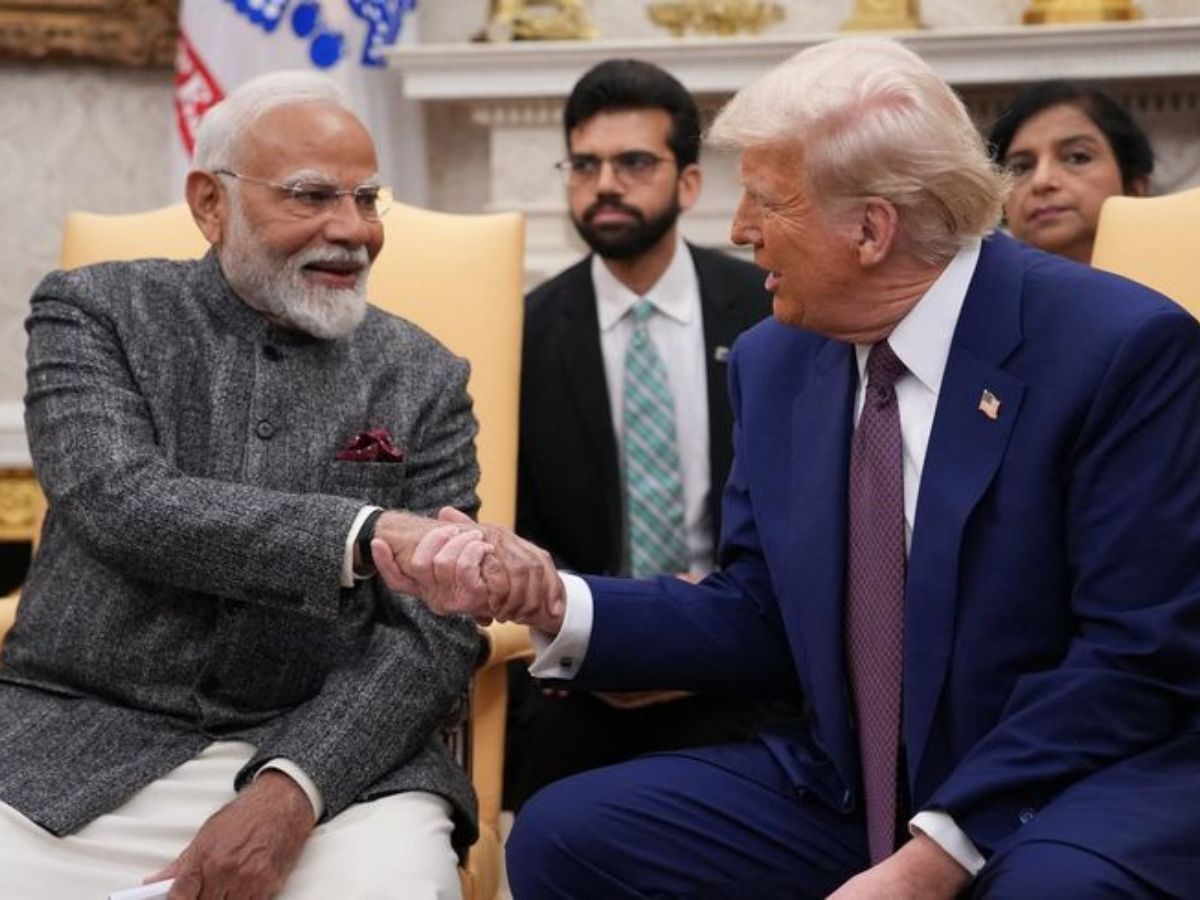
India and the United States are in the final stages of concluding a mutually beneficial early trade agreement, with both sides aiming to seal the deal by the end of August—strictly within the bilateral framework agreed upon on March 29. This development comes despite recent political rhetoric from US President Donald Trump and his tariff threats against Indian goods.
Intense Negotiations Underway
The two countries have already completed five rounds of physical negotiations and several virtual meetings, aligning most terms under the “Terms of Reference” (ToR) finalized in New Delhi in March. US Vice President JD Vance had publicly announced the ToR during his India visit in April, calling it a “vital step” toward a comprehensive bilateral trade agreement.
Negotiators are now working virtually to resolve the remaining differences ahead of the sixth and potentially final round of talks, scheduled for August 25 in New Delhi, when the American delegation arrives on August 24.
Also Read—India Debunks ‘Fake News’ Amid US Tariff Blow, Sixth Round of Talks on Cards
Energy Trade in Focus—but With Full Sovereignty
A key highlight of the evolving deal may be a provision for expanded bilateral energy trade. India is likely to increase imports of US energy resources, provided they are commercially viable over the long term. However, sources clarified that there will be no restriction imposed on India regarding energy procurement from any third country, including Russia.
“Energy security is non-negotiable for India,” said an official familiar with the developments. “We import oil from 39 countries, and the US is just one of them. The deal will not limit our sovereignty over choosing suppliers.”
India is the third-largest importer of crude oil in the world, after the US and China, meeting nearly 87% of its crude oil demand through imports. Russia was the top supplier in 2023, accounting for nearly 39% of India’s crude oil and condensate imports, according to a US Energy Information Administration (EIA) report.
Also Read- Trump Aide Accuses India of Funding Russia’s War, PM Modi Holds Ground on Energy Security
Trump’s Tariff Threats and India’s Response
On July 30, President Trump announced punitive tariffs on Indian exports to the US, including a 25% levy, and hinted at penalties for continuing oil imports from Russia. The Indian side has not officially responded to the outburst but remains steadfast in protecting its domestic agriculture, dairy, and MSME sectors, an issue that has reportedly caused friction in the negotiations.
Commenting on India’s energy strategy, another source said, “India began purchasing Russian crude at discounts after the US and EU imposed sanctions on Moscow in 2022. These imports increased more than sixfold and continue due to both economic and strategic reasons.”
Despite the noise, the upcoming trade deal is being designed to stand independent of both countries’ other strategic alignments. The two sides are focused on building a resilient and mutually respectful trade ppartnership withbalanced outcomes.