
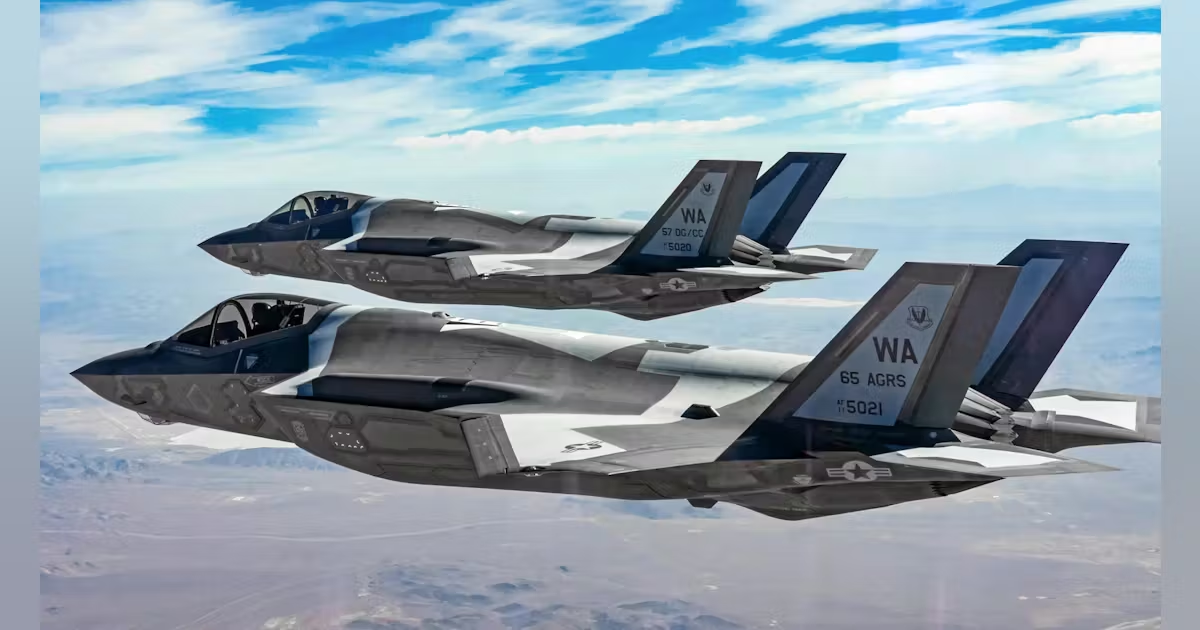
India reportedly decided to distance itself from a proposal to purchase advanced F-35 stealth fighter jets from the United States after President Donald Trump announced a sharp 25% tariff on Indian exports. This was viewed more as an economic coercive measure weighing on Indian minds given the `timing` of the tariff announcement. Indian officials began to view this measure as one of sorts coercive in nature tied with broader strategic interest in terms of defense ties with Russia and self-reliance goals in defense production.
According to data from the International Monetary Fund, the United States’ trade imbalance with India was approximately $43 billion last year, ranking it as the 11th highest and far less than that of nations like Vietnam, which was over $121 billion. Earlier this month, Mr. Trump declared a 20% tariff rate for Vietnam.
The “whole trade team has been frustrated” with New Delhi, US Treasury Secretary Scott Bessent said on Thursday, accusing India of stalling trade talks in an interview with CNBC. He criticized India for not being a “great global actor,” pointing to its close connections with Russia, and added that the country now had the responsibility to take the next steps.
From Allies to Into Adversarial: Defense Deals in Jeopardy
Till date, India and the U.S. have expanded on defense cooperation. India stepping back from the F-35 talks signals discomfort with the transactional diplomacy of Washington. Defense officials made the statement that such high-value acquisitions under the shadow of what they call `economic coercion’ cannot take place. India is now looking at upgrades to its own fleet, in conjunction with advanced Russian jets such as the Su-57. At the same time, India reiterated its support for the indigenous “Tejas” fighter program.
Tariffs Undermining Strategic Trust
President Trump is seen as approaching the imposition of tariffs with the idea that India’s relations with Russia, particularly in energy and defence, are detrimental to U.S. strategic interests. In contrast, Indian policymakers contend that this view overlooks India’s balancing act between global powers. The tariffs have exacerbated already strained relations between the two countries, which had been in the doldrums since previous years over recent stalled trade talks. The pushback against the F-35 deal is symbolic of a more extensive strategic recalibration by India, which seeks to avoid being cornered into any one alliance.
‘Make in India’ Gains Ground
India’s fresh emphasis on domestic manufacturing for defense under the Make in India initiative gained prospects off the back of this fallout. With the intensification of global tensions and focus on economic sovereignty, the suspension of the F-35 deal could turn out to be a harbinger for long-term investment in homegrown innovation and military self-reliance.
Regarding the seriousness of Mr. Trump’s statements, analysts are unsure. “Trump being Trump, we can’t be sure,” stated Abhijit Das, an expert on international commerce headquartered in New Delhi. “This could be a negotiating ploy as he did something similar with the EU.” By first threatening 30% tariffs and then lowering them to 15%, the US leader coerced the EU into a trade agreement.
Despite being relatively mild, India’s markets and rupee both fell on Thursday. At 10:50 a.m. local time, the rupee dropped as much as 0.4% to 87.7375 per dollar before bouncing back to trade 0.2% down. The benchmark NSE Nifty 50 Index, however, had fallen as much as 0.9% earlier in the day and was now down 0.5%.