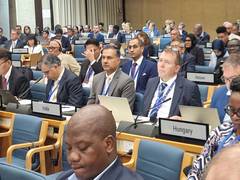
Nairobi [Kenya], June 30 (ANI): India has conveyed its readiness to engage constructively towards a balanced and effective global instrument on plastic pollution while strongly emphasising the need to safeguard the right to development.
According to an official social media post by India’s mission in Kenya, the nation’s delegation to the Informal Heads of Delegation (HODs) meeting in Nairobi was led by Adarsh Swaika, the Permanent Representative to UNEP and UN-Habitat.
PR to UNEP @AdarshSwaika1 led the 🇮🇳 delegation at the Informal HODs meeting in Nairobi ahead of the next session of Intergovernmental Negotiating Committee to develop the instrument on plastic pollution (INC 5.4).
He underlined the following key principles on behalf of Indian… pic.twitter.com/APItpYqCO9
— India in Kenya (@IndiainKenya) June 30, 2026
The crucial meeting was held ahead of the upcoming session of the Intergovernmental Negotiating Committee (INC 5.4), which is tasked with developing an international legally binding instrument on plastic pollution.
While reiterating India’s constructive approach, Swaika underlined several key guiding principles on behalf of the Indian delegation to ensure a balanced outcome.
India firmly maintained that decisions must be taken by consensus to ensure complete collective ownership among member states and that the process itself must remain entirely member-driven.
On the scope of the proposed treaty, the Indian delegation highlighted that it must focus strictly on plastic pollution in line with the United Nations Environment Assembly (UNEA) Resolution 5/14.
India emphasised avoiding any regulatory overlap with other international frameworks, particularly the World Trade Organization (WTO) and the World Health Organization (WHO).
Addressing key developmental concerns, India strongly advocated that there should be no capping or regulation of primary polymer production in order to safeguard the fundamental right to development.
Furthermore, the delegation stated that implementation must be country-driven, taking into account national circumstances and guided by the Rio Principles, including common but differentiated responsibilities.
Highlighting the challenges faced by developing nations, India noted that the provision of Means of Implementation is critical, including the necessity of a dedicated multilateral fund.
Swaika concluded that the entire negotiation requires a fair, transparent and inclusive process that is fully reflective of national circumstances and capabilities. (ANI)
The article has been published through a syndicated feed. Except for the headline, the content has been published verbatim. Liability lies with original publisher.