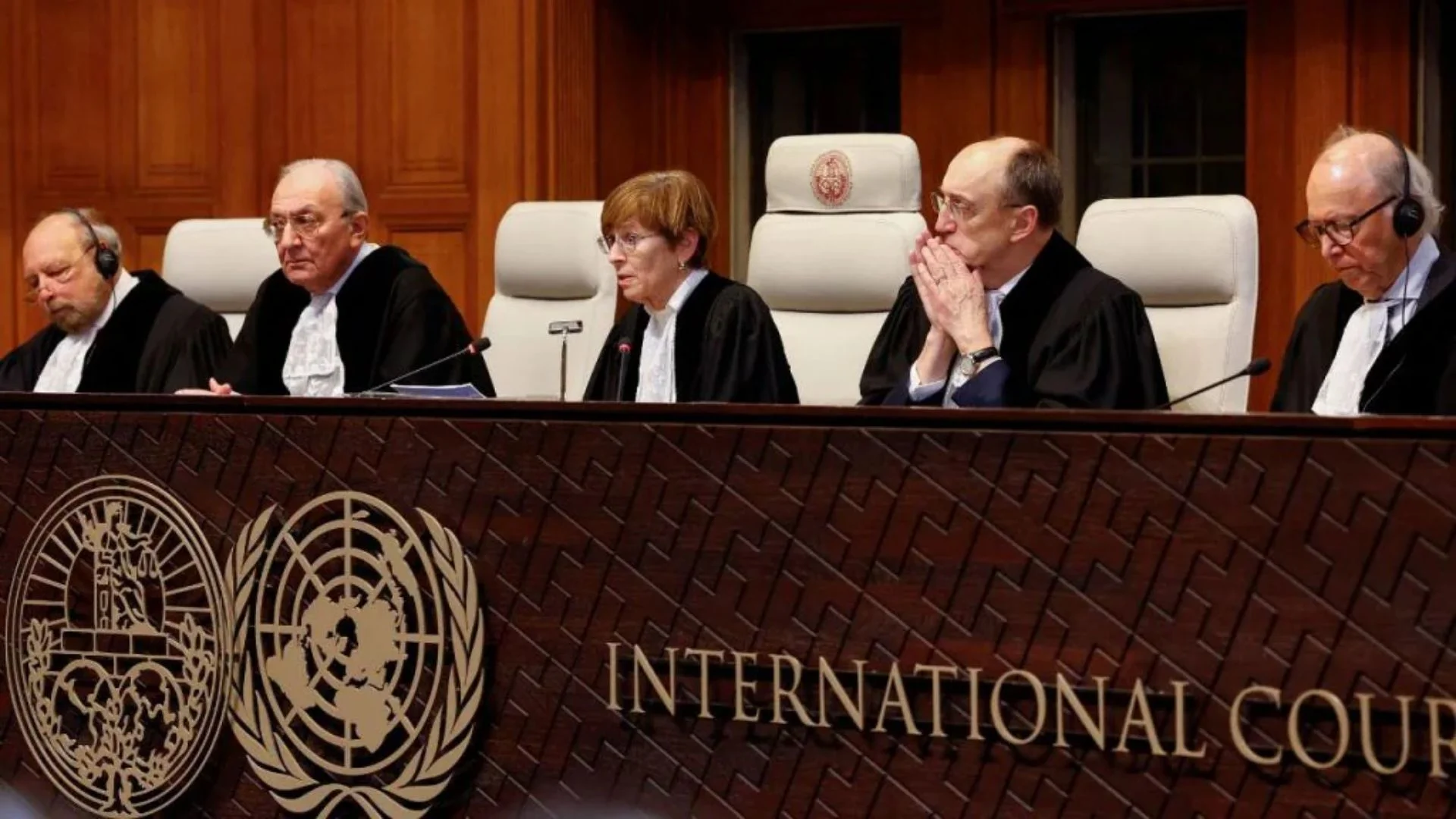
World Court Gives Historic Climate Ruling
In a groundbreaking legal opinion, the International Court of Justice (ICJ) has asserted that nations have binding international legal duties to take action on climate change and inaction could be a “wrongful act.” The non-binding advisory opinion is likely to redefine global climate lawsuits and strengthen responsibility for leading polluting states.
The ICJ decision is in response to the call by small island nations that are threatened by climate change with rising sea levels. It declares that the governments are obligated under current international law to reduce greenhouse gas emissions and take aggressive climate action.
A Legal Path to Climate Justice
The court’s ruling is expected to affect thousands of climate-related cases around the globe. Center for International Environmental Law senior attorney Joie Chowdhury described it as “a legal blueprint to hold major emitters accountable.” She further stated that courts everywhere tend to cite ICJ decisions as persuasive authority, and the opinion could spur more domestic and regional court cases as well as state-to-state lawsuits.
The court further affirmed that hazardous climate policies like subsidies for fossil fuels, the granting of licenses to explore, or an inability to manage emissions are capable of constituting internationally wrongful acts.
Litigation Between States May Follow
Legal analysts maintain the ICJ has paved the way for smaller, climate-exposed nations to sue bigger emitters. While proceedings are onerous and expensive, the ruling sets out legal precedent for claims on exported emissions, energy subsidies, or transboundary environmental damage.
“The ruling draws a red line: going on as usual without mitigation could be unlawful,” Chowdhury stated.
Support for Island States and Sovereignty
The ICJ also dealt with a serious issue for low-lying island states: losing territory to the rising seas. According to the court, such a loss of territory does not deny a state’s legal statehood. This brings relief to countries like Tuvalu and Vanuatu, which have long struggled to defend their sovereignty in the face of existential climate risks.
Impacts Beyond the Courtroom
While the ICJ’s opinion is not legally binding, its actual strength lies in its moral and legal clout. Climate experts indicate it will have traction in UN talks, particularly at the coming COP30 summit in Brazil. It can also gain traction for climate finance, emissions goals, and compensation for loss and damage.
Notably, the ruling rejects the contention that the Paris Agreement represents the only legal framework governing climate action. The ICJ was keen to note that more general international laws such as human rights and sea law also establish binding obligations.
A Turning Point in Climate Accountability
The ICJ ruling solidifies the link between human rights and climate justice, taking into account damages like climate displacement and health effects. More than 2,600 climate-related cases have been brought worldwide already, so it’s expected that this ruling will “supercharge” subsequent litigation efforts.
“This is not law it’s about survival, dignity, and justice,” Chowdhury stated. “Now it’s now up to courts and governments to make that law real.”