
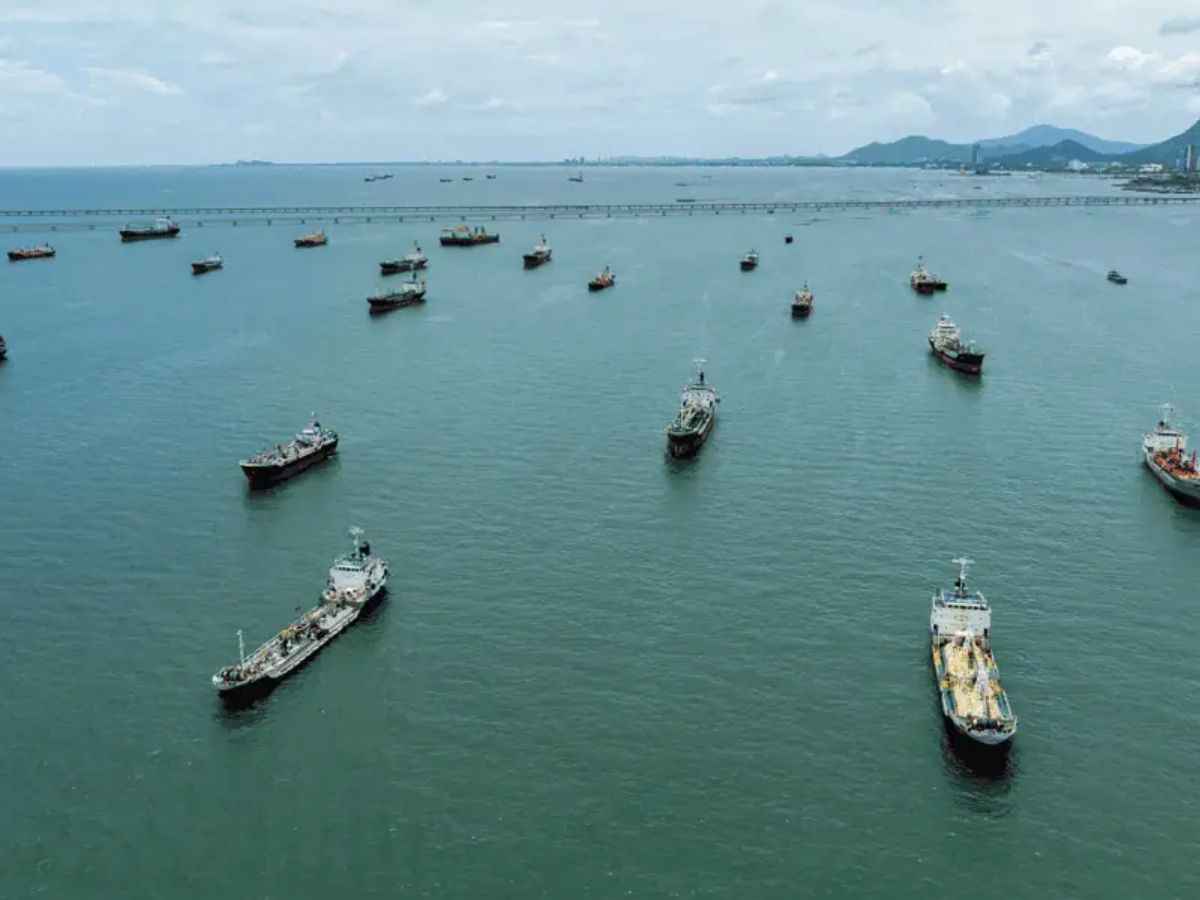
The Wall Street Journal citing administration officials has reported President Donald Trump telling his aides that he is “willing to end” the military operation against Iran, even if the Strait of Hormuz remains largely closed. And as reported by the Times of India on 01 April: “Go to Hormuz, take your oil”. These are interesting statements which only reinforce what Kissinger famously said: “America has no permanent friends or enemies, only interests.”
While conflict is in no one’s interests, American interests in the recent Iranian conflict are both articulated and apparent. Crude price above $70 per barrel makes shale oil production in America profitable. Similarly, reduced Qatar gas supplies make more expensive American gas supplies lucrative, especially after the Ukraine conflict impacted cheaper Russian oil and gas supplies. These conflicts and actions in Venezuela, or earlier regime changes in Iraq and Libya also reinforce the dollar and petro-dollar dominance. And what about coercion or compellence of other countries’ actions through trade tariffs? Some would even see in these time distributed actions, a larger mosaic of sequenced actions reinforcing US interests.
But what of the global institutions and world order in place since the end of World War II? Aren’t the trade tariffs violative of WTO or MFN treaties? Similarly, where was the NPT when AQ Khan and Pakistan violated its provisions, or is it only a convenient coercion tool for those not on the same wavelength? It is quite apparent that in these volatile uncertain times, each country must look out for its own national interests. The Non-Aligned Movement too enabled placing national developmental interests above pressures from competing blocks. The current scenario is however more complex and multi-dimensional than a simple alignment choice.
As Maslow’s 5-tier need hierarchy shows, ‘Physiological Needs’ such as or air, water, food, shelter, are primordial and without their fulfilment, the next level of needs is not meaningful or attractive. A similar analogy can be made of basic ‘energy security’ amongst many other considerations. After all, while we may have ‘given it up’ for LPG cylinders for more needy brethren, LPG price hikes (in regular or off market supply) will place these out of reach for our most needy households. While for some it may be a budgetary inconvenience, for numerous others, it will be a hunger issue for the family.
Our Govt truly has a tightrope to walk in balancing the many interests involved in this conflict. The embedded geo-political considerations are complex and some of the issues have been intractable “wicked problems” (an academic term) for decades, even when the world order was stable. For instance, our Palestine policy did not support us in our 1971 war, but Israel did – when we did not even have diplomatic relations with them. Even in other conflicts or stand-offs since then. Even now, when we urgently need to keep up with fast-changing technology changes on the battlefield, Israeli assistance is invaluable. In Israel one has personally witnessed tremendous goodwill for Indians. They recognise with gratitude that India is the only country in the world where Judaism has never been persecuted. And yet, as a civilisation our connect with Persia pre-dates Islam, Judaism and Christianity.
Our foreign diaspora and their remittances are both important for us. While recent US H1B visa restrictions and taxes on remittances outside USA have impacted these, we still have a very large diaspora in the Gulf countries. Our relations with the UAE and even Saudi Arabia have seen major recent improvements and the UAE monarchy spearheading the opening of a grand temple at Dubai is symbolic of the transformational changes at hand. Even with Saudi Arabia, though its recent defence pact with Pakistan imposes its own challenges going forward.
As per a world population review of 2024, of the world’s approximately 1,978 million Muslims, Indonesia has about 12.27%, India about 10.11% (200 mn – world’s 3rd largest), Pakistan 12.2% (about 240.8 mn) and Bangladesh 7.62% (151 mn). About 15% of India’s Muslims identify as Shia. As per a 2009 review, of the worlds near 174 million Shias, about 68 million reside in Iran (38.5%), 21.5 million in Pakistan (12.5%), and 20 million each in India and Iraq (11.5%).
Thus, while the current conflict across the Hormuz is between Israel/USA and Iran, the Sunni-Shia element in it is also germane. The killing of Iran’s moderate temporal as well as religious leader thus poses its own challenges with countries with sizeable Shia population. Resultant street protests adequately exemplify this. Yet the conflict is not only about Iran feeling Israel and USA are the Shaitaan and Israel for many decades feeling its existence being threatened by Iran and its proxies. Religious fault lines, especially in the middle East, continue to be a wicked problem, while there is also larger geo-political jostling at play. Gone are the days of a bipolar contest between communist countries and the West. Today economic and technology competition is the new battlefield.
For the USA, removing the threat to the petro-dollar system in place since 1973 after their deficit grew due to the Vietnam war and Great Society spending (as a successor to the dollar being pegged to gold reserves in the Bretton Woods standard in place from 1944-1971, or the Gold Standard itself from 1870s-1914) is existential, since global demand for the dollar enables it to print dollars at will without consideration of fiscal deficit or trade imbalances. It also ensures countries continue to procure dollars and to invest in US securities.
Challenges from Saddam, Gaddafi or Maduro threatening to sell their oil in non-dollar currencies have passed over with regime change, and the BRICS de-dollarisation threat too currently seems neutralized by the Iran war. However, a weakened America in a multi-polar world and the US-EU alliance itself coming under strain after Trump’s adhoc tariffs, Greenland threats and unilateral actions against established global norms is the new reality. Russian and Chinese support to Iran help them conveniently challenge USA indirectly. Trump’s two recent statements quoted above, in a scenario of an elusive off-ramp after greater than visualised Iranian resistance, and looming mid-term elections in USA reinforce this observation.
Each state actor in this mix is pursuing different outcomes. For USA, continued dollar dominance, weakened competition and weapon sale revenue, as it seeks to retain pole position amongst challengers to its authority. For Israel permanent removal of the Iran and Hezbollah threats in possibly a last window of opportunity in an advantageous position. For some Gulf countries, an opportunity to see a Shia Iran emaciated. For Russia, an opportunity to do unto USA what they are doing to it in Ukraine. And for China, an opportunity to see US dominance weaking – to its advantage in its Taiwan re-unification quest and desire to be a new world pole.
It is in this delicate quagmire, where our friends would look to India for support. Some in quid-pro-quo consideration. Today we face a challenging unenviable situation requiring nimble and agile diplomacy. Having come so far already, it is time in national interest, to set aside our differences and support our Govt in charting a course in the choppy waters of many a wicked problem. Questions can come later, for as in the biblical phrase, ‘no one follows an uncertain trumpet’.
Lt Gen (Dr) Ajai Singh is a former Commander in Chief of the Andaman & Nicobar Command & the 5th generation of his family who saw combat service in the Army