
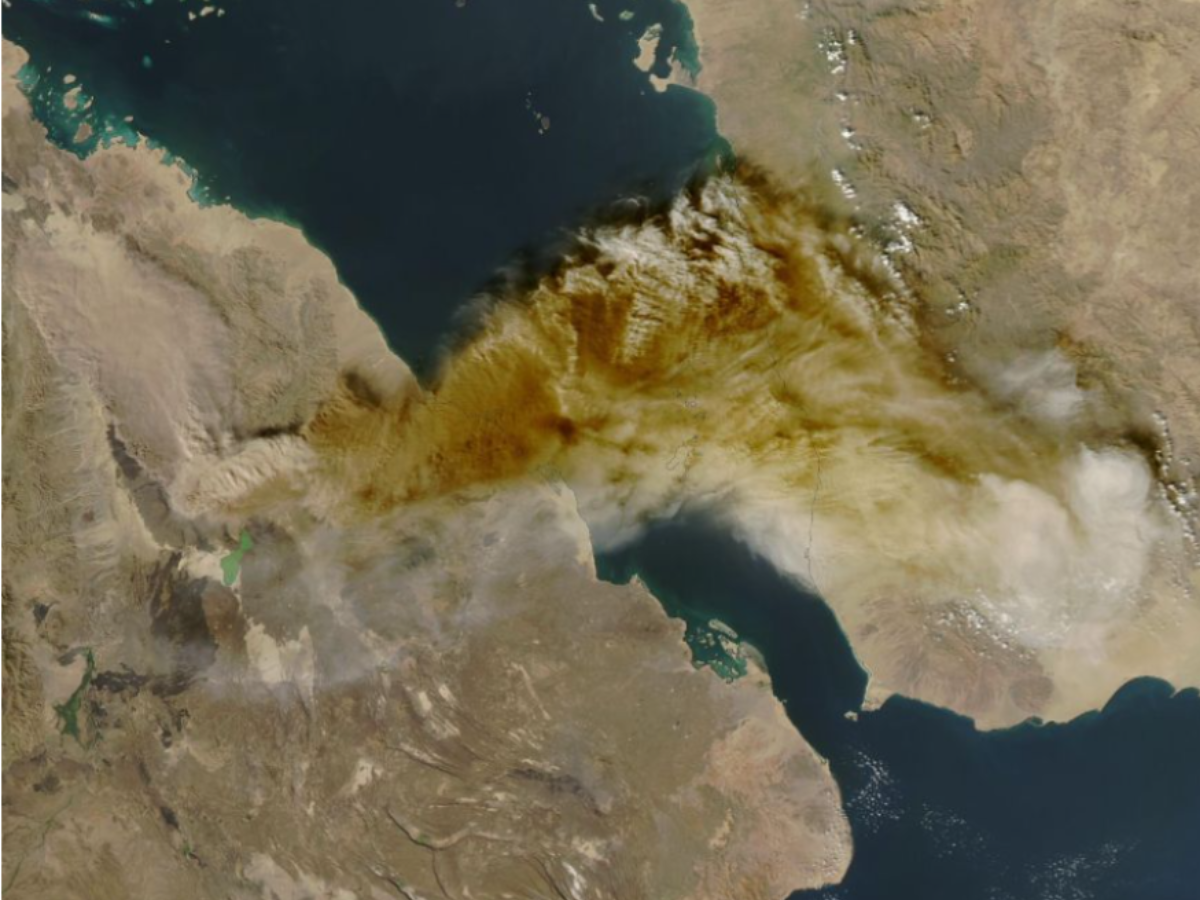
A rare geological event in East Africa is rippling across continents. Ethiopia’s Hayli Gubbi volcano which has lain dormant for several millennia, erupted without warning and sent a massive ash cloud thousands of kilometers.
As the cloud churns towards northern India, aviation officials and weather agencies are girding for disruption. Though no one was injured by the eruption in Ethiopia, its aftereffects may reverberate across South Asia in industries linked to air travel and air quality.
Hayli Gubbi: A Long-Silent Volcano Awakens
The Hayli Gubbi volcano is in the Erta Ale Range, one of the most active volcanic belts in Africa. According to experts, this particular volcano had not manifested any significant signs of activity over the last almost 10,000 years.
Its sudden awakening produced towering columns of ash that spread across the Red Sea, passing Oman and Yemen, before drifting further east. Local officials in Ethiopia reported widespread ashfall in nearby villages, raising concerns about fodder shortages and long-term economic losses.
Ash Plume Begins Approaching India
Meteorologists ascertain that the ash cloud of the upper level has now started to move toward northwest India. The minor disturbances on certain air routes have already been observed by aviation monitors. The ash is moving at high altitudes, although its presence over critical air corridors is expected to trigger additional rerouting and temporary cancellations.
Places Most Likely to Witness Atmospheric Alteration
Forecast models indicate that the plume is likely to enter first over Gujarat and then spread towards Rajasthan, Delhi NCR and Punjab. The India Meteorological Department says the ash cloud contains sulphur dioxide and fine particles suspended 10 to 15 kilometres above the ground. These are unlikely to affect surface breathing conditions but may create a hazy sky for a few hours.
Will Indian Cities Face Pollution Impact?
IMD officials say that the primary impact of the volcanic eruption on cities would be a marginal rise in minimum temperatures, somewhat similar to the warming impact brought about by dense cloud cover.
ALSO READ: Venezuela ‘Categorically Rejects’ US Terrorist Designation of Cartel de los Soles
An imminent impact on air quality is still uncertain as the ash remains at upper layers of the atmosphere. However, experts caution that any interaction with existing pollution could worsen haze temporarily in NCR where AQI levels were already near the severe range.
Flight Operations Under Stress
As the plume spreads, airlines have started cancelling or diverting flights. Some aircraft are now being rerouted through Pakistan’s airspace to avoid high-risk zones.
Aviation officials warn that Tuesday could see heavier disruptions if ash settles near Delhi or Jaipur. With the plume rapidly advancing across Central Asia, travel schedules might remain strained for the next day or two.
ALSO READ: Who Is Scott Tingle, NASA’s New Chief Astronaut? Career, Salary, Space Missions, Navy Service & More
Disclaimer: This article is based on available meteorological and aviation updates. Forecasts may change as new data emerges and readers should follow official advisories.