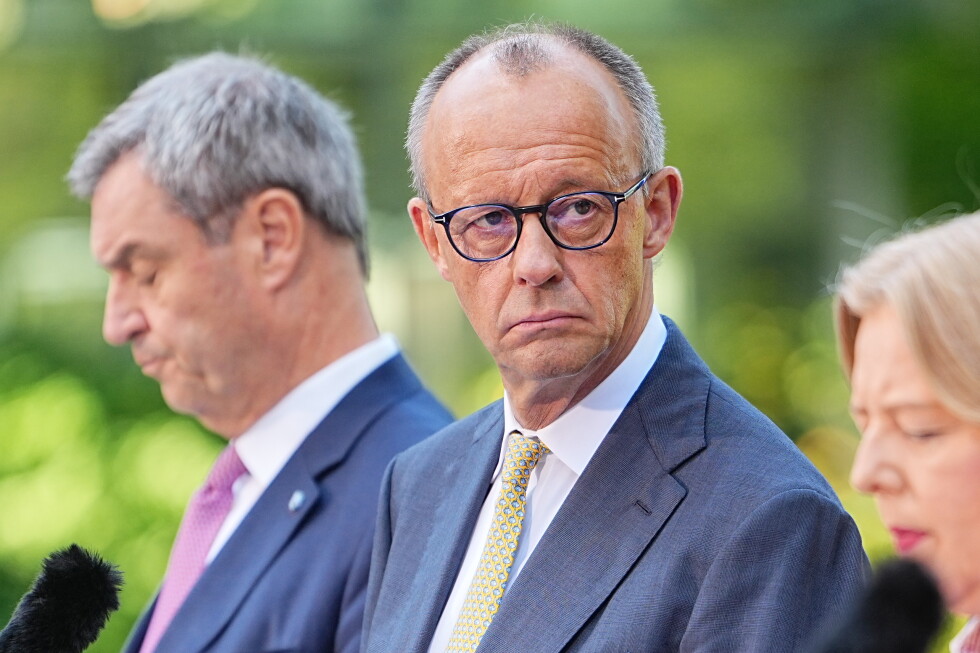
Berlin: German Chancellor Friedrich Merz and his government coalition partners presented a comprehensive reform package Thursday with the goal of getting the country’s sluggish economy back on track.
The 34 measures include cuts to income tax for low- and middle income families, an overhaul of the creaking pension system, tougher rules for employees’ sick leave and a reduction of the country’s stifling bureaucracy.
“These reforms all have one goal: We’re setting out into the future,” Merz said Thursday. “We’re strengthening ourselves so that we can live well in these new times.”
Merz’s coalition of center-right and center-left parties took office just over a year ago with pledges to reform and turn around Germany’s sluggish economy, Europe’s biggest. It has since become deeply unpopular, in part because of perceptions that it has squabbled but so far achieved little.
Merz is trying to cut his government coalition free from that negative reputation.
“From the very beginning, we set an agenda with a single goal in mind: We want to get Germany back on track. It is now clear that this is possible,” the conservative chancellor said.
Germany’s economy returned to modest growth last year after shrinking for two years in a row. The government expects underwhelming growth of 0.5% this year, a figure that has been pushed down by the fallout from the war in Iran.
The country of 83.5 million people already faced increasing competition from Chinese companies, higher energy costs following Russia’s full-scale invasion of Ukraine and issues including U.S. President Donald Trump ’s tariffs and trade threats. On top of that, it has deeper problems such as high production costs, lagging private investment and increasingly costly health and pension systems caused by an aging population.
On Thursday, the government coalition leaders said that the tax cuts, once fully implemented in 2028, would give an annual tax break of about 600 euros ($64.40) for a family with two working parents, two children and a total taxable income of 60,000 euros ($64,416). The total tax relief provided by the reform amounts to approximately 10 billion euros ($11.4 billion) per year.
The pension system reform would include gradually raising the retirement age, currently between 65 and 67 years depending on the number of years worked, in line with life expectancy. The coalition leaders said they would implement the recommendations presented by a government-mandated panel of experts and politicians last month to stabilize the pension system. The aim is to prevent the level of pensions from falling and ward off the need for a big, long-term increase of the levy employees pay into the pension system.