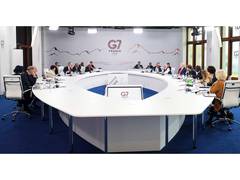
Evian [France], June 18 (ANI): G7 leaders on Wednesday (local time) called for more balanced, durable and resilient global growth, stressing the need for the swift restoration of free and safe transit through the Strait of Hormuz and a lasting resolution to ongoing conflicts that have heightened uncertainty across the global economy.
In a joint statement issued on the final day of the G7 Summit in Evian, the leaders reaffirmed their commitment to multilateral cooperation to advance economic growth, resilience and development, while addressing risks facing the global economy and strengthening engagement with international partners. Egypt, Kenya and the Republic of Korea also supported the statement.
The leaders said the global economy continues to face the lingering effects of previous shocks and structural shifts affecting trade and investment, while growing uncertainty has increased risks to global growth.
“Pressures on energy, agricultural inputs and fertiliser supply chains have increased, affecting industries, farmers and households everywhere, particularly in the most vulnerable countries,” the statement said.
Against this backdrop, the G7 underlined the importance of restoring stability in critical trade routes, particularly the Strait of Hormuz, a key artery for global energy supplies.
“We recognise that a swift return to free and safe transit through the Strait of Hormuz without any form of charges, and a lasting resolution to the conflict, are imperative to mitigate these negative impacts and support more balanced, durable and resilient global growth,” the leaders stated.
The group reaffirmed its commitment to well-functioning, stable and transparent markets for energy and other commodities and called on all countries to avoid arbitrary export restrictions. The statement emphasised the importance of secure trade flows and uninterrupted energy trade amid current geopolitical tensions.
This comes as the US and Iran are set to sign an MoU later this week. US President Trump has underscored that the peace deal will enable the reopening of the Strait of Hormuz, which witnessed disruptions amid the West Asia conflict.
Looking ahead, the leaders stressed the need to strengthen economic resilience through diversified and reliable supply chains, efficient energy systems and closer cooperation between producer and consumer countries. They highlighted the role of international organisations, including the International Energy Agency (IEA), and initiatives such as the Partnership on Wide Energy and Resources Resilience Asia (POWERR Asia) in enhancing supply chain resilience and safeguarding economic and price stability.
The G7 also encouraged oil-importing countries to establish sufficient strategic petroleum reserves aligned with the IEA’s 90-day stockpiling requirement, saying stronger crisis-management mechanisms could help stabilise energy markets during periods of disruption.
On trade, the leaders noted growing recognition among World Trade Organisation members of the need to reform the global trade body to better respond to contemporary challenges and member interests. They called for constructive discussions aimed at meaningful WTO reform.
The statement also highlighted concerns regarding non-market policies and practices, warning that such measures can contribute to persistent market distortions, excess industrial capacity, economic dependencies and harmful spillover effects across global markets.
The leaders reiterated the importance of resilient and reliable supply chains, particularly in strategic sectors and critical technologies. They pledged to deepen cooperation to identify vulnerabilities, reduce excessive dependencies and address risks associated with technology leakage.
The G7 further called for stronger efforts by international financial institutions, including the International Monetary Fund (IMF) and Multilateral Development Banks, to enhance crisis preparedness, mitigation and management while promoting macroeconomic stability.
Reflecting growing attention to emerging technologies, the leaders asked finance ministers, central bank governors, financial regulators and technology companies to examine opportunities and risks associated with frontier artificial intelligence models, including their impact on productivity, labour markets and financial stability. They also called for enhanced cooperation among cybersecurity agencies and experts to address risks arising from rapid AI development.
The statement additionally underscored the need to prepare financial systems for the opportunities and challenges posed by quantum technologies, while ensuring secure quantum supply chains.
A major focus of the declaration was the issue of widening global imbalances. The G7 noted that persistent and growing imbalances pose risks to balanced growth and financial stability and welcomed ongoing work by finance ministers and central bank governors to assess their causes and identify solutions.
The leaders said countries with large and persistent external surpluses should strengthen domestic sources of growth through measures such as boosting private demand, improving social safety nets and increasing investment. Meanwhile, countries with large external deficits should pursue policies that support domestic savings and fiscal consolidation.
The G7 warned that delaying efforts to address imbalances could fuel trade tensions and lead to disorderly economic adjustments. It called for stronger surveillance by the IMF and greater monitoring of domestic policy impacts by both the IMF and the Organisation for Economic Co-operation and Development (OECD).
The leaders welcomed the Global Convergence for Growth Summit held on June 11 and pledged to continue discussions on global imbalances within the G20 under the United States’ presidency and other international forums.
“This statement reflects the outcome of the discussion between G7 members, benefiting from productive exchanges of views with partner countries,” the declaration concluded. (ANI)
The article has been published through a syndicated feed. Except for the headline, the content has been published verbatim. Liability lies with original publisher.