
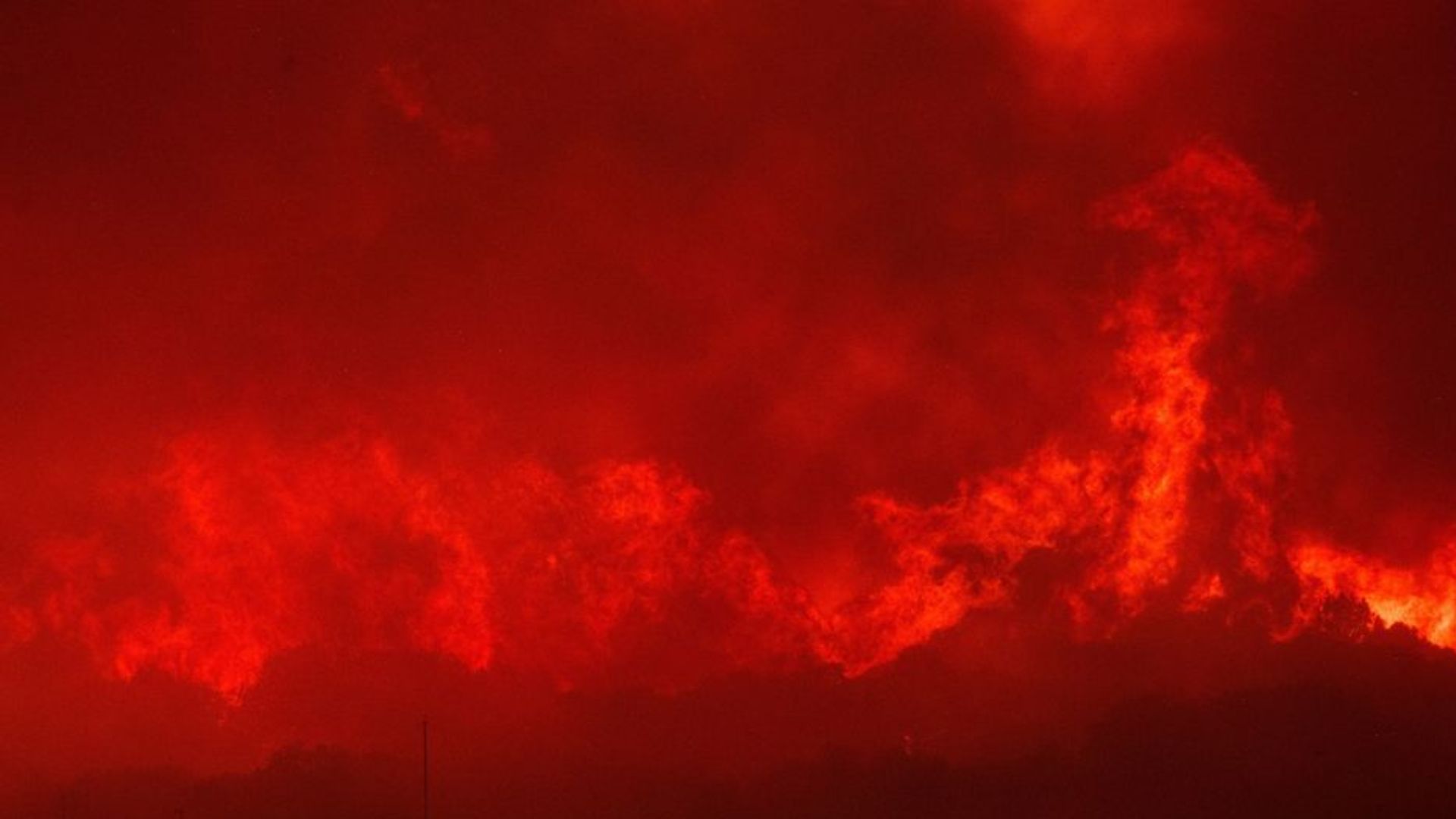
Fast-moving wildfires, intensified by strong winds and extreme summer heat, are raging through parts of Greece, France, Spain, and Turkey. At least three people have died, and thousands have been forced to leave their homes as firefighters struggle to bring the flames under control.
Greece Battles Flames Near Athens
In Greece, wildfires tore across scrub-covered hills in the Keratea region, about 25 miles southeast of Athens, on Friday. The blaze came dangerously close to residential neighborhoods. Nearly 200 firefighters, supported by water-dropping aircraft and helicopters, worked to contain the fire while thick black smoke filled the sky.
On the tourist island of Milos, two Vietnamese visitors lost their lives after being swept into the sea by powerful winds, according to the Greek Coastguard.
France and Spain Face Fierce Blazes
In France’s Aude region, a wildfire killed an elderly woman inside her home and injured two others, one critically with severe burns. The fire broke out on Tuesday afternoon and quickly spread across dry land.
Across the border in Spain, flames driven by 15 mph winds raced through the Torre de la Peña beach resort in Cadiz. Popular spots including bars, restaurants, hotels, and campsites between La Peña and Casas de Porros were evacuated as firefighters battled the advancing fire.
Turkey Declares Disaster Zones
Turkey is also in crisis, with wildfires threatening its fourth-largest city and forcing the evacuation of more than 3,500 people. Two people have died, and dozens of major fires have been reported daily since late June.
In the forested mountains near Bursa, overnight flames turned the sky a deep red, forcing highway closures and evacuations from nearby villages. The government has declared the western provinces of Izmir and Bilecik disaster zones.
Another blaze near Saricaeli village in Canakkale province led to the evacuation of a university campus and an elderly care home. Thick smoke reduced visibility, temporarily closing the Dardanelles Strait, a critical shipping lane.
A Region on High Alert
The wildfire crisis is not limited to Greece, France, Spain, and Turkey. Bulgaria and Montenegro are also battling multiple outbreaks, with flames threatening rural villages, farmlands, and protected forest areas. Emergency crews in these countries are stretched thin, using both ground teams and aerial support to contain fast-moving fires.
Meteorologists warn that the combination of soaring temperatures, prolonged drought, and relentless winds is creating the perfect conditions for large-scale, hard-to-control blazes. Many reservoirs and rivers are running low, limiting water supplies for firefighting operations. Experts fear that if weather patterns remain unchanged, southern Europe could face “one of the most dangerous and destructive wildfire seasons in decades,” putting lives, wildlife, and economies at severe risk.