NATO’s eastern frontier was thrust into the spotlight early Wednesday when Polish and alliance fighter jets intercepted and destroyed Russian drones that crossed into Polish airspace. Poland responded quickly and decisively, invoking Article 4 of NATO’s eastern frontier was thrust into the spotlight early Wednesday when Polish and alliance fighter jets intercepted and destroyed Russian drones that crossed into Polish airspace.
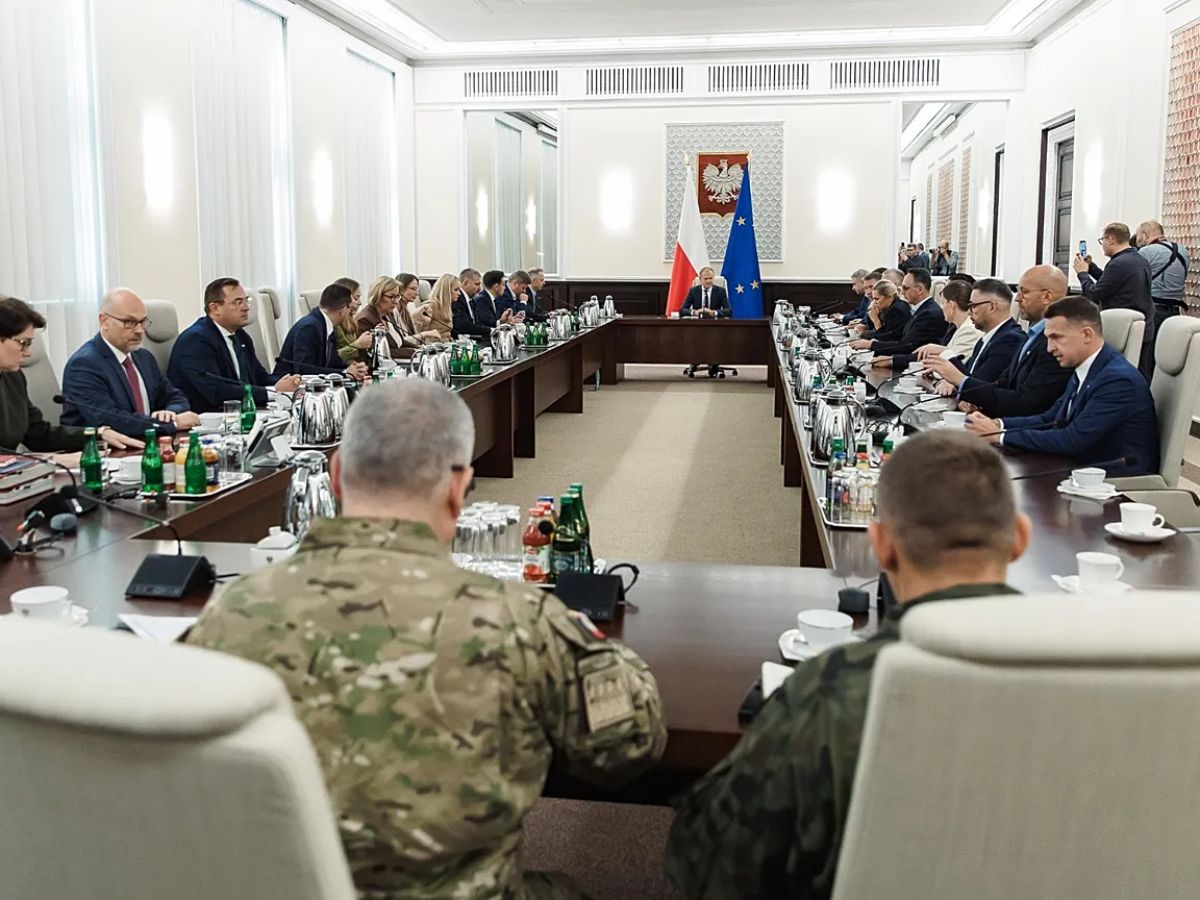
Poland responded quickly and decisively, invoking Article 4 of the North Atlantic Treaty, which prompted urgent deliberations among the 32-member alliance and brought up serious security concerns in the region.
What is Article 4 and Why Was It Invoked?
NATO Secretary-General Mark Rutte confirmed the violation was “not isolated,” promising the alliance would “closely monitor” developments along its border with Russia and Belarus .Any member may formally request consultations under Article 4 in the event that it feels its territorial integrity or security is in danger. This is a significant but cautious move.
Unlike the more famous Article 5, which treats an attack on one as an attack on all, Article 4 does not automatically mandate a military response. It acts as a vital warning sign instead, drawing partners to the table to evaluate the threat and choose a coordinated response that may include anything from military readiness to diplomatic complaints.
What is the History of Article 4?
Since NATO’s founding in 1949, Article 4 has been invoked only eight times, underscoring the gravity of Poland’s decision. The most recent invocation before this week occurred on February 24, 2022—the very day Russia launched its full-scale invasion of Ukraine. Additional NATO forces and defense systems were swiftly sent to front-line states including Poland, Romania, and the Baltic states as a direct result of that action.
Poland’s decision to invoke it again highlights its deep concern that the ongoing war in Ukraine could inadvertently, or intentionally, spill further into NATO territory. This incident marks the first time Russian drones were shot down over a NATO country, a dangerous new precedent.
Also Read: Sushila Karki’s India Connection: How the Ganga & banaras Shaped Nepal’s Interm Leader
Who is Poland Within NATO?
To understand Poland’s decisive action, it’s important to know its role in the alliance. Poland became a NATO member in 1999, cementing its turn toward the West after the collapse of the Soviet Union. It is currently a top defense spender in relation to its GDP and one of Europe’s most outspoken supporters of a robust collective defense.
Sharing a long border with Ukraine and the Russian ally Belarus, Poland considers itself on the front line of NATO’s eastern flank. Since it has continuously called on the alliance to strengthen regional security, its use of Article 4 makes sense as part of its security strategy.
What Was NATO’s Immediate Military Response?
Following the drone incident, NATO quickly mobilized its integrated air defenses, demonstrating its capability to respond to threats in real-time. With assistance from member countries including the Netherlands, Germany, and Italy, the alliance activated both fighter jets and ground-based systems, according to Rutte.
This rapid reaction showcased NATO’s readiness. Afterwards, Polish authorities declared that the airspace was “stabilized,” and defensive systems were operating normally again.
Also Read: Donald Trump Political Journey: From Tabloids To The White House
Russia and Belarus Responds
Moscow swiftly denied any intention to target Poland. Russia’s defense ministry claimed its drones were not aimed at any locations inside NATO territory and suggested Poland was simply out of their operational range.
Belarus, Russia’s close ally and host to Russian military forces, also sought to downplay the incident. Its military chief, Gen. Pavel Muraveiko, offered an unverified explanation on social media, suggesting the drones had simply “lost their course” due to electronic interference. No evidence was provided to support this claim.
While the immediate crisis has been de-escalated, the consultations now underway will focus on what further measures, if any, are needed to prevent future incidents and reinforce NATO’s deterrence posture. How the alliance handles this most recent obstacle at its doorstep will be watched by the entire world.the North Atlantic Treaty, which prompted urgent deliberations among the 32-member alliance and brought up serious security concerns in the region.