
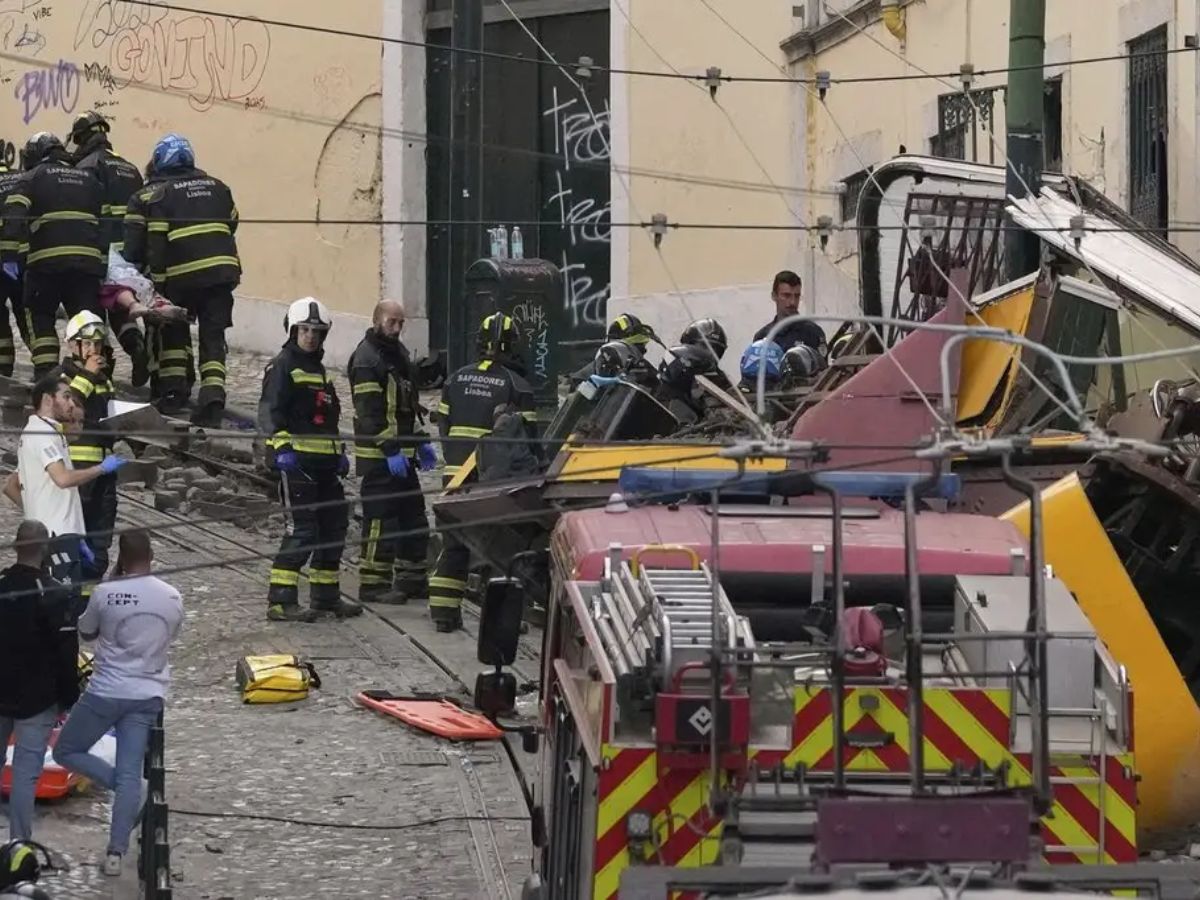
“In five seconds I was there,” said tour guide Mariana Figueiredo, describing the moment she rushed toward the source of a deafening noise. “People started to jump from the windows… Then I saw another one that was already crushed. When I got there the only thing I could hear was silence.” That haunting silence has now fallen over Lisbon’s historic Gloria neighborhood after a funicular car derailed and crashed, killing 16 people and injuring more than 20 others in a tragedy that has shocked the nation and international community.
What Exactly Happened?
On Wednesday evening, a bright yellow funicular car on the iconic Gloria line, a key tourist attraction and commuter route—derailed while descending a steep, cobbled street in central Lisbon. The vehicle overturned and smashed into a building, its crumpled wreckage coming to a rest on the cobblestones as smoke filled the air.
Emergency responders worked for hours to free passengers trapped inside the mangled carriage. After authorities verified a double-counting of a victim who had passed away in the hospital, the original death toll of 17 was subsequently reduced to 16.
Who Were the Victims?
The victims represent a global community, underscoring Lisbon’s status as a major international tourist destination. Police believe the dead include nationals from:
- Portugal
- South Korea
- Switzerland
- Canada
- Germany
- Ukraine
Among the confirmed fatalities is the funicular’s brake guard, André Jorge Gonçalves Marques. Charity Santa Casa da Misericórdia, located at the top of the hill, also confirmed that four of its employees were killed while commuting home from work. A three-year-old German boy was successfully rescued from the wreckage, but his mother was hurt and his father reportedly perished in the collision.
How Did Witnesses and Survivors React?
The scene was one of chaos and profound bravery. First responders and bystanders like Ms. Figueiredo immediately rushed to help, pulling at the roof to reach those inside and attempting to calm the distressed.
“A lot of people were crying around me. They were very frightened. I was trying to calm them down,” Figueiredo recounted.
A man on another funicular at the bottom of the hill told reporters the experience was so terrifying he would never ride one again. “No matter how many more years I live, I’ll never take the funicular again,” he said. The psychological impact was immediate. Tourists from Singapore, who had changed their plans at the last minute and avoided the fatal ride, expressed shaken disbelief. “It’s scary… Who knows, we might have been on this one,” one said. “It changes your perspective on life.”
What is Being Done Now?
In response to the disaster, Lisbon’s public transport operator, Carris, has taken immediate action:
- All funiculars in the city have been closed indefinitely.
- Each line will undergo thorough technical inspections before any potential reopening.
- An independent investigation has been launched to determine the cause of the crash.
The head of Carris, Pedro Gonçalo de Brito Aleixo Bogas, revealed that while the funiculars had operated correctly since 2007, maintenance costs have more than doubled over the past decade. He promised the findings of the investigation would be released publicly, though no timeline was given.
The tragedy has united the city in grief and demand for accountability. At a memorial service attended by Portugal’s political elite, the public sentiment was clear. “We need people to know they’re safe here,” one woman said outside the church, a call for a thorough investigation that was met with nods of agreement from others gathered in mourning.