
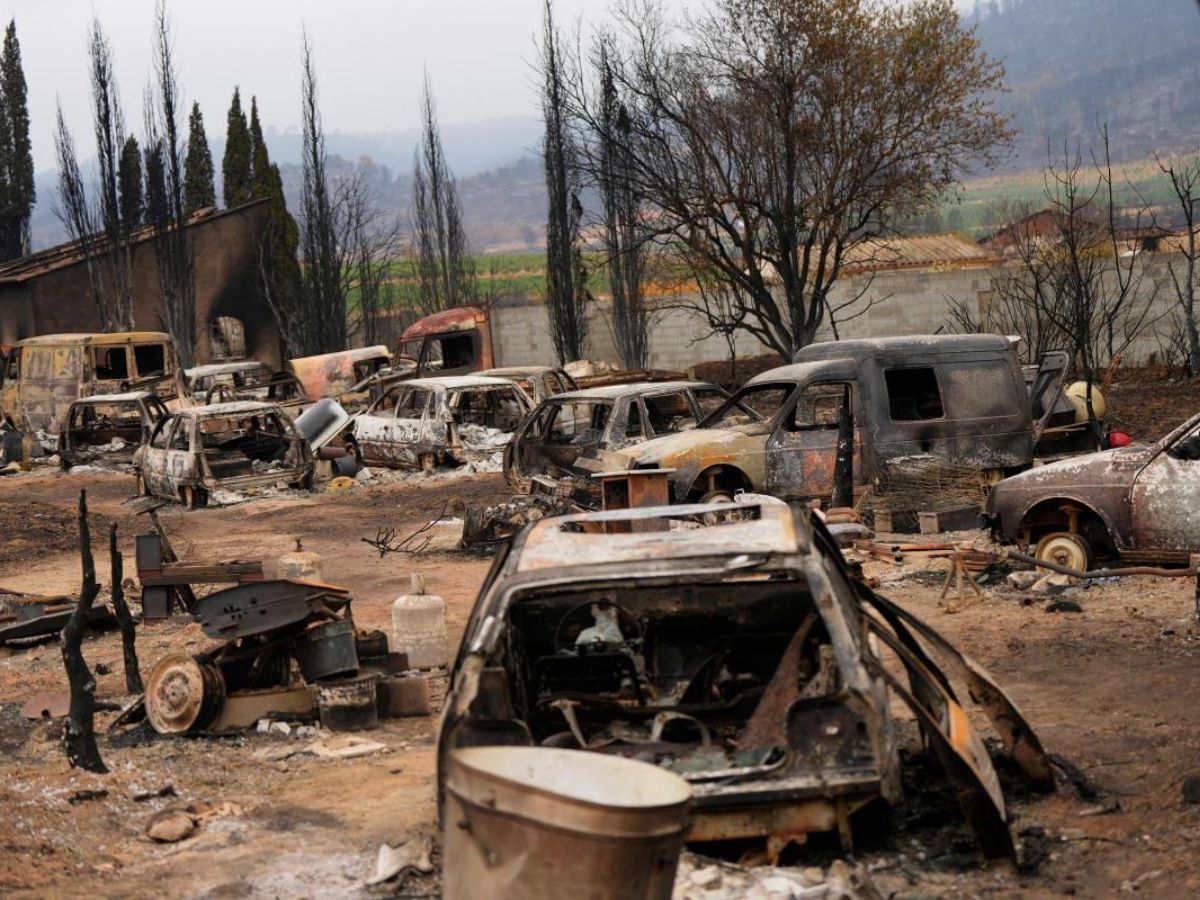
The Corbières mountains, a charming but arid region in the Aude department that is well-known for its vineyards and ancient villages, are where the fire started on Tuesday. Fueled by hot winds and bone-dry vegetation, the wildfire expanded rapidly, covering over 160 square kilometers (62 square miles)—an area larger than Paris and its suburbs combined.
It destroyed 15 communes and had a 90-kilometer radius by the time it was contained. Entire areas were rendered unrecognizable due to the destruction or serious damage to at least 36 dwellings. Thirteen people were hurt, including eleven firefighters fighting the fire in terrible conditions, and one person lost their life in their house.
Evacuations and Emergency Response
Nearly 1,000 residents have yet to return to their homes as roads remain blocked and some areas are deemed unsafe. Across 17 municipalities, schools, gyms, and community halls have been converted into emergency shelters.
In Tuchan, Mayor Beatrice Bertrand described how her small village opened its doors:
“When Durban-Corbières residents arrived, we hosted over 200 people. Local businesses stayed open late, villagers offered spare rooms, and the Civil Protection brought beds. People were scared, they had fled with almost nothing.”
Also Read: Wildfires Rip Through Greek Towns — More Lives Could Be at Risk
The Heatwave Threat
Even with the flames under control, local authorities are warning residents not to drop their guard. Meteorologists predict temperatures will climb above 30°C (86°F) this weekend, accompanied by low humidity and gusty winds—the perfect conditions for flare-ups.
Christian Pouget, the regional administrator, stressed, “We cannot declare victory yet. The risk of re-ignition is high.” Fire crews remain on standby, patrolling smoldering zones to prevent new outbreaks.
A History-Making Fire
France’s minister for ecological transition, Agnès Pannier-Runacher, called it the worst wildfire since 1949, well before the country began keeping detailed records in 2006.
While France has long faced summer wildfires, recent years have seen a sharp increase in frequency and severity. Since the 1980s, Europe has warmed twice as quickly as the rest of the world, according to climate scientists, which has resulted in drier landscapes and longer fire seasons.
Just last month, another major blaze reached the port city of Marseille, injuring around 300 people. In recent summers, Portugal, Spain, and Greece have all seen similar devastating fires, highlighting the continent’s increasing vulnerability.
Also Read: ‘Fall of Gaza Is Fall Of Hamas’ – Did Netanyahu Signed For Hostage Death Warrant?
Investigation and Lessons
Authorities have launched an investigation into the cause of the Aude wildfire, though officials suspect a combination of human activity and extreme weather. For now, the priority remains protecting vulnerable areas from a possible second wave.
Residents claim they would be more watchful than ever as they await the all-clear to go back home. “We’ve seen how fast it can happen,” said one evacuee. “You think you have time, you don’t.”
The coming week’s weather will decide whether the Aude region can begin rebuilding or whether this summer’s nightmare will flare back to life.