
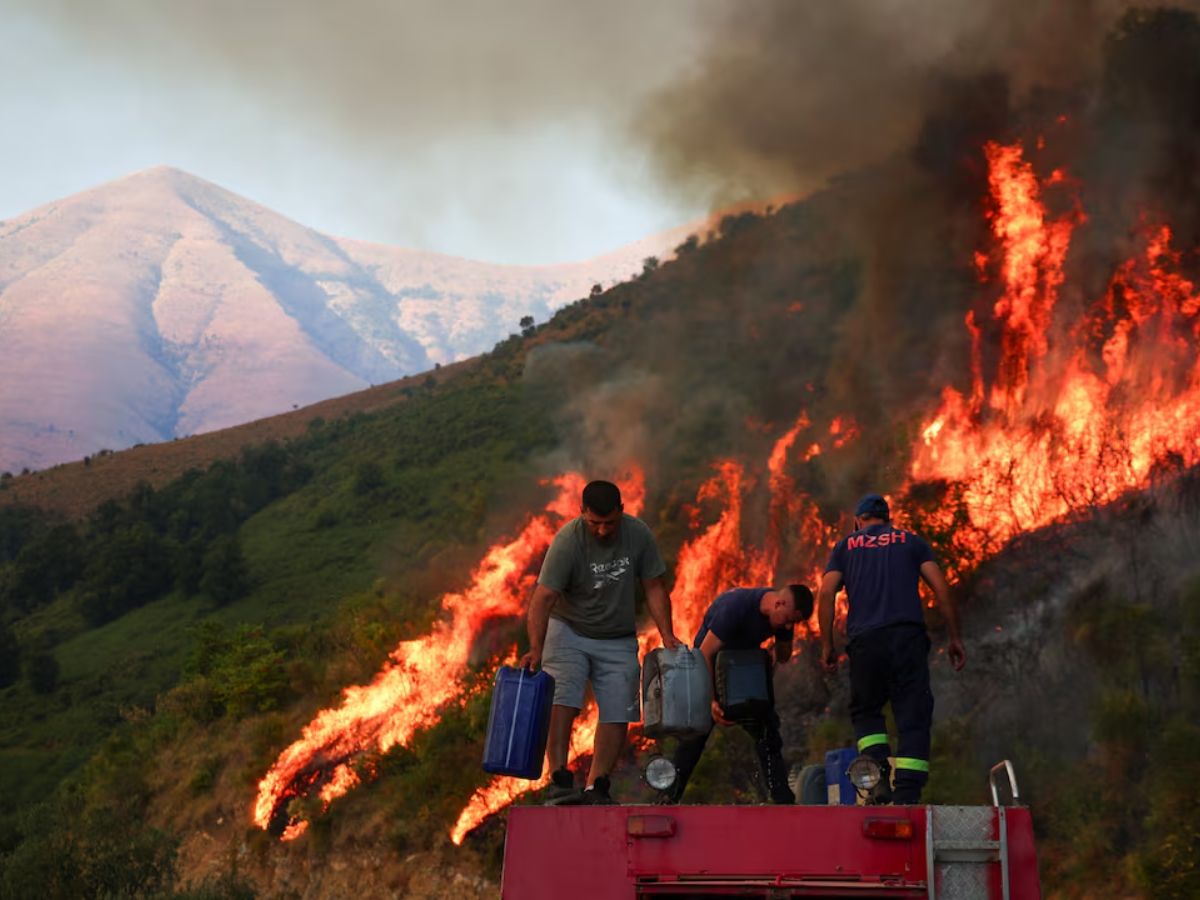
A brutal new heatwave has gripped southern Europe, with temperatures surpassing 40°C (104°F) across the Mediterranean. Scientists warn that global warming is intensifying the region’s summers, making them hotter, drier, and more prone to catastrophic wildfires.
“We are being cooked alive, this cannot continue,” lamented Alexandre Favaios, mayor of a fire-ravaged Portuguese town, as three blazes raged nearby.
In Spain’s capital, Madrid, a man working at a horse stable lost his life as flames advanced on homes and farms. To the south in Tarifa, a wildfire—suspected to have started in eucalyptus and pine forests, forced over 2,000 evacuations, with helicopters dumping seawater in desperate containment efforts.
Spain’s Military Joins the Battle
Spain’s Interior Ministry has declared a “pre-emergency,” mobilizing nearly 1,000 military personnel to assist the 1,200 firefighters already deployed. The Castile and Leon region alone faces 32 active fires, five of which directly threaten populated areas.
In León province, nearly 3,800 residents fled their homes, while seven towns in Zamora were also evacuated. The Vila Real fire in northern Portugal has been burning for an astonishing 10 days, with local authorities pleading for additional aid.
Portugal Calls Morocco for Help
With two of its water-bombing planes grounded for repairs, Portugal requested and received firefighting aircraft from Morocco. Over 1,300 Portuguese firefighters and 14 aircraft are engaged in the battle. While thunderstorms are forecast to bring some relief, the damage already done spans vast swathes of forest and farmland.
Balkan States Under Siege
In Albania, helicopters from the Czech Republic, Slovakia, and the UAE were dispatched to battle 19 separate wildfires whipped by strong winds. In neighbouring Montenegro, blazes reached the capital, Podgorica, blanketing the city in choking smoke. One resident, surveying the ashes of her home, said,
“Everything that can be bought will be compensated, but the memories that burned cannot.”
Greek Islands and Turkish Coastline in Crisis
In Greece, gale-force winds pushed fires across Zakynthos, Cephalonia, and the western mainland, prompting the evacuation of villages and a hotel. “The wildfire is out of control,” warned Zakynthos mayor Yiorgos Stasinopoulos.
In Turkey’s Canakkale province, a large blaze forced the closure of Canakkale airport and part of the Dardanelles Strait. While some fires were brought under control, blazes in city centers remain active, according to Agriculture Minister Ibrahim Yumakli.
Also Read: Inside Russia’s Shadow Workforce: The North Korean Labourers You’re Not Supposed To Know About
The Climate Alarm Grows Louder
From scorched pine forests in Spain to smoke-filled Balkan capitals, the Mediterranean is living through another grim chapter in its wildfire history. With scientists confirming that climate change is amplifying the severity and frequency of such disasters, the question remains, how much more can these communities endure?